 St. Petersburg Window
 Why Crescent Lake Siding Wears Differently Than You'd Expect
Crescent Lake is one of St. Petersburg's older, established neighborhoods, and that comes with a mix of housing stock you don't see as much in newer Pinellas County subdivisions — bungalows, mid-century homes, and additions built across several decades, each with its own siding history. That mix matters when something starts to fail, because "matching what's there" is often half the job.
The climate does the rest of the work. St. Petersburg sits in a hurricane-exposed coastal zone with intense, near-constant UV exposure, wind-driven rain that gets pushed sideways into wall assemblies, and salt air that travels further inland than most homeowners assume. Add in the humidity that keeps moisture sitting against exterior walls longer than it would in a drier climate, and you get a set of conditions that specifically target seams, fastener points, and any spot where the water-resistive barrier behind the siding has been compromised.
None of that is unique to Crescent Lake. But an older, tree-canopied, established block reacts to it differently than a new build with fresh materials and modern flashing details — which is exactly why siding repair here needs a contractor who understands both the neighborhood's building stock and the coastal conditions it's sitting in.
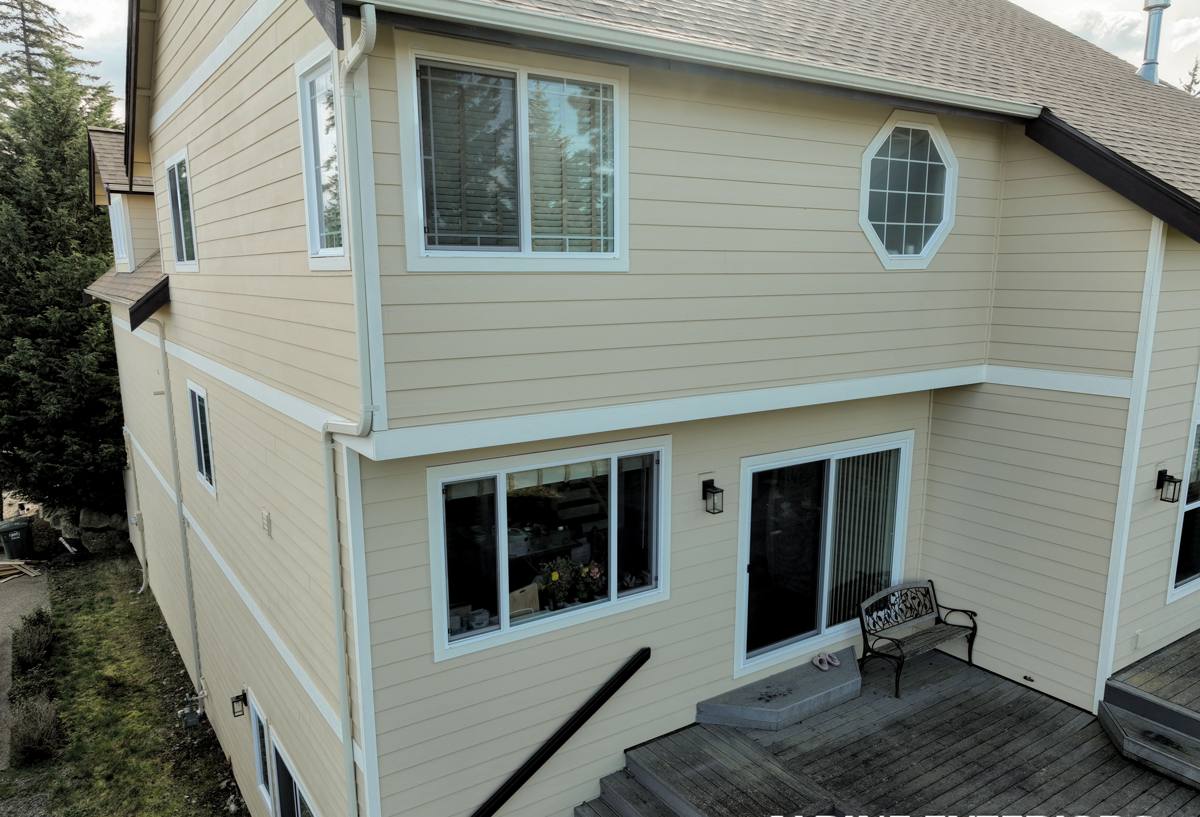
Signs Your Siding Needs Repair — Not a Full Tear-Off
Not every siding problem means a full re-side. Plenty of damage in Crescent Lake is legitimately fixable if it's caught before moisture gets behind the cladding and into the sheathing. Here's what we look for on a repair call:
- Cracked, split, or buckled boards — often from impact, fastener stress, or age, not necessarily from water damage yet
- Soft or spongy spots when pressed, especially near the bottom courses and around windows and doors
- Visible gaps at seams, corners, or trim where caulking has failed or shrunk
- Paint or finish that's peeling, bubbling, or chalking heavily in one section but not others
- Discoloration or staining that tracks downward from a single point — usually a sign water is getting behind a panel and running
- Sections that look and feel different from the surrounding siding after a storm — even minor warping is worth inspecting
- Any area where you can see daylight, insulation, or sheathing through a gap
If the damage is contained to a few boards or one elevation of the house, repair is usually the right call. If we find soft sheathing, mold, or damage that's spread across multiple wall sections, that's a different conversation — and we'll tell you honestly which situation you're in.
What a Correct Siding Repair Actually Involves
A siding repair that's done right is not just popping off a damaged board and nailing up a new one. There are a few steps that get skipped by crews trying to move fast, and skipping them is how a "repaired" wall fails again in a year or two.
Inspect Before You Touch Anything
Before any board comes off, we check the extent of the damage — is it cosmetic, or has water already reached the underlayment? Pulling one board can reveal that the problem is bigger (or smaller) than it looked from the ground.
Check What's Behind the Siding
Siding is the visible layer, but the water-resistive barrier and flashing behind it are what actually keep a wall dry. If that barrier is torn, improperly lapped, or missing around a penetration, replacing the siding alone won't fix the underlying problem — it'll just hide it again until the next storm.
Match the Material and the Fastening
New boards need to match the existing siding's profile, exposure, and finish as closely as possible, and they need to be fastened correctly for wind resistance — not just tacked in place. In a hurricane-exposed area like St. Petersburg, fastener spacing and type aren't optional details.
Seal and Finish Properly
Caulking, paint, or factory-finish touch-up has to hold up to UV and salt air the same way the rest of the wall does. A repair that looks fine on install day but wasn't sealed correctly will show its seams — literally — within a season.
Common Failure Points We See on Repair Calls
Across the older housing stock typical of established St. Petersburg neighborhoods, a few patterns show up again and again:
| Failure Point | Typical Cause | Why It Matters in This Climate |
|---|---|---|
| Bottom courses near grade | Splash-back moisture, poor drainage, ground contact | Constant wetting cycle accelerates rot in wood-based products |
| Butt joints and seams | Failed caulk, board shrinkage, improper original install | Wind-driven rain finds any open seam during storms |
| Around windows and doors | Missing or damaged flashing, gaps in trim | High-pressure areas during hurricane-force wind events |
| South and west-facing walls | Direct, sustained UV exposure | Fastest fade, chalking, and finish breakdown |
| Corner boards and trim | Impact damage, fastener pull-through | Compromises the seal for the whole wall section behind it |
Repair or Replace? How We Make That Call
Homeowners often assume any siding damage means a full re-side, or the opposite — that it can always just be patched. Neither is automatically true. Here's the honest breakdown of how we evaluate it:
| Factor | Leans Toward Repair | Leans Toward Replacement |
|---|---|---|
| Extent of damage | Isolated to one or two wall sections | Spread across multiple elevations |
| Underlying moisture | Barrier and sheathing intact | Water has reached sheathing or framing |
| Age of existing siding | Newer material, matchable | Original material discontinued or near end of life |
| Cause | Impact damage, isolated flashing failure | Systemic installation error or product-wide wear |
| Cosmetic match | New boards blend acceptably | Visible mismatch across the whole house |
We'll always give you the repair option when it's structurally sound to do so — a full re-side isn't the answer to every problem, and we're not going to sell you one it doesn't call for.
Why We Repair — and Rebuild — With James Hardie Materials Only
When we're patching a damaged section, we're matching it with James Hardie fiber cement, not whatever's closest on the shelf. That's a deliberate standard, not a sales pitch. Hardie's fiber cement is non-combustible, engineered specifically for high-humidity, storm-prone climates through its HZ5 product line, and finished with a factory-applied ColorPlus coating that resists the fading and chalking that UV and salt air cause fastest on field-painted or lower-grade materials.
We don't install vinyl, LP SmartSide, primed wood, or cedar as a company policy — not because those products have no merits, but because we've made a professional call that fiber cement holds up more consistently to what this coastal climate does to a wall over years, and it carries a stronger transferable warranty when installed to spec. If your existing siding is one of those materials and it's failing in a way that needs more than a patch, we'll say so plainly and talk through what a transition to Hardie would look like — no pressure, no games.
For straightforward repairs where matching the existing Hardie siding is the right move, we source the correct plank profile, exposure, and ColorPlus finish so the repaired section blends in rather than standing out as an obvious patch.
Our Process for a Crescent Lake Repair Call
- On-site inspection — we look at the damage in person, not from a photo, and check behind at least one board to assess the barrier and sheathing condition
- Honest scope assessment — you get a clear answer on whether this is a repair, a partial re-side, or something bigger, and why
- Written estimate — a defined scope of work, materials, and price before anything starts
- Material matching — sourcing the correct profile and finish so the repair blends with the rest of the wall
- Repair work — removal of damaged sections, barrier and flashing correction where needed, proper fastening, and sealing
- Final walk-through — we show you what was done and why, including anything we found behind the old siding
What Affects Cost and Timeline
Every repair is different, but a few factors consistently drive the price and schedule: how many boards need replacing, whether the water-resistive barrier needs repair or replacement, how accessible the damaged section is, and how closely the existing siding and finish need to be matched. A single-board impact repair is a quick job. A section with hidden moisture damage behind it takes longer, because the sheathing and barrier work has to happen before a single new board goes up. We'll walk you through the real driver of cost on your specific job during the estimate — we don't quote broad numbers over the phone before we've seen the wall.
Why Local Experience in This Neighborhood Matters
A crew that regularly works in established St. Petersburg neighborhoods like Crescent Lake has already seen the failure patterns typical of the area's mix of older and newer siding, understands how mature tree cover and proximity to the water affect moisture and drainage around a home, and knows what larger repair or replacement work typically requires for permitting through Pinellas County and the City of St. Petersburg. That's the difference between a repair that's built to hold through the next hurricane season and one that's just cosmetic.
We'd rather look at your siding in person and tell you honestly what it needs than guess from the street. If you're seeing damage, discoloration, or soft spots on your siding, reach out for a free, no-pressure estimate — we'll walk the exterior with you, explain what we find, and lay out your real options.