 St. Petersburg Window
 Siding Built for Disston Heights, Not Just Florida in General
Disston Heights is one of St. Petersburg's established residential neighborhoods, with a mix of older and newer homes shaded by mature tree canopy typical of the city's inland pockets. That mix matters when it comes to siding. Homes here span several decades of construction, which means several generations of siding materials are still on the walls — old wood lap that's been painted a dozen times, aging vinyl that's chalked and warped, and in some cases fiber cement that was never installed to spec. When we go out for an estimate in this part of St. Petersburg, we're not guessing at what the neighborhood throws at a house. We're working from what we've already seen on the block.
This page is about one product, one job: James Hardie fiber cement siding, installed correctly on a Disston Heights home. We're not going to cover every siding option on the market, because we don't install every option — we install James Hardie, and we'll explain why later on. What we want to cover here is what your home actually needs, what a correct installation looks like, and how our process works from first call to final walk-through.
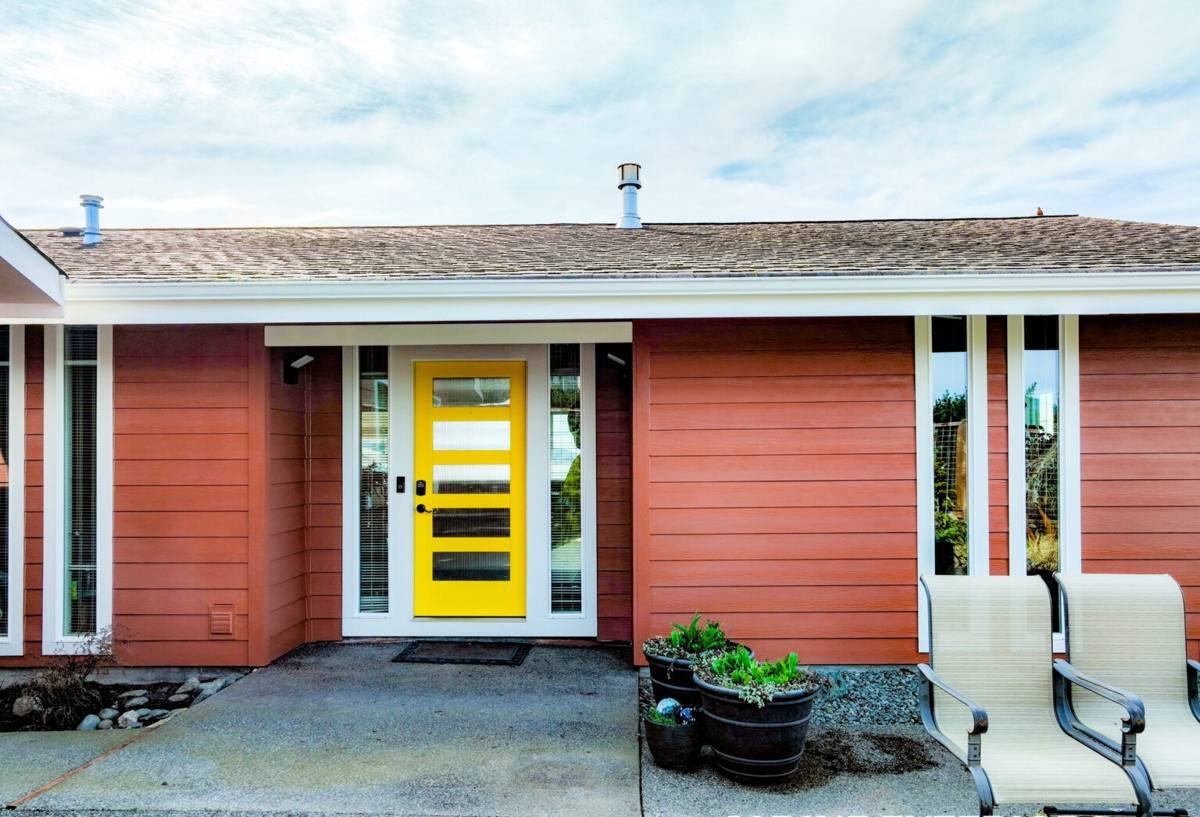
What Pinellas County's Climate Actually Does to Siding
St. Petersburg sits on a peninsula between Tampa Bay and the Gulf, and that geography is not gentle on the outside of a house. Four things do most of the damage over time:
Hurricane-Force Wind and Wind-Driven Rain
Even when a storm doesn't make direct landfall on Pinellas County, St. Petersburg regularly sees tropical-storm-force wind and rain pushed sideways, not down. Siding that isn't fastened correctly, or that relies on caulk and paint film to keep water out, starts failing at the seams and butt joints first. Wind-driven rain finds every gap a standard installation leaves behind.
Year-Round, High-Intensity UV
Florida's sun angle and number of clear days put more UV load on a house than most of the country sees in a year. Paint films chalk, fade, and crack faster here. Materials that rely on a field-applied paint job for their weather barrier are on a shorter clock in St. Petersburg than they would be in a milder climate.
Salt Air
St. Petersburg isn't directly oceanfront everywhere, but it's close enough to Tampa Bay and the Gulf that salt-laden air reaches most of the city, including inland neighborhoods like Disston Heights on breezy days. Salt accelerates corrosion of fasteners and trim metal and speeds up the breakdown of lower-quality coatings.
Humidity and Moisture Cycling
Between the wet season and the daily humidity swing, siding in this region goes through constant expansion and contraction, and any material that absorbs moisture is going to move, swell, or rot faster here than in a dry climate.
None of this is unique to Disston Heights specifically — it's Pinellas County weather, and it's what any exterior on a St. Petersburg home has to survive. What's specific to this neighborhood is the age and mix of homes, which means a wider range of existing conditions under the old siding: different sheathing types, different amounts of prior water damage, different trim details from one decade of construction to the next.
Why We Install Only James Hardie
We made a deliberate decision as a company to install James Hardie fiber cement siding exclusively. We don't install vinyl, LP SmartSide, Cemplank, Allura, or primed wood species like spruce or cedar. That's not a marketing position — it's a standard we hold to because of what we've seen these products do, and not do, in a climate like this one.
Vinyl is inexpensive and easy to install, but it's a plastic product that softens in heat, becomes brittle with UV exposure over years, and can deform or blow off in high wind if it isn't installed with real attention to fastening detail. Engineered wood products like LP SmartSide use a wood-strand core, which means the entire moisture-management strategy of the product depends on the factory coating and field-sealed cut edges staying intact — a real liability in a climate with this much rain and humidity. Primed wood siding needs a maintenance commitment most homeowners don't have time for: repainting on a cycle, caulking gaps, watching for rot at every joint.
James Hardie fiber cement is cement, sand, and cellulose fiber — it doesn't burn, it doesn't absorb water the way wood-based products do, and it doesn't soften or warp in heat. Hardie also builds a version of its product specifically engineered for high-humidity, high-moisture climates — the HZ5 line — which is what we spec for St. Petersburg homes, including Disston Heights. It comes with a factory-applied ColorPlus finish, which is baked on under controlled conditions rather than rolled on in the field, and it carries a strong transferable warranty when installed to Hardie's specifications. That last part — installed to spec — is doing a lot of work in that sentence, and it's the whole reason installation quality matters as much as the product choice.
What a Correct James Hardie Installation Actually Involves
James Hardie siding is only as good as the installation behind it. A rushed or generic install voids the warranty and defeats the reason to choose the product in the first place. On a Disston Heights home, a correct install includes:
- Tear-off and substrate inspection — removing the old siding and checking the sheathing underneath for rot, prior water intrusion, or soft spots before anything new goes up.
- Weather-resistive barrier — installing or verifying a code-compliant water barrier behind the siding, which is the layer actually stopping bulk water, not the siding itself.
- Correct fastener pattern and type — Hardie specifies fastener spacing, type, and depth, and a hurricane-prone coastal area is not where you want those specs shortcut.
- Proper clearances — siding held off the roofline, decks, and grade by the manufacturer's minimum clearance so wicking moisture doesn't sit against the bottom edge of the board.
- Sealed and flashed penetrations — every window, door, vent, and utility penetration flashed and sealed correctly, since these are the first places wind-driven rain finds a way in.
- Butt joint and seam treatment — joints caulked or flashed per spec, not just butted together and painted over.
- ColorPlus touch-up done correctly — using Hardie's matched touch-up product at cut edges and joints so the factory finish isn't compromised at the one place it's vulnerable.
Every one of those steps is inspectable, and every one of them is where a corner-cutting install shows up first — usually a few years later, as staining, buckling, or a joint that's opened up.
Our Process for a Disston Heights Project
1. On-Site Assessment
We walk the exterior with you, look at the current siding and trim condition, check for signs of moisture behind existing material, and talk through what you want out of the project — full replacement, specific problem areas, or a color and style change.
2. Product and Color Selection
We'll go through James Hardie's plank profiles, textures, and ColorPlus color options, and talk about what fits the house and the neighborhood without guessing — we can show you real samples, not just a screen rendering.
3. Written Scope and Estimate
You get a clear, itemized estimate before any work starts — what's included, what the timeline looks like, and what happens if we find sheathing damage once the old siding comes off, since that's the one variable that can't always be seen from the outside.
4. Tear-Off, Prep, and Install
Old siding comes off, substrate gets inspected and repaired as needed, weather barrier goes on or gets verified, and Hardie siding goes up to manufacturer spec — fastening, clearances, flashing, and finish work included.
5. Final Walk-Through
We walk the finished exterior with you before calling the job done, so nothing gets discovered after the fact.
James Hardie Product Lines That Fit This Neighborhood
Disston Heights has enough architectural variety that there isn't one single "right" Hardie profile for the whole neighborhood — but a few product lines cover most of what we see:
| Product | Best Fit For | Notes |
|---|---|---|
| HardiePlank Lap Siding | Ranch and bungalow-style homes | The most common profile; available in smooth or cedar-textured finish |
| HardieShingle | Homes with a gable accent or cottage detailing | Staggered or straight-edge panels for an accent area or full elevation |
| HardieTrim | Window, door, and corner trim on any style | Matches the siding system so trim doesn't become the weak point |
| HardiePanel | Modern or accent-wall applications | Vertical panel siding, often paired with lap siding for contrast |
We'll help you match the profile to your home's existing lines and roofline rather than pushing one default option on every job.
What Drives the Cost of a Siding Project Here
| Factor | Why It Moves the Price |
|---|---|
| Home size and story count | More square footage and second-story work both add material and labor time |
| Substrate condition | Rotted sheathing found during tear-off has to be replaced before new siding goes on |
| Trim and detail complexity | Homes with more windows, gables, and architectural detail take more time to flash and trim correctly |
| Product line and profile | HardieShingle and specialty panel work generally take longer to install than standard lap siding |
| Full replacement vs. partial | Partial repairs can cost less up front but may not match color or profile as cleanly as a full re-side |
We'll give you a specific number for your home after the on-site assessment — broad ranges without seeing the house aren't much use to you, and we'd rather give you an accurate figure than a low one that changes later.
Signs Your Disston Heights Home May Need New Siding
- Visible warping, buckling, or gaps at siding seams
- Soft spots or give when you press on the siding near the bottom edge of the wall
- Paint that's chalking, peeling, or fading unevenly across the exterior
- Staining or streaking that keeps coming back after cleaning
- Rising energy bills with no other obvious explanation
- Visible daylight or drafts around window and door trim
- Siding that's original to a home built decades ago and has never been replaced
Why a Crew That Already Works This Neighborhood Matters
A contractor who's worked in Disston Heights and the surrounding St. Petersburg neighborhoods has already dealt with the substrate surprises common to homes of a certain age here, already knows the permitting process through the City of St. Petersburg and Pinellas County, and isn't learning wind-load and moisture-barrier requirements for a coastal Florida job for the first time on your house. That familiarity shows up in fewer surprises mid-project and a crew that can spot a problem — old water damage, undersized flashing, a prior repair done wrong — before it becomes your problem after the siding is closed up.
If you're ready to talk about James Hardie siding for your Disston Heights home, reach out for a free, no-pressure estimate — we'll walk the exterior with you and give you a straight answer on what your home needs.