 St. Petersburg Window
 Siding That Has to Work in Snell Isle's Exposure
Snell Isle sits close to open water, and that changes what "good siding" means. A product that performs fine three miles inland can fail early on a lot that gets direct bay breeze, near-constant humidity, and salt in the air every single day. Homes here take a harder hit than most of Pinellas County, and the siding on the outside of the house is the first thing absorbing that punishment — sun, wind, rain, and salt, year after year, with no real off-season.
We install siding across the St. Petersburg area, and the jobs on and around Snell Isle get treated differently from a standard inland install. Not because the process changes in a dramatic way, but because the margin for error is smaller. Fasteners, flashing details, and material choice all matter more when a house sits closer to the water.
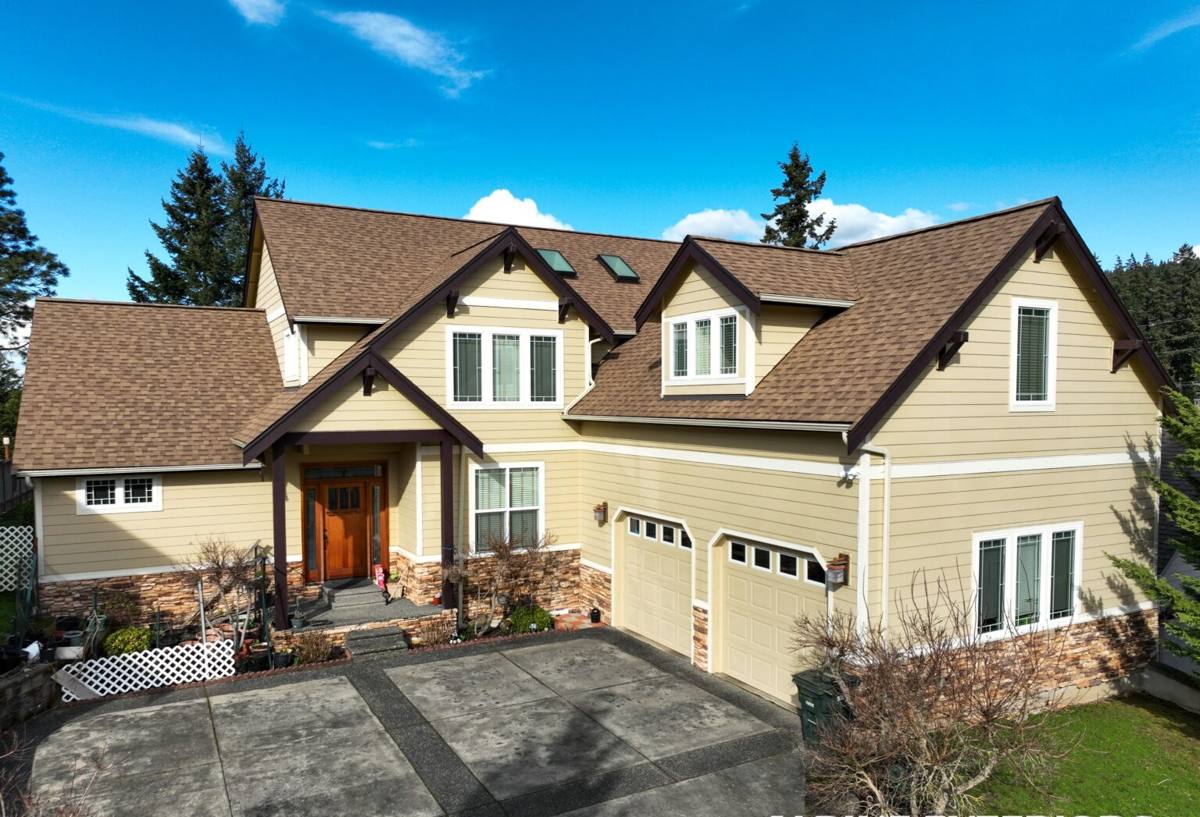
What the Local Climate Actually Does to Siding
It helps to be specific about what's working against a home's exterior in this part of Florida, because it explains almost every decision that follows.
Salt Air and Corrosion
Airborne salt settles on siding, trim, and fasteners even on properties that aren't directly waterfront. Over time it accelerates corrosion in metal components and degrades cheap coatings faster than manufacturers' lab testing usually accounts for. Fastener choice and flashing material stop being a minor spec detail near the water — they're one of the main things separating a 10-year job from a 30-year job.
Wind-Driven Rain
Pinellas County doesn't just get rain, it gets rain that's pushed sideways into the wall assembly during storms. Any weakness in lap overlaps, butt joints, or flashing around windows and penetrations becomes a point where water gets forced behind the cladding instead of running off it. Once water gets behind siding, it's the sheathing and framing that pay the price, not just the surface finish.
Hurricane-Force Wind Loads
Siding on a home this close to open water has to hold up under real wind pressure, not just look good on a calm day. That means fastener spacing, fastener embedment, and manufacturer wind-rating compliance aren't optional extras — they're the difference between siding that stays attached during a named storm and siding that peels off in sheets.
Year-Round UV
Florida sun is relentless almost every month of the year. Paint film that would last a decade in a milder climate can chalk, fade, or crack in a fraction of that time here. A factory-applied finish engineered for UV exposure is worth far more in St. Petersburg than it would be in most of the country.
What a Correct Siding Installation Actually Involves
Siding is a system, not a single product nailed to a wall. Skipping any layer of that system is where most premature failures start, and it's the same whether the crew is working in Snell Isle or anywhere else on the Pinellas peninsula — it just matters more here.
- Substrate check: old siding comes off and the sheathing underneath gets inspected for rot, delamination, or prior water damage before anything new goes up.
- Weather-resistive barrier: a correctly lapped and sealed house wrap or building paper goes on first, with special attention to seams and penetrations.
- Flashing at every opening: windows, doors, and any wall penetration get flashed so water is directed out and down, never trapped behind the cladding.
- Correct fastener type and spacing: per manufacturer specification and local wind-zone requirements, not a generic "close enough" pattern.
- Proper clearances: siding held off rooflines, decks, and grade by the manufacturer's minimum gap so water can't wick up from below.
- Caulking and sealant only where specified: over-caulking traps moisture just as badly as under-caulking lets it in.
- Trim and accessory integration: corners, soffits, and fascia detailed so the whole envelope sheds water as one system, not a patchwork.
None of this is exotic. It's the difference between a crew that follows the manufacturer's installation manual to the letter and one that treats it as a suggestion. In a wind-driven-rain, high-UV, salt-air environment, that difference shows up years sooner than it would somewhere drier and calmer.
Why We Only Install James Hardie Fiber Cement
We made a standing decision years ago to install James Hardie fiber cement siding exclusively, and we don't deviate from that for jobs in St. Petersburg or anywhere else we work. That's not a marketing position — it's a practical one, built around what actually holds up in this specific climate.
Non-Combustible Material
Fiber cement is engineered from cement, sand, and cellulose fibers, giving it a non-combustible core. That's a meaningful advantage over wood-based or vinyl products, and it's one less thing to worry about on a coastal property.
Climate-Engineered Product Lines
James Hardie builds region-specific formulations under its HZ system, engineered for the moisture and humidity profile of a given climate zone. Gulf Coast Florida sits in the more demanding end of that spectrum, and the product a crew installs here should reflect that — not a generic national spec.
ColorPlus Factory Finish
Instead of a job-site paint job, ColorPlus finishes are baked on in a controlled factory environment, which gives far more consistent UV and fade resistance than field-applied paint can match — directly relevant given how hard the Florida sun works on exterior finishes.
Moisture Behavior
Fiber cement doesn't swell, rot, or delaminate the way wood-based products can when they take on repeated moisture exposure. In a wind-driven-rain environment, a material that shrugs off incidental moisture at the surface is a real advantage, not a footnote.
Warranty Structure
Hardie backs its products with a strong, transferable limited warranty when installed to specification — which is part of why correct installation matters so much to us. A warranty is only as good as the install underneath it.
We don't install LP SmartSide, vinyl, Cemplank, Allura, primed spruce, or cedar. Each of those has legitimate uses somewhere, but none of them line up with the combination of salt exposure, UV load, and wind requirements that a Snell Isle home has to handle for decades, not just years.
Our Process, Start to Finish
- On-site assessment: we walk the exterior, check current siding and substrate condition, and note anything specific to the lot's exposure — proximity to water, prevailing wind direction, existing drainage patterns.
- Written estimate: scope, product line, color, and price laid out plainly, with no vague allowances hiding in the fine print.
- Permitting: we pull the required permits through the City of St. Petersburg and handle inspections tied to Pinellas County's wind-zone requirements.
- Tear-off and substrate repair: old cladding removed, sheathing inspected, and any rot or damage addressed before new material goes up — this step gets skipped by corner-cutting crews and it's the one that causes the most callbacks later.
- Weather barrier and flashing install: done to manufacturer spec, with extra attention at every window, door, and penetration.
- Hardie installation: fastened per the manufacturer's published requirements for this wind zone, with correct spacing, clearances, and joint treatment.
- Final walkthrough: we go over the finished job with the homeowner before calling it done.
Cost Factors Homeowners Should Understand
Every home is priced individually, but the same handful of factors move the number up or down on nearly every siding job we quote in this area.
| Factor | Why It Matters | Typical Effect on Cost |
|---|---|---|
| Tear-off complexity | Multiple layers of old siding or hidden substrate damage add labor before new material goes up | Increases cost |
| Home size and wall area | More square footage means more material and labor hours | Scales cost directly |
| Siding profile chosen | Lap width, shingle-style, or panel systems have different material and labor demands | Moderate effect |
| Trim and accessory detail | Corner boards, frieze boards, and window trim add finishing labor | Moderate effect |
| Story height | Two-story and taller sections require more scaffolding and safety setup | Increases cost |
| Substrate repair needed | Rotted sheathing or framing found during tear-off must be fixed before install | Adds cost if discovered |
| Color and finish | Factory ColorPlus finishes vs. field-painted options carry different material pricing | Minor to moderate effect |
We walk through these line by line during the estimate so there's no guessing where the number comes from.
Why Hiring a Crew That Already Works Snell Isle Matters
Siding installation isn't a one-size-fits-all trade, and a crew's familiarity with a specific area shows up in ways homeowners don't always think to ask about.
- Permit and inspection familiarity: knowing what the City of St. Petersburg and Pinellas County inspectors look for avoids delays and rework.
- Wind-zone compliance by habit, not by lookup: a crew that installs in this area regularly has the fastening and clearance requirements built into how they work, not something they have to research mid-job.
- HOA and architectural review awareness: established neighborhoods like Snell Isle often have design expectations homeowners need to satisfy before or during a project, and a local crew has usually navigated that before.
- Realistic scheduling around Florida weather: summer storm patterns and hurricane season windows affect when tear-off and install phases should happen — a crew working this market plans around that instead of getting caught by it.
- Supplier relationships: consistent local volume means fewer material delays and more predictable timelines.
None of that is exotic knowledge, but it's the accumulated result of doing this work in this specific area repeatedly, and it shows up in fewer surprises during the job.
Signs Your Current Siding Is Past Its Useful Life
Homeowners often wait too long to address siding problems because the damage isn't obvious from the street. A few things worth checking:
- Soft or spongy spots when you press on the siding, especially near the bottom courses.
- Visible cracking, buckling, or gaps at butt joints and corners.
- Paint that's chalking heavily or peeling in sheets rather than fading evenly.
- Rust staining running down from fastener heads or trim pieces.
- Musty odors or visible staining on interior walls that share an exterior wall with damaged siding.
- Warping or rippling, particularly on walls that face prevailing wind and rain.
Any one of these is worth a professional look before it turns into a sheathing or framing repair, which costs considerably more than replacing siding alone.
Maintenance After Installation
Correctly installed Hardie siding is low-maintenance, not no-maintenance. A yearly rinse to clear salt residue, a periodic check of caulk lines at trim and penetrations, and prompt attention to any impact damage go a long way toward getting the full lifespan out of the material — especially this close to the water, where salt buildup happens faster than it does further inland.
If your Snell Isle home's siding is showing its age, or you're planning ahead of the next storm season, we're happy to take a look and talk through what your home actually needs. Request a free, no-pressure estimate using the form below.