 St. Petersburg Window
 Why Siding Wears Faster in Disston Heights
Disston Heights sits inland from the bay but still gets the full weather package that every St. Petersburg neighborhood deals with: long stretches of intense UV, sudden wind-driven downpours, hurricane-force gusts during the season, and a steady dose of salt-laden air blowing in off the Gulf and Tampa Bay. None of that is unique to this one neighborhood, but it adds up differently on an established, tree-shaded residential street than it does on open new construction. Mature landscaping holds moisture against walls longer after a storm, older homes often have siding details that were never designed for today's wind and moisture codes, and decades of Florida sun take a visible toll on paint and seams long before the structure underneath is actually compromised.
That combination — heat, humidity, wind, and salt exposure — is exactly why siding replacement in this part of St. Petersburg isn't a cosmetic project. It's a decision about what's going to protect the wood framing, sheathing, and interior of the house for the next several decades.
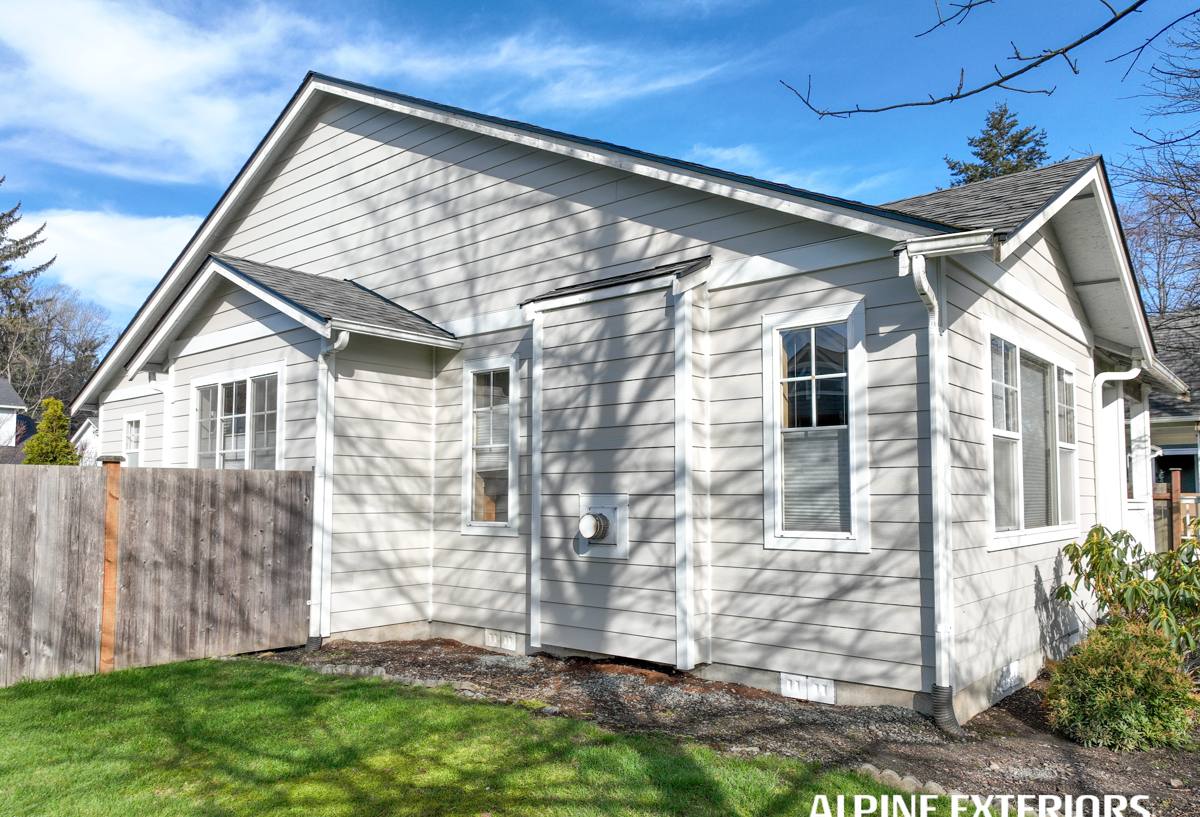
Signs Your Siding Is Overdue for Replacement
Homeowners often wait for siding to look obviously bad before calling anyone, but by then moisture may have already reached the sheathing underneath. Worth checking for:
- Boards that are soft, spongy, or crumble when pressed — a sign moisture has gotten behind the material
- Persistent paint failure (peeling, bubbling, or chalking) even after repainting
- Visible warping, buckling, or cupping, especially on walls that get the most afternoon sun
- Gaps opening up at seams, corners, or around windows and doors
- Rising energy bills with no other explanation — failing siding lets conditioned air and humidity move through the wall assembly
- Mold, mildew, or a musty smell along interior walls that back up to exterior siding
- Siding that's more than 20-25 years old, regardless of appearance, if it's an original material not rated for Gulf Coast conditions
Any one of these is worth a look. Several at once usually means the siding has already outlived its usefulness and repair patches will only buy a little time.
What a Correct Siding Replacement Involves Here
Replacing siding on a Pinellas County home is not just pulling off old boards and nailing up new ones. Done right, it's a system, and every layer matters as much as the visible finish.
Moisture Management Behind the Cladding
Before any new siding goes up, the wall needs a properly lapped weather-resistant barrier, correctly integrated with window and door flashing so water is directed out and down, never trapped. In a climate where wind-driven rain is a regular event rather than an occasional storm, gaps or shortcuts in this layer are what cause rot years later — long after the crew that installed it is gone.
Fastening for Wind Resistance
Pinellas County's building code reflects its wind zone, and siding has to be fastened according to the manufacturer's engineered wind-load specifications for that zone — not generic spacing. Under-fastened siding is one of the more common failure points inspectors see after a windstorm, and it's invisible until wind actually tests it.
Clearances and Flashing Details
Correct ground clearance, proper flashing above windows and doors, and sealed penetrations for vents, fixtures, and utility lines all matter more in a humid coastal climate than they would somewhere dry. Skipping these details doesn't show up on install day — it shows up two or three years later as staining, soft spots, or paint failure at those exact locations.
Material Comparison: Why Fiber Cement, Not Vinyl or Engineered Wood
We get asked regularly why we only install James Hardie fiber cement siding and don't offer vinyl, LP SmartSide, or other engineered wood products. It comes down to how each material actually performs against heat, humidity, salt air, and wind over the long haul — not brand preference.
| Material | How It Handles This Climate | Maintenance Burden | Why We Don't Install It |
|---|---|---|---|
| Vinyl siding | Softens and can warp or distort under sustained intense sun; rated wind resistance drops as panels age and become brittle | Low, but limited to a narrow color range that fades over time | Real-world heat and UV performance in Florida doesn't match cooler-climate ratings, and it's not our standard |
| LP SmartSide / engineered wood | Wood-strand core is vulnerable if moisture gets past the finish or a seam fails; humid coastal exposure raises that risk | Moderate to high — finish and seams need to be monitored and maintained | Moisture intrusion risk is a trade-off we're not willing to put our name behind in a wet, humid climate |
| Primed spruce / cedar | Natural wood absorbs moisture, is attractive to pests, and needs a sound, unbroken paint film to survive humidity and salt air | High — regular repainting and sealing required | Ongoing maintenance burden is steep for coastal conditions, and failures are common when upkeep lapses |
| James Hardie fiber cement | Non-combustible, dimensionally stable in heat and humidity, factory finish engineered for UV and moisture exposure | Low — no repainting on the factory-finished ColorPlus line for many years | This is what we install — see below |
The James Hardie System We Install
James Hardie fiber cement is engineered specifically around climate. The company builds its HardiePlank and HardiePanel products with formulations aimed at the conditions homes actually face in different regions — hot, humid, storm-prone areas like the Gulf Coast get a different engineering approach than colder, freeze-thaw climates. For St. Petersburg, that means a product designed around exactly the sun, humidity, and wind exposure Disston Heights homes deal with every year.
A few things about the system that matter to homeowners deciding on siding:
- Non-combustible core — fiber cement doesn't feed a fire the way wood or vinyl-adjacent materials can
- ColorPlus factory finish — baked-on color applied under controlled conditions, more resistant to fading and chipping than field-applied paint, and it eliminates the need for repainting on the schedule wood or vinyl would require
- Dimensional stability — fiber cement doesn't expand, contract, or warp with heat and humidity swings the way vinyl and wood products can
- Transferable warranty — coverage that's meaningful if the home changes hands, which matters in a market where houses turn over
We install the lap and panel profiles most commonly used on homes in this area, matched to the home's existing style rather than forcing a look that doesn't fit the neighborhood.
Cost Factors for Disston Heights Homeowners
Every home is different, so we don't quote a project without seeing it, but the variables that actually move the price are consistent from house to house.
| Factor | Why It Matters | Typical Impact on Cost |
|---|---|---|
| Total square footage of exterior wall | Sets the baseline material and labor quantity | High |
| Condition of the sheathing underneath | Rot or moisture damage found once old siding comes off adds repair work before new siding can go up | Medium to High (variable) |
| Number of corners, trim details, and window/door openings | Each one adds labor time and flashing detail work | Medium |
| Siding profile and accent choices | Mixing lap siding with panel or shingle-style accents adds material and install complexity | Low to Medium |
| Story count and access | Second-story and hard-to-access walls take more time and equipment | Low to Medium |
Most Disston Heights projects fall somewhere in a broad mid-range depending on those factors — we'll walk your home with you and explain exactly where your number comes from rather than handing over a flat estimate over the phone.
Our Process From Estimate to Finished Job
- On-site walk-through of the home, including a look at trim, windows, and any areas showing early signs of moisture or damage
- Written estimate that breaks out material, labor, and any sheathing repair contingencies, so there are no surprises mid-project
- Permitting handled on our end, submitted to the correct local jurisdiction with wind-load documentation for the product being installed
- Removal of existing siding and inspection of the sheathing before anything new goes up — this is when hidden moisture damage gets caught and addressed
- Installation of the weather-resistant barrier, flashing, and James Hardie siding to manufacturer spec and local wind-zone fastening requirements
- Final walk-through with the homeowner before we consider the job done
Why Local Experience in This Neighborhood Matters
A crew that regularly works St. Petersburg and Pinellas County homes already knows the local permitting process, the wind-zone requirements that apply here, and the kinds of moisture and sun exposure issues that show up on homes with this area's mix of age and construction. That's different from a crew learning Florida code on your project. Local experience also means a real, reachable point of contact if a warranty question or a post-storm concern comes up years down the road — not a call center or a franchise that's moved on to the next region.
For a neighborhood like Disston Heights, where home styles and ages vary block to block, that familiarity translates into siding that's installed to match the house it's going on, not a one-size approach.
Ready to Talk About Your Home
If your siding is showing its age or you're planning ahead of the next storm season, we're happy to take a look and give you a straight answer about what your home actually needs. Reach out for a free, no-pressure estimate using the form below.