 St. Petersburg Window
 Roofing in Pinellas Park Isn't the Same Job as Roofing Inland
Pinellas Park sits in the middle of a peninsula that takes weather from two directions at once — Gulf-driven humidity and UV from the west, and tropical systems that track in off open water. A roof here isn't just shedding rain a few times a month like it would in a drier climate. It's absorbing months of direct, high-angle sun, getting hit with wind-driven rain that finds its way into anything less than a tight seal, and slowly corroding metal components from salt-laden air that reaches well inland from the coastline. None of that is unique to any one street in Pinellas Park — it's the baseline every roof in this part of Pinellas County has to handle, year after year.
That matters when you're choosing materials and a contractor, because a roofing job that would hold up fine in a milder climate can fail here in half the time. Asphalt shingle roofing can absolutely handle this environment — it's one of the most common roof types in the area for good reason — but only when it's specified and installed with these conditions in mind, not treated as a generic install.
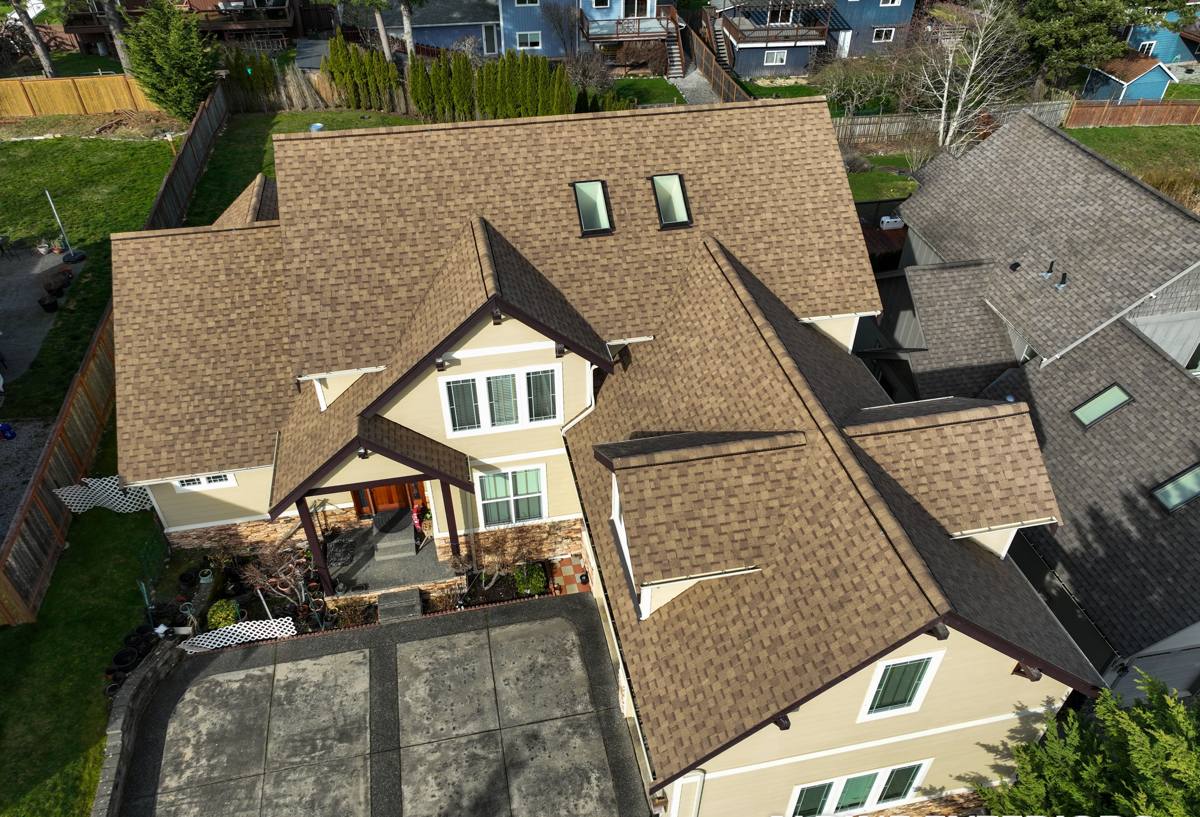
What Pinellas Park Homes Actually Need From an Asphalt Shingle Roof
A correct asphalt shingle roof for this area isn't defined by the shingle alone. It's a system, and every layer has to be right for the climate:
- Wind-rated shingles, installed to their rated nailing pattern. Florida's building code sets wind uplift requirements that are stricter than most of the country, but the shingle only performs to its rating if it's fastened exactly the way the manufacturer specifies — nail count, placement, and sealant strip activation all matter.
- A synthetic or self-adhering underlayment that acts as a true secondary water barrier, not just a moisture liner. When wind pushes rain sideways under a shingle tab, the underlayment is what keeps it out of the decking.
- Sealed, corrosion-resistant flashing at every roof-to-wall transition, valley, and penetration. Salt air accelerates rust on standard fasteners and thin flashing far faster than most homeowners expect.
- Balanced attic ventilation so heat and moisture don't build up under the deck. Florida sun raises attic temperatures dramatically, and poor ventilation shortens shingle life from underneath, not just from the top.
- Proper drip edge and starter strip detailing at eaves and rakes, which is one of the most common places we find corners cut on older installs — and one of the first places wind gets a grip on a shingle edge.
Skip any one of these and the shingle itself becomes almost irrelevant — a premium shingle over a weak underlayment or bad flashing will still leak.
Signs a Pinellas Park Roof Is Due for Attention
Because so much of the damage from sun and storms happens gradually, most homeowners don't notice a problem until it shows up as an interior stain. Worth checking for, or asking a roofer to check for:
- Granules collecting in gutters or at downspout outlets — a sign the shingle's protective surface is wearing thin
- Shingle tabs that are curling, cupping, or lifting at the edges, especially on south- and west-facing slopes
- Cracked or brittle shingles, particularly noticeable after several years of direct sun exposure
- Dark streaking or algae growth, which is cosmetic but can indicate moisture retention
- Soft spots in the decking felt underfoot in the attic, or daylight visible through the roof boards
- Rust staining around vent pipes, flashing, or exposed fasteners
- Missing shingles or exposed nail heads after a storm, even a relatively minor one
A shingle roof rarely fails all at once. It's usually a slow accumulation of small weak points, and after a named storm or a particularly harsh summer, those weak points are where a leak finally shows up.
What a Correct Installation Actually Involves
Tear-Off and Deck Inspection
A proper reroof starts with removing the old roofing down to the deck — not installing over existing shingles. That's the only way to find and repair soft, rotted, or delaminated decking before it's covered up again. Skipping this step is one of the most common shortcuts in the industry, and it's also one of the most consequential, since a weak deck undermines everything installed on top of it.
Underlayment and Flashing First
Before a single shingle goes down, the deck gets a water-resistant underlayment, new drip edge at all eaves and rakes, and new flashing at every valley, chimney, wall transition, and penetration. This is the layer that determines whether wind-driven rain stays out, and it's largely invisible once the job is done — which is exactly why it needs to be right the first time.
Shingle Installation to Wind-Rated Spec
Shingles are installed with the manufacturer's specified nailing pattern and fastener count for the wind rating being claimed. Starter strips are set correctly at eaves and rakes so the first course has full sealant contact, since that first row is the one most exposed to wind uplift.
Ventilation and Final Details
Ridge and soffit ventilation are checked and corrected if the attic isn't breathing properly, pipe boots and vent flashing are sealed, and the full roof is walked and inspected before cleanup. Cleanup includes a magnetic sweep for stray nails — a small step, but an important one for a family with kids, pets, or a driveway full of tires.
Our Process, From First Call to Final Walkthrough
Inspection and Honest Estimate
We start with a full roof and attic inspection, not just a look from the driveway. You get a clear explanation of what's actually wrong, what's cosmetic versus structural, and what your realistic options are — repair, partial replacement, or full reroof — with no pressure toward the most expensive option.
Materials and Scheduling
Once you approve a scope, we handle permitting through Pinellas County or the applicable local jurisdiction, order materials, and schedule the work around Florida's weather patterns rather than fighting them — asphalt shingle installation has real weather constraints, and a crew that rushes it in the wrong conditions is doing you a disservice.
Installation Day
Tear-off, deck repair as needed, underlayment, flashing, and shingle installation typically happen within the same work window for most residential roofs, with the property protected throughout — landscaping, pool, and driveway included.
Final Walkthrough and Documentation
We walk the finished roof with you, cover warranty paperwork, and provide the documentation many homeowners need for insurance purposes, including anything related to a wind mitigation inspection.
Choosing a Shingle Type for a Gulf Coast Climate
Not every asphalt shingle product is built the same way, and the right choice depends on budget, how long you plan to stay in the home, and how much wind and impact resistance you want built in.
| Shingle Type | Typical Wind Performance | Relative Cost | Best Fit For |
|---|---|---|---|
| 3-Tab Shingles | Meets code minimums when properly installed; less margin in sustained high wind | Lowest | Budget-conscious reroofs, rental properties, shorter hold periods |
| Architectural (Dimensional) Shingles | Higher wind ratings than 3-tab; thicker, more layered construction | Mid-range | Most owner-occupied homes; the standard recommendation for this climate |
| Impact-Rated Architectural Shingles | Highest wind and impact resistance; often eligible for insurance credits | Highest | Homeowners prioritizing storm resilience and long-term insurance savings |
We install architectural shingles as our standard recommendation for Pinellas Park homes because the added thickness and wind performance are worth the modest cost difference over a 3-tab product, especially given the storm exposure here. Impact-rated shingles cost more up front but can offset that over time through insurance premium credits, which is worth discussing with your carrier before you decide.
Why It Matters That We Already Work in Pinellas Park
A roofing crew that works this specific market regularly knows things that don't show up in a generic install guide: how Pinellas County's permitting and inspection process actually runs, which fastener and flashing materials hold up against salt air versus which corrode within a few years, and how HOA or neighborhood aesthetic guidelines in this area typically handle shingle color and style approval. That local familiarity translates into fewer surprises, faster permitting, and a roof detailed for the conditions it will actually face — not a one-size-fits-all install lifted from a milder climate.
It also matters for insurance. Florida homeowners' policies increasingly hinge on documented wind mitigation features and proof of code-compliant installation. A contractor who understands what your insurer and the local building department expect can save you real friction — and money — later.
Maintenance That Actually Extends Roof Life Here
Asphalt shingle roofs in this climate benefit from a bit more attention than the same roof would need somewhere with milder sun and fewer storms:
- Clear gutters and downspouts regularly so water isn't backing up under the eaves
- Trim back overhanging branches that scrape shingles or drop debris that traps moisture
- Have the roof visually checked after any significant storm, even if nothing looks obviously wrong from the ground
- Address small leaks or lifted shingles quickly — a five-minute repair now avoids a deck replacement later
- Keep attic ventilation clear of insulation blocking soffit vents
None of this replaces a professional inspection every few years, but it does meaningfully slow the wear that sun, humidity, and salt air put on a shingle roof between inspections.
Get a Straight Answer About Your Roof
If your roof is showing its age, took a hit in a recent storm, or you're just not sure how much life it has left, we're happy to take a look and give you an honest read on it. There's no cost and no pressure to move forward — just a clear picture of where things stand and what your options are. Use the form below to request a free estimate.