 St. Petersburg Window
 Old Northeast is one of St. Petersburg's older, most established neighborhoods — mature oak canopies, brick streets in places, and a mix of historic bungalows, Mediterranean Revival homes, and waterfront-adjacent lots near Tampa Bay. A composite deck here has to do more than look good against a century-old home. It has to handle deep shade in some yards and full sun in others, sit close enough to the water on some lots to take salt air seriously, and survive Pinellas County's hurricane season year after year without turning into a maintenance project. We build composite decks for this specific neighborhood, and the plan changes depending on which of those conditions your lot actually has.
Why Old Northeast Decks Face a Different Set of Problems
Two things make decking in Old Northeast different from a newer subdivision a few miles inland. First, the tree canopy. Many lots here have large, established oaks that shade a good portion of the yard for most of the day. That's a real asset for the house, but it changes how a deck dries out after rain, how much organic debris lands on it, and how much moisture sits against the boards and framing underneath. Second, the housing stock and lot layout — older homes, narrower lots in places, and in some cases proximity to Coffee Pot Bayou or the open bay, which puts salt air into the equation even for homes that aren't directly waterfront. A deck built without accounting for either of those factors tends to show problems within a few years, even if the material itself is rated to last decades.
The Tree Canopy Factor
Shade sounds like it should make a deck's life easier, and in terms of UV exposure, it does. But shaded, canopy-covered decks dry out slower after rain, and they collect leaf litter, pollen, and oak debris that holds moisture against the board surface if it isn't cleared. That combination is exactly the condition where mold and mildew growth show up on composite decking, not because the material failed, but because organic buildup sat on a damp surface longer than it should have. We factor canopy coverage into board selection and airflow planning under the deck, not just into the framing layout.
What the Climate Does to a Deck in This Neighborhood
St. Petersburg sits in a part of Florida that gets the full range of what Gulf Coast weather can do. Hurricane-force winds during storm season put real lateral and uplift load on a deck structure, especially anything attached to the house with a ledger board — that connection has to be built to hold, not just fastened for a calm day. Intense, nearly year-round UV breaks down lower-grade composite formulations over time, causing fading and surface chalking faster than in a milder climate. Wind-driven rain during storms and even routine summer downpours pushes water at angles that test flashing and ledger connections most inland decks never have to deal with. And for Old Northeast lots close to the bayou or bay, salt air adds a slow, constant corrosion load on fasteners and any exposed metal hardware — a process that doesn't wait for a storm to do its work.
Where Composite Actually Earns Its Keep Here
This is the climate composite decking was made for. It doesn't need staining or sealing to resist UV and moisture the way wood does, and a quality capped board resists the fading, splintering, and rot that wood decking struggles with under sustained Florida sun and rain. That doesn't mean every composite product performs the same way — board quality, capping, and how the deck is actually built still decide whether it holds up. But the material itself is a good match for what this specific neighborhood's climate does to an outdoor structure.
Common Deck Situations We See in Old Northeast
- Shaded decks under mature oak canopy — needing airflow planning and board selection suited to slower drying conditions
- Additions to historic bungalows and Mediterranean Revival homes — matching a deck's proportions and railing style to an older home's character
- Waterfront-adjacent and bayou-proximate lots — needing corrosion-resistant hardware and a fastening plan built for salt air
- Full tear-out and replacement of aging wood decks — where rot in the framing gets discovered once the old boards come up
- New deck builds on narrower older lots — where layout has to work around existing landscaping, root systems, and setback lines
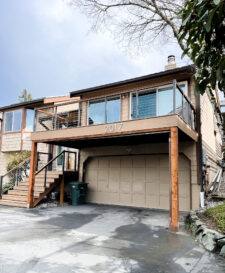
- Elevated decks and stairs — common on homes with a raised first floor, which changes the structural and railing code requirements involved
What a Correct Composite Decking Job Involves
Substructure and Ledger Attachment
The framing underneath is what actually determines whether a deck survives hurricane-force wind, not the decking surface. That means pressure-treated or otherwise rated framing lumber, joist spacing suited to composite board specifications, and a ledger board attached to the house with proper flashing and structural fasteners — not just lag screws driven into siding. On older Old Northeast homes, this step often uncovers existing rot, undersized framing, or outdated attachment methods that need correcting before new decking goes down.
Fastening and Hidden-Clip Systems
Most quality composite decking installs with a hidden fastener system rather than face-screwing, which gives a cleaner look and avoids creating screw holes that can trap water. In a salt-air-influenced environment, the fasteners and clips themselves need to be corrosion-resistant — stainless or coated hardware rated for coastal exposure, not standard-grade fasteners that will corrode faster this close to the bay.
Board Selection and Color
Capped composite boards hold up to intense Florida UV better than uncapped composite or lower-grade formulations, resisting fading and surface degradation over time. Color matters too — darker boards absorb more heat and can get hot underfoot in full-sun yards, which is worth weighing against a shaded lot where that's less of a concern. We walk through this with the specific sun exposure of your yard in mind, not a generic recommendation.
Railing and Code Compliance
Elevated decks and any deck attached to a raised first floor need railing that meets current building code for height and baluster spacing, along with proper guard and stair rail attachment. This is also where a historic neighborhood's character comes in — railing style can often be chosen to complement an older home's look while still meeting code, rather than defaulting to a look that doesn't fit the house.
Quick Checklist Before You Sign a Contract
- Confirm the framing and ledger attachment plan, not just the decking brand being installed
- Ask what fastener and hardware grade is being used, especially if your lot is near the bayou or bay
- Get a straight answer on how tree canopy or shade on your lot affects board choice and airflow planning
- Ask whether the quote includes removal and disposal of any existing deck or just the new build
- Confirm railing height and spacing meet current code, particularly on an elevated deck
- Get separate warranty terms for the decking material and the installation labor in writing
Our Process, Start to Finish
- On-site assessment — we look at the lot's sun and shade exposure, proximity to water, existing structure condition, and any access or setback constraints
- Honest recommendation — board type, color, and layout suited to your specific yard, with the reasoning explained rather than a one-size answer
- Framing and structural work — new or corrected substructure, ledger attachment, and any needed repairs to what's underneath
- Decking installation — hidden fastener system, corrosion-resistant hardware, and board layout planned around the site conditions
- Railing and stairs — built and attached to current code, styled to fit the home
- Final walkthrough — we go over basic maintenance for your specific site conditions, especially if there's canopy coverage to manage
Composite vs. Wood: Cost and Trade-Off Factors
| Factor | What Changes the Decision |
|---|---|
| Upfront material cost | Quality composite typically costs more per square foot than pressure-treated wood at install time |
| Ongoing maintenance | Composite doesn't need staining or sealing; wood in this climate generally needs re-sealing every year or two to hold up |
| Shade and moisture exposure | Wood under heavy canopy shade is more prone to rot and mildew than composite in the same spot |
| UV and sun exposure | Full-sun composite boards resist fading better with capped formulations; uncapped wood grays and can splinter over time |
| Salt air proximity | Hardware and fastener grade matter more than the decking material itself on lots near the bayou or bay |
| Historic home character | Both materials can be styled to fit an older home; the difference is mostly in long-term upkeep, not appearance options |
Why Hiring a Crew That Already Works Old Northeast Matters
A deck built to a manufacturer's generic installation guide will pass inspection almost anywhere. Whether it actually holds up in Old Northeast for the next decade depends on details that spec sheet doesn't cover — how much airflow a substructure needs under a heavily shaded lot, which hardware grade actually resists corrosion on a lot two blocks from the water versus one further inland, how a ledger attachment needs to be detailed on an older home's existing framing. Those are judgment calls made on site, built from having actually worked this neighborhood's mix of tree cover, older construction, and bay proximity before — not decisions a generic install checklist makes for you.
We work in St. Petersburg and this part of Pinellas County regularly, and Old Northeast's particular combination of mature canopy, historic housing stock, and waterfront-adjacent exposure is something we plan for specifically rather than treat as an edge case.
Ready When You Are
If you're considering a new composite deck, replacing an aging wood deck, or adding on to a historic Old Northeast home, it's worth having someone look at your lot's actual sun, shade, and water exposure before you start comparing quotes. We offer free, no-pressure estimates for composite decking projects in Old Northeast and the surrounding St. Petersburg area — use the form below to get a time on the schedule.