 St. Petersburg Window
 Why Siding Wears Out Faster on Kenneth City Homes
Kenneth City sits inland from the Gulf but still well within reach of everything Tampa Bay throws at a house. Summers bring months of intense, direct UV that bakes painted wood and cheaper siding panels until the finish chalks and cracks. Afternoon storms roll in fast and hard, driving rain sideways under loose trim and lap joints that were never meant to handle wind-driven water. And because Pinellas County is a peninsula, salt-laden air moves across the whole county, not just the beaches — it works into fasteners, seams, and any spot where a coating has thinned out.
Add in hurricane-season wind gusts that stress every seam and fastener in a siding system, and you get a climate that is genuinely hard on exterior materials. Homes here don't fail because owners neglected them — they fail because most siding products sold nationally were never engineered with this specific combination of heat, humidity, salt air, and storm wind in mind.
The Housing Stock in Kenneth City
Kenneth City is a small, established Pinellas County community made up largely of ranch-style homes built from the 1950s through the 1970s, with a mix of concrete block construction and wood-frame additions, garages, and second stories added over the decades. On many of these homes, the original wood lap siding or old wood-panel siding on additions has been repainted many times and is now past the point where another paint job solves anything — the boards themselves are cupping, splitting, or soft at the bottom edge.
Because these homes are older, a siding replacement is rarely a simple swap. It usually means finding out what's actually happening behind the old siding — sheathing that's been absorbing moisture for years, flashing that was installed to a lower standard than current code requires, or transitions around windows and roof lines that were never properly sealed in the first place.
Common Failure Points We See
- Bottom courses of siding near grade, where splash-back and moisture sit longest
- Butt joints and corners where old caulk has failed and water has been tracking behind the siding
- Areas around window and door trim where flashing was skipped or undersized
- Wood-frame additions where the wall assembly behind the siding was never designed for this climate
- South- and west-facing walls, which take the most direct UV exposure over the life of the home
What a Correct Siding Replacement Actually Involves
A siding replacement done right is not just pulling off old boards and nailing up new ones. On a Kenneth City home, we treat it as a full exterior wall inspection with a new siding system as the outcome:
- Full tear-off of the existing siding down to the sheathing, so nothing is hidden behind a new install
- Inspection of the sheathing and framing for rot, delamination, or water damage, with any compromised material replaced before anything new goes up
- Installation of a weather-resistive barrier that's rated for this climate, lapped and sealed to shed wind-driven rain
- Correct flashing at every window, door, roofline, and penetration — this is where most siding failures actually start
- Fastening to the manufacturer's high-wind schedule, not the minimum spec, given the storm exposure this area sees
- Factory-finished siding installed with the gaps, clearances, and fastener placement the manufacturer specifies
Skip any one of these steps and you end up with a house that looks new for a season or two and then starts showing the same problems the old siding had — just underneath a fresh face.
Why We Only Install James Hardie Fiber Cement
We standardized on James Hardie siding for every replacement job we do, including in Kenneth City, and we don't install vinyl, LP SmartSide, or other fiber cement brands. That's a deliberate call, not a brand preference. Hardie's HZ product lines are engineered specifically for humid, high-UV, storm-exposed climates like ours — the boards resist moisture swelling, hold up to direct sun without the chalking and fading that plagues cheaper products, and are non-combustible, which matters in a state where wildfire and lightning-strike risk is part of the insurance conversation.
The ColorPlus factory finish is baked on under controlled conditions, which gives it far better UV and color-fade resistance than field-applied paint on wood or vinyl's molded-in color, which can look chalky and dated well before the siding itself wears out. Hardie also backs its products with a strong, transferable warranty — useful if you sell the home before the siding's service life is up, which matters in a market where Pinellas County homes turn over regularly.
Which Hardie Profile Fits Kenneth City's Ranch Homes
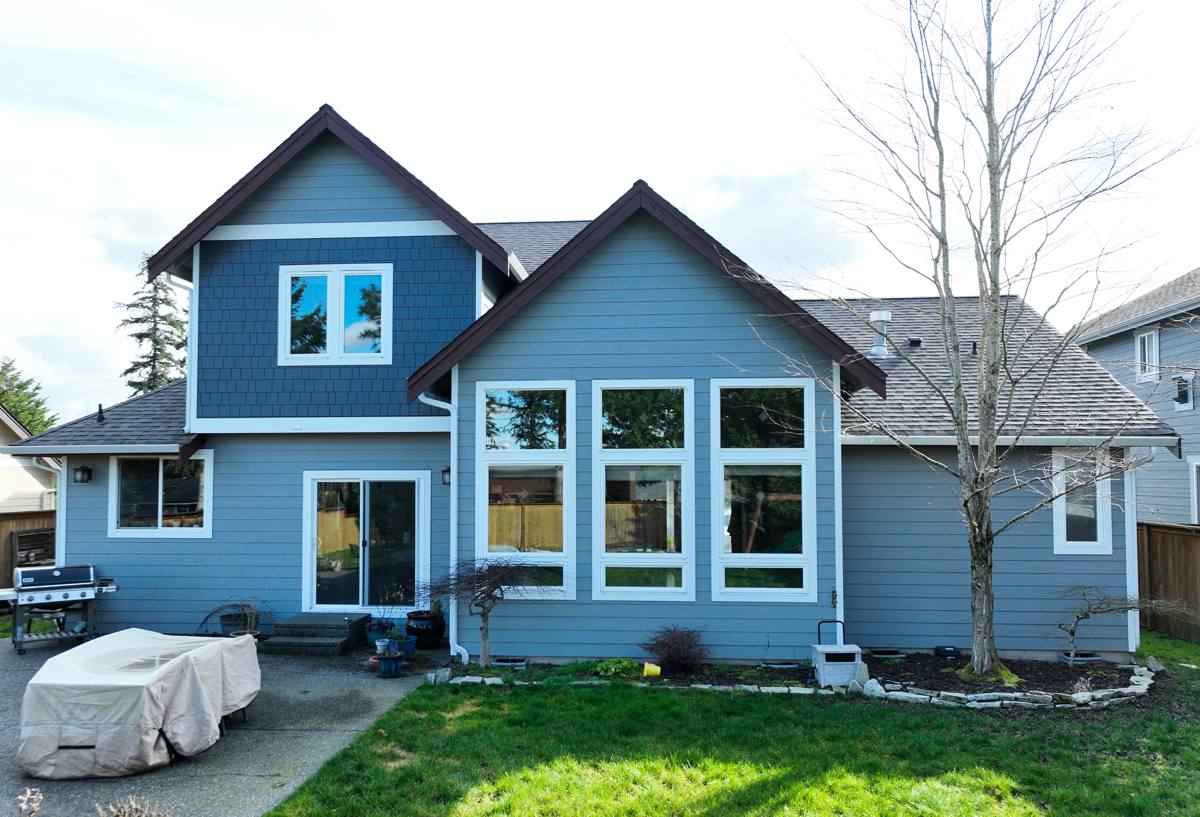
Most homes in this area are single-story ranches with straightforward wall lines, which is exactly where traditional HardiePlank lap siding does its best work — clean horizontal reveal, low-maintenance factory finish, and a profile that matches the mid-century look these homes already have. On gable ends, dormers, or accent walls, some owners choose HardieShingle for a textured look that breaks up a long, flat elevation. Either way, the substrate underneath — the tear-off, sheathing repair, barrier, and flashing — matters more to how the job performs than which profile you pick, which is why we spend more time getting that right than upselling a particular look.
We won't put a product on a Kenneth City home that we know will need attention again in eight or ten years because of how this climate treats it. Hardie, installed correctly, is built for the specific punishment this area delivers.
Our Process, Start to Finish
Every job follows the same sequence, whether it's a full ranch home or a single wood-frame addition:
- On-site assessment — we look at the current siding, check for soft spots, and get a sense of what's likely happening behind it before we quote anything
- Written estimate — a clear scope covering tear-off, any sheathing repair contingencies, siding line and color, and timeline
- Permit pulled — before any tear-off begins, not after
- Tear-off and sheathing inspection — this is when we find out what the old siding was hiding, and we walk you through anything that needs repair before we move forward
- Weather barrier, flashing, and Hardie installation — installed to manufacturer spec and the wind-fastening requirements for this area
- Final walkthrough and inspection — sign-off before we consider the job done
Permitting and Code Considerations Specific to This Area
Siding replacement in Kenneth City requires a permit, and inspections follow the Florida Building Code as applied in Pinellas County. Because this area sits in a wind zone that demands real attention to fastening schedules and water-resistive barrier detailing, an inspector is going to check more than whether the siding looks straight — they're checking that it was installed to hold up in a named storm. A contractor who pulls permits here regularly knows what the inspection will focus on and builds the job to pass the first time, rather than treating the permit as paperwork to get out of the way.
What Siding Replacement Typically Costs
Every home is different, but these are the factors that actually move the number on a Kenneth City job:
| Factor | Why It Matters |
|---|---|
| Home size and wall complexity | More corners, gables, and trim details mean more labor and material per square foot |
| Sheathing condition | Rot or water damage found during tear-off adds repair scope that can't be known until the old siding is off |
| Siding profile chosen | Traditional lap, shingle-style, and panel systems each carry different material and labor costs |
| Trim and accessory work | Fascia, soffit, and window trim often get addressed at the same time to avoid mismatched new-and-old transitions |
| Height and access | Two-story sections or additions with tight access take longer and require more equipment |
We give you an itemized estimate that shows what's driving the price, not a lump number — so you can see exactly what you're paying for before work starts.
Why Hiring a Crew That Already Works Kenneth City Matters
Kenneth City is small enough that a crew working here regularly gets to know the town's permitting office, the typical construction of homes on a given street pattern, and what tends to be hiding behind fifty- and sixty-year-old siding before they even pull the first board. That familiarity shows up in fewer surprises mid-project and a faster permit and inspection process.
It also matters after a storm. A crew based in the St. Petersburg area and already doing regular work in Pinellas County can respond and schedule repairs faster than a company that has to send a crew in from out of the area — which matters when wind or wind-driven rain has compromised siding and you need the wall protected before the next system comes through.
Signs It's Time for Replacement, Not Repair
- Siding that's soft, spongy, or crumbles when pressed near the bottom edge
- Paint that won't hold — bubbling or peeling again within a year or two of repainting
- Visible gaps, warping, or boards pulling away from the wall at seams and corners
- Interior signs like peeling paint, musty smell, or soft drywall on an exterior wall
- Siding that's original to a 1950s–1970s build and has never been fully replaced
- Visible storm damage — cracked, missing, or displaced sections after high wind
If your Kenneth City home is showing any of these signs, we're happy to take a look and give you a straight answer about whether you're looking at repair or full replacement. Reach out for a free, no-pressure estimate — we'll walk the exterior with you, explain what we find, and give you a clear, itemized quote with no obligation.