 St. Petersburg Window
 Why Kenneth City Siding Takes a Different Kind of Beating
Kenneth City sits inland from Tampa Bay but still lives inside the same weather system as the rest of Pinellas County — hurricane-force wind gusts, months of intense UV exposure, wind-driven rain that finds every gap in a wall system, and a steady drift of salt air off the Gulf and the Bay. None of those factors are unique to waterfront property. They reach every neighborhood in this part of Florida, including the older, established streets that make up Kenneth City.
What that means for siding is simple: a product and installation method that would be fine in a drier, calmer climate often isn't fine here. Siding on a Kenneth City home has to shed wind-driven rain instead of absorbing it, hold its shape and fasteners through repeated wind loading, and resist UV breakdown on painted or coated surfaces year after year without a winter off. Salt-laden air adds a slow corrosive pressure on fasteners and trim that inland Midwest installers rarely have to think about.
We install siding for homes throughout this part of St. Petersburg, and Kenneth City comes with its own mix of housing stock — mid-century block homes with wood or old fiberboard siding on gables and additions, ranch homes with siding-clad exteriors added over the decades, and newer infill construction. Each of those needs to be evaluated on its own, but the climate demands are the same for all of them.
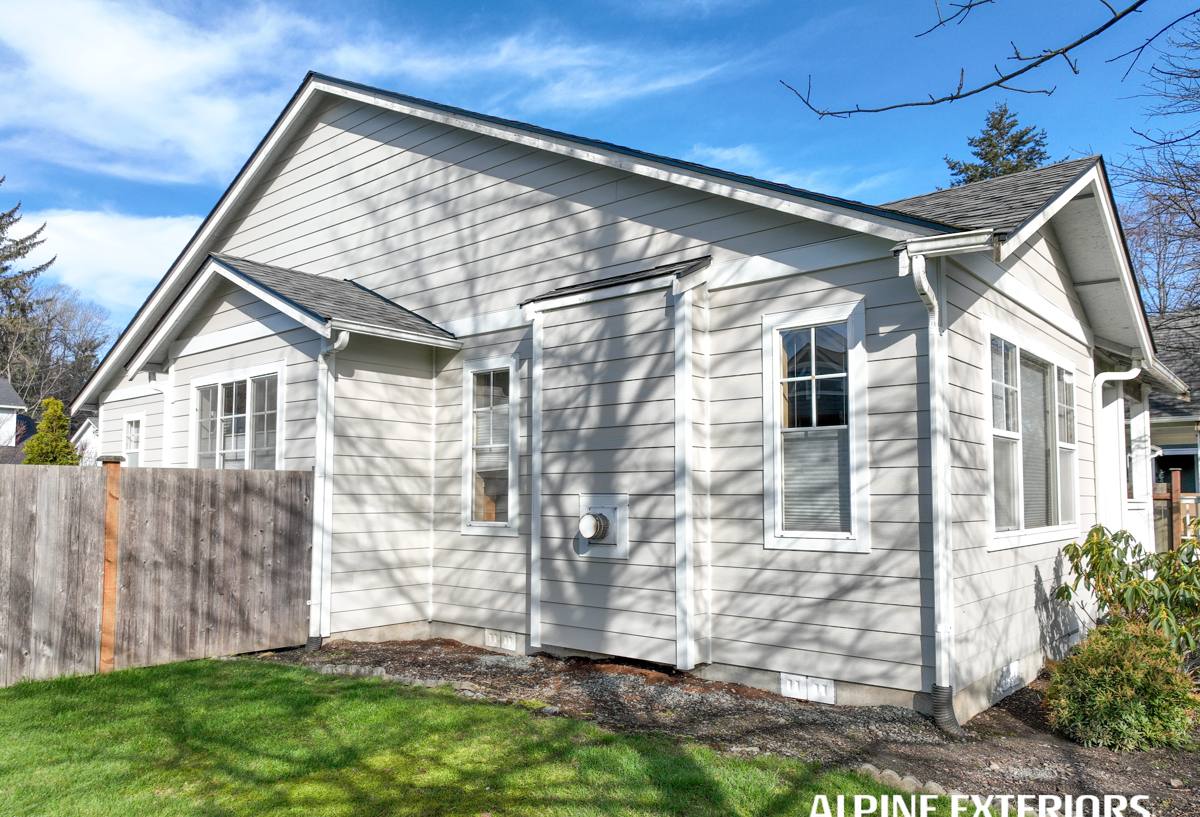
Signs Your Kenneth City Home's Siding Is Losing the Fight
Siding failure in this climate rarely happens all at once. It shows up gradually, and homeowners often don't notice until a repair is bigger than it needed to be. Common signs we see on inspections in this area include:
- Soft or spongy spots when you press on the siding, especially near the bottom courses and around window and door trim — a sign moisture has gotten behind the surface
- Visible swelling, delamination, or a "puffy" edge on panel seams, most common on older wood-based composite products
- Paint that's chalking, peeling, or fading unevenly, particularly on south- and west-facing walls that take the most direct sun
- Rust streaks below nail heads or fasteners, a sign the fastener itself is corroding from salt air exposure
- Gaps opening up at butt joints and corners, letting wind-driven rain track behind the cladding during storms
- Visible warping or cupping of individual boards or panels after repeated wet-dry cycles
None of these are cosmetic issues you can leave indefinitely. Once moisture gets behind siding, it's working on the sheathing, framing, and insulation behind it — problems that cost far more to fix than the siding itself.
Why We Install Only James Hardie Fiber Cement
We get asked why we don't offer vinyl, LP SmartSide, or other engineered wood products, and it's a fair question — those products work for plenty of homes in plenty of climates. Our answer is specific to this climate, not a knock on every product that isn't Hardie.
Vinyl siding is lightweight and affordable, but it softens and can distort in sustained heat, and in a hurricane-wind environment it's more prone to cracking and blow-off at the edges than a rigid fiber cement product. Engineered wood siding products have improved a lot over the years, but they're still wood-based at the core — meaning any breach in the factory coating or a caulk joint that fails gives moisture a path into a material that's still vulnerable to swelling and rot over time. Given the wind-driven rain this area sees, that's a maintenance burden we'd rather not put on a homeowner's plate.
James Hardie fiber cement is cement, sand, and cellulose fiber. It doesn't absorb water the way wood-based products do, it's non-combustible, and it holds its shape and paint line in heat and humidity far better over the long run. Hardie's HZ5 product line is engineered specifically for climates like ours — hot, humid, and hurricane-exposed — and the factory-applied ColorPlus finish is baked on and warrantied against fading and chipping in a way that field-applied paint can't match. It costs more up front than vinyl. It holds up longer with less maintenance, which is the trade we think is worth making on a Florida exterior.
What a Correct Installation Actually Involves
Siding is only as good as the assembly it's part of. The panel or plank is the visible piece, but the parts nobody sees are what determine whether the wall stays dry for the next twenty years.
Weather-Resistive Barrier and Flashing
Before any siding goes up, the wall needs a properly lapped weather-resistive barrier, and every penetration — windows, doors, hose bibs, electrical — needs correctly integrated flashing so water sheds outward instead of tracking behind the barrier. This is the step that's invisible once the job is done and the step most responsible for whether a wall stays dry.
Fastening to Manufacturer Spec
James Hardie publishes specific fastening patterns, nail types, and embedment depth for high-wind zones, and Pinellas County falls under wind-load requirements that make this non-negotiable. Under-driven or over-driven fasteners, wrong nail spacing, or the wrong fastener material all shorten the life of the installation regardless of how good the siding itself is.
Clearances and Joint Treatment
Hardie siding needs proper clearance from grade, roofing, and decks, and butt joints need to be treated correctly — caulked and painted per spec, or engineered with H-channel or flashed joints, depending on the detail. Sealing these joints wrong is one of the most common corner-cuts we see on repair calls, and it's usually invisible until moisture damage shows up.
Trim and Corner Detailing
Corners, window and door trim, and transitions to roofing or masonry are where most water intrusion actually starts. These details take more time to do right than the flat field of siding does, which is exactly why they're where corners get cut on rushed jobs.
How We Handle a Kenneth City Siding Project
- On-site inspection. We walk the full exterior, check for existing moisture damage, evaluate the sheathing underneath where accessible, and identify problem areas — gable ends, window returns, low-clearance sections.
- Written scope and estimate. You get a clear breakdown of what's being replaced, what Hardie product and profile is recommended, and what the job costs — no vague allowances.
- Tear-off and substrate check. Old siding comes off and we inspect the sheathing and framing underneath. Any rot or damage gets addressed before new siding goes up — covering over a compromised substrate defeats the purpose of the new siding.
- Weather barrier and flashing installation. This is the step that determines long-term performance, done to manufacturer and code spec before a single piece of siding is hung.
- Hardie installation to spec. Correct fastener pattern, clearances, and joint treatment, installed by a crew that installs this product regularly rather than occasionally.
- Trim, caulking, and final detail work. The finish details that separate a clean, weathertight job from one that looks fine on day one and fails at year three.
- Final walkthrough. We go over the finished work with you before calling the job done.
What Drives Siding Cost in This Area
| Factor | Why It Matters Here |
|---|---|
| Home size and wall complexity | More corners, gables, and dormers mean more trim and flashing detail work, which is where labor time concentrates |
| Substrate condition | Older Kenneth City homes with existing wood or fiberboard siding sometimes need sheathing repair once the old material is removed |
| Hardie product line and profile | Lap siding, panel siding, and shingle-style profiles carry different material and labor costs |
| Color and finish choice | Factory ColorPlus finishes carry a warranty advantage over field-painted options and price accordingly |
| Access and site conditions | Fencing, landscaping, and setback distances affect scaffolding and staging time |
| Wind zone fastening requirements | Pinellas County's wind-load standards can affect fastener count and pattern, which affects labor |
We don't publish a flat per-square-foot number because these factors move the price meaningfully from one house to the next — which is why every quote starts with an actual look at your home, not a phone estimate.
Choosing the Right Hardie Product for This Climate
James Hardie makes several siding profiles — HardiePlank lap siding, HardiePanel vertical siding, HardieShingle for a shake look — all available in the HZ5 formulation engineered for our humidity and storm exposure. ColorPlus finishes come in a range of factory colors with a coordinated caulk and touch-up system, which matters in coastal-influenced air where a mismatched field-applied repaint stands out fast. For homes where matching an existing look matters — replacing damaged sections, working around masonry, or matching a neighborhood's general character — we walk through profile and color options as part of the estimate rather than assuming one answer fits every house.
Why Hiring a Crew That Already Works This Area Matters
Siding installers who mostly work inland or in milder climates don't always treat flashing, fastening, and joint sealing with the seriousness those details need here. A crew that regularly works Pinellas County jobs already knows the wind-load requirements, has seen how wind-driven rain actually finds gaps during a real storm, and understands why a corner cut on a mild-climate job becomes a moisture problem on a house two miles from the Bay. That local pattern recognition is worth more than it sounds like on paper — it's the difference between a crew following a checklist and a crew that knows why the checklist exists.
A Quick Checklist Before You Hire Anyone for Siding Work
- Ask what siding product they install and why — and whether they install more than one brand or line
- Ask how they handle weather-resistive barrier and flashing at windows, doors, and penetrations
- Confirm they follow manufacturer fastening specs for high-wind zones, not a generic pattern
- Ask how they handle substrate repair if rot or moisture damage is found once old siding comes off
- Get the estimate in writing with the specific product, profile, and color spelled out
- Ask about warranty coverage — both the manufacturer's product warranty and the installer's labor warranty
If you're weighing a siding project for a Kenneth City home, we're happy to take a look and walk you through what your house actually needs — no pressure, no generic quote pulled out of the air. Reach out for a free estimate using the form below.