 St. Petersburg Window
 Composite Decking in Kenneth City: Built for This Climate, Not Just This Season
Kenneth City sits in the middle of Pinellas County, close enough to Tampa Bay and the Gulf that homes here deal with the same coastal stresses as the barrier islands, even without direct beach frontage. Salt-laden air moves inland on sea breezes, afternoon thunderstorms roll through nearly every summer day, and the sun sits high and strong for most of the year. A deck built without that reality in mind will show it within a couple of seasons — fading, warping, soft spots, or fasteners that back out and start squeaking. Composite decking, installed correctly, is one of the few outdoor flooring systems that can genuinely hold up to Pinellas County's conditions decade after decade. But "composite" isn't a single product with one performance level, and installation matters as much as material choice. This page covers what a composite deck actually needs to survive and look good in Kenneth City, what a correct installation involves, and how our process works from first call to finished deck.
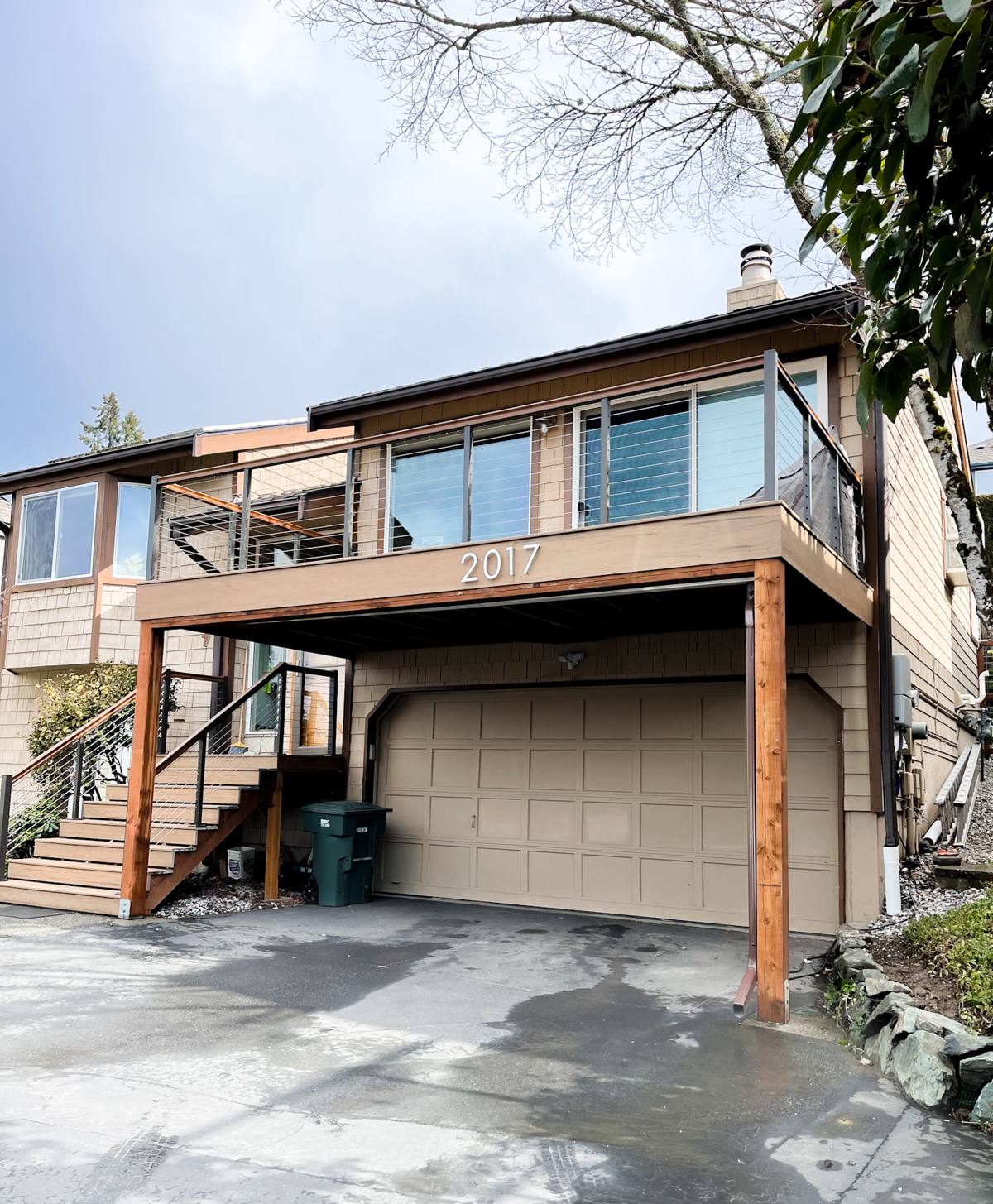
Why Kenneth City's Climate Is Harder on Decking Than People Expect
Homeowners moving from other parts of the country are often surprised at how quickly outdoor materials degrade here. It isn't one factor — it's several working together, all year round.
Heat and UV Exposure
Central Florida gets some of the most intense, sustained UV exposure in the continental U.S. Deck boards facing south or west can reach surface temperatures well above the surrounding air on a clear afternoon. Over years, that UV load breaks down pigments and surface resins in lower-grade materials, leading to fading, chalking, or a rough, sun-baked texture underfoot.
Wind-Driven Rain and Humidity
Pinellas County doesn't just get rain — it gets rain pushed sideways by gusty storm fronts and, in a bad year, tropical systems. That means water gets driven into gaps, fastener holes, and end grain that a calmer climate would never test. Combined with year-round humidity, any material or fastener that isn't genuinely moisture-tolerant will start to fail from the inside out, often before it shows visible damage on the surface.
Salt Air
Even a few miles from open water, salt aerosol travels on the wind and settles on everything outdoors. It accelerates corrosion in fasteners, framing hardware, and railing components. A deck built with standard hardware store screws and brackets will corrode faster in Kenneth City than the same deck built forty miles inland.
Storm and Hurricane Wind Loads
Decks attached to the house, plus any railings, stairs, and ledger connections, need to handle real wind uplift and lateral load, not just support foot traffic. This isn't optional engineering — it's the difference between a deck that stays put through a tropical storm and one that becomes a hazard.
What a Correctly Built Composite Deck Needs
Composite decking gets marketed as "low maintenance" and "weatherproof," which is true in a general sense but glosses over the details that actually determine how it performs here. A deck that's going to hold up in Kenneth City needs attention in five specific areas.
Substructure and Framing
The composite boards are only as good as what's underneath them. Pressure-treated framing rated for ground contact where applicable, proper joist spacing for the specific composite product (composite typically needs tighter joist spacing than wood), and adequate airflow underneath to prevent moisture buildup are all non-negotiable in a humid coastal climate.
Fasteners and Hardware
This is where a lot of decks quietly fail years before the boards themselves would. Standard galvanized fasteners corrode faster near the coast. We use stainless steel or coated fasteners rated for coastal and treated-lumber contact, along with hidden fastener clip systems compatible with the specific composite brand being installed.
Ledger Attachment and Flashing
Where the deck attaches to the house is the single most common failure point on any deck, composite or wood. Proper flashing keeps wind-driven rain from working its way behind the ledger board and into the home's structure — a slow, hidden problem that can go unnoticed for years.
Board Spacing and Drainage
Composite boards need consistent gapping for both drainage and thermal expansion. Florida's daily heat swings mean boards installed too tight will buckle; boards spaced too loose trap debris and moisture. Getting this right on the first pass is what separates a deck that lies flat for fifteen years from one that starts cupping in three.
Railing and Guard Systems
Railings take direct wind load and also need to resist salt-air corrosion at every post connection and baluster fastener. We spec railing hardware the same way we spec deck fasteners — for the coast, not just for code minimums.
Composite vs. Wood vs. PVC: An Honest Comparison for This Climate
Every decking material has trade-offs. Here's how they generally compare for a Kenneth City home, based on maintenance burden, moisture behavior, and long-term cost — not brand marketing.
| Material | Maintenance | Moisture/Humidity Behavior | Typical Lifespan Here | Upfront Cost |
|---|---|---|---|---|
| Pressure-Treated Wood | Annual sealing/staining needed | Prone to warping, splitting, and rot if maintenance lapses | 10-15 years with upkeep | Lowest |
| Composite (mid-grade) | Occasional cleaning, no sealing | Stable if capped and properly fastened | 20-25+ years | Moderate |
| Composite (premium capped) | Minimal — periodic cleaning only | Excellent moisture and UV resistance | 25-30+ years | Higher |
| PVC/Cellular | Minimal | Very stable, but can run hotter underfoot in direct sun | 25-30+ years | Higher |
For most Kenneth City homeowners, a capped composite board strikes the right balance: it resists the UV fading and moisture intrusion that punish uncapped or lower-grade boards, without the premium price ceiling of full PVC systems. We'll walk through actual brand and line options during your estimate rather than push one product for every project — the right choice depends on your budget, sun exposure, and how the deck will be used.
Our Installation Process
A composite deck is a multi-step project, and skipping steps is exactly how decks end up with the problems described above. Here's how we approach it.
- On-site assessment. We look at sun exposure, drainage patterns, existing structure (if replacing an old deck), and how the space connects to your home before recommending anything.
- Design and material selection. We talk through board colors, railing styles, and layout, and match the composite line to your budget and how the deck will actually be used.
- Permitting and engineering. Deck permits in Pinellas County typically require plans showing footing sizes, framing spans, and attachment details. We handle this so the structure is built to code, not just to look right.
- Demolition (if applicable). Old decking, railings, and any compromised framing are removed and hauled off.
- Framing and substructure. Footings, posts, beams, and joists are built to the spacing and hardware standards the composite manufacturer requires — not generic wood-deck spacing.
- Flashing and ledger work. Proper flashing is installed anywhere the deck meets the house, before a single board goes down.
- Board and railing installation. Boards are fastened with the correct hidden-clip or approved fastener system, with spacing set for Florida's heat swings.
- Final walkthrough. We check railings, stair connections, and board fit with you before calling the job done.
Sizing Up the Cost Factors
Composite deck pricing varies by size, framing complexity, and board tier, so we don't quote sight-unseen numbers on a page like this. What we can tell you is what actually moves the price:
- Deck size and shape — multi-level decks and curves cost more than a simple rectangle
- Framing condition — replacing an existing structure versus building on solid, code-compliant framing
- Height above grade — taller decks need more substantial footings, posts, and stair runs
- Board tier — entry-level capped composite versus premium capped or PVC lines
- Railing style — basic composite or aluminum rail versus glass or cable systems
- Site access — how easily materials and equipment can reach the build area
We'll break all of this down clearly during your in-person estimate, with no pressure to upsize the project beyond what actually fits your home and budget.
Why It Matters That We Already Work in Kenneth City
Building codes, permitting requirements, and wind-load standards vary by jurisdiction across Pinellas County, and a crew that pulls permits and inspections in this area regularly moves through that process without guesswork or delays. Just as important, we've seen firsthand how the local combination of sun, salt air, and storm season treats different composite products and fastener systems over time — not from a spec sheet, but from work we've done and maintained relationships with homeowners in this area. That local track record shapes what we recommend and what we steer away from.
A Quick Pre-Project Checklist
Before you commit to a composite deck project, it's worth thinking through these points:
- How much direct afternoon sun will the deck get, and does that affect board color or heat underfoot?
- Is the deck replacing an existing structure, or is this new construction requiring full footings?
- Do you need permit and HOA approval, and has that been factored into the timeline?
- What railing style fits both your home's look and your privacy or safety needs?
- Are there drainage or grading issues near the house that should be addressed before building?
- What's your realistic maintenance appetite — occasional cleaning, or none at all?
Working through these questions upfront avoids change orders and surprises once the project is underway.
Maintenance: What Composite Actually Requires
"Low maintenance" doesn't mean "no maintenance." A properly installed composite deck in Kenneth City still benefits from periodic attention:
- Rinse or wash the surface a few times a year to clear pollen, salt residue, and organic debris before it stains
- Check railing posts and stair connections annually for any loosening, especially after storm season
- Keep gutters and downspouts near the deck clear so runoff isn't dumping directly onto boards or framing
- Trim back landscaping that shades boards constantly, which can slow drying and encourage mildew
None of this is heavy work, but it's the difference between a deck that looks new for two decades and one that just gets by.
Ready to Talk Through Your Deck?
If you're weighing a composite deck for your Kenneth City home, we're happy to walk your property, talk through material options honestly, and give you a clear, no-pressure estimate. Use the form below to get started.