 St. Petersburg Window
 Deck Replacement Built for the Realities of Crescent Lake
Crescent Lake is one of St. Petersburg's older, more established neighborhoods, and a lot of the decks we get called out to inspect there are original to the house or were built decades ago under very different building standards. A deck that looked solid five years ago can be hiding rot in the framing, corroded fasteners, or connections that were never rated for Florida wind loads in the first place. When it's time to stop patching and start over, a proper deck replacement is about more than swapping old boards for new ones — it's about rebuilding the structure so it can actually handle what Pinellas County weather throws at it year after year.
This page covers what deck replacement specifically looks like for homes in and around Crescent Lake: why the local climate is hard on outdoor structures, what a correctly built deck needs to include, how we approach the job, and what to look for in a contractor before you sign anything.
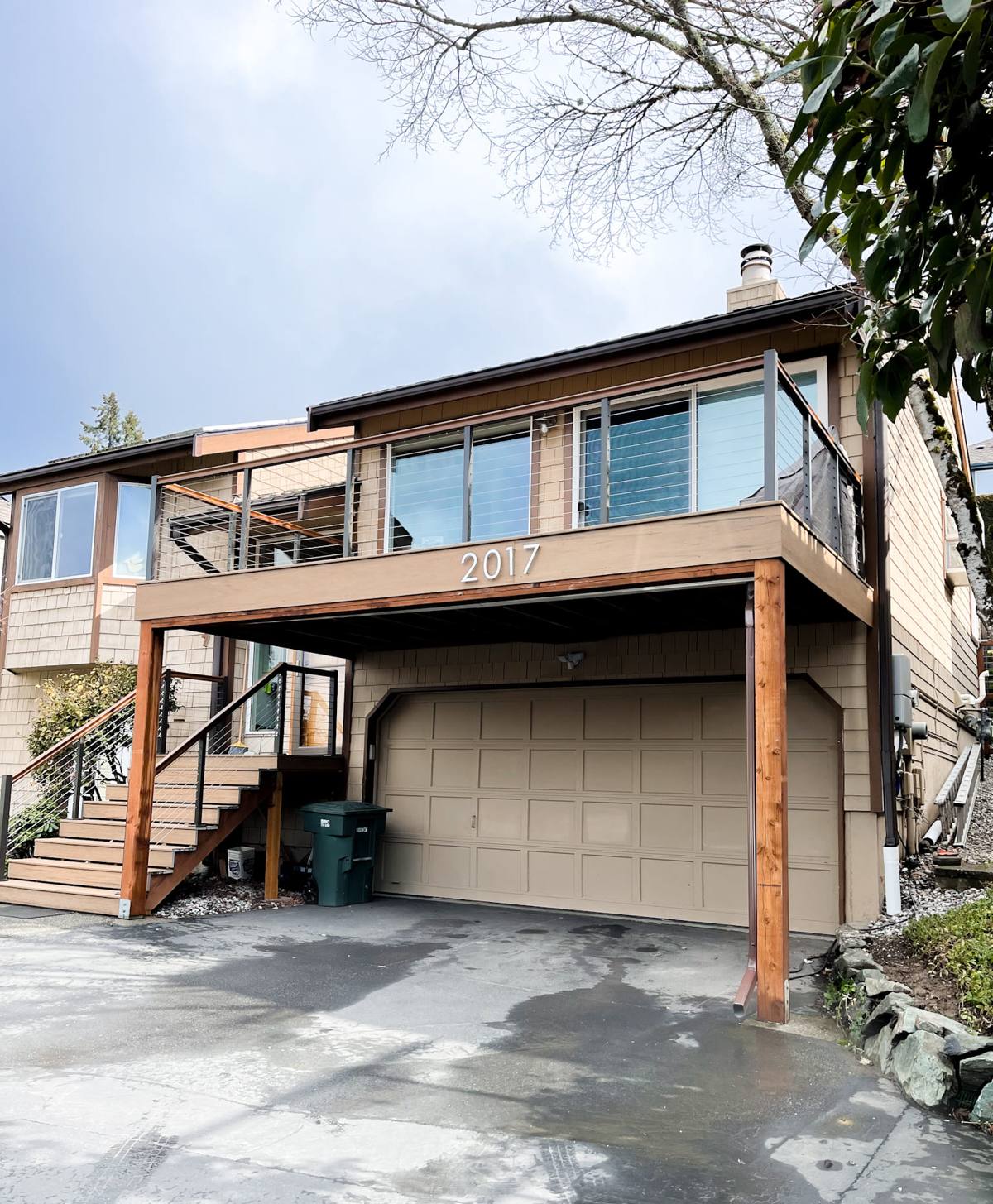
Why Decks Near Crescent Lake Wear Out Faster Than You'd Expect
St. Petersburg sits close enough to Tampa Bay and the Gulf that even inland neighborhoods like Crescent Lake feel the effects of coastal weather. A few specific factors do most of the damage to residential decks here:
Intense, Year-Round UV
Florida's sun exposure is relentless compared to most of the country, and it doesn't really let up in winter the way it does farther north. UV breaks down the lignin in wood fibers, causing graying, splintering, and surface checking, and it degrades the resins and pigments in composite decking over time too. Boards that face west or get full afternoon sun age noticeably faster than shaded sections of the same deck.
Wind-Driven Rain and Humidity
Pinellas County's rainy season brings storms that don't just fall straight down — wind-driven rain gets pushed sideways into board seams, ledger connections, and railing posts. Combined with our high year-round humidity, this keeps wood moisture content elevated far more often than in drier climates, which is exactly the condition that promotes rot and fungal decay in structural framing.
Hurricane-Force Wind Loads
Even outside of a direct hurricane hit, tropical storm systems and seasonal squalls put real lateral and uplift stress on an attached deck. Ledger attachment, post-to-beam connections, and railing anchoring all have to be built to hold up under wind, not just support foot traffic on a calm day — and a lot of older decks in this area were never engineered with that in mind.
Salt Air
St. Petersburg's proximity to the water means salt-laden air travels further inland than people expect. Salt accelerates corrosion in fasteners, joist hangers, and any exposed metal hardware. A deck that looks fine on the surface can have badly corroded connectors doing the actual structural work underneath.
Signs Your Crescent Lake Deck Needs Replacing, Not Just Repairing
Repairs make sense when the problem is isolated. Replacement makes sense when the issues point to the structure itself. Here's what tells us which situation we're looking at:
- Soft, spongy, or spring-y decking boards in multiple areas, not just one or two spots
- Visible rot, splitting, or insect damage at the ledger board where the deck meets the house
- Rusted, corroded, or missing joist hangers and structural screws
- Wobbly railings or posts that move when pushed — a safety issue, not a cosmetic one
- Deck is more than 15-20 years old and has never had the substructure inspected
- Gaps between boards that have closed up or widened unevenly, signaling movement in the frame
- Standing water or poor drainage underneath the deck after rain
- No visible flashing where the ledger attaches to the house — a common source of hidden water intrusion
If you're only seeing one of these on a deck that's otherwise sound, a repair may genuinely be enough. If several apply, replacement is usually the more honest recommendation — and often more cost-effective than paying for repeated repairs on a frame that's past its service life.
What a Correct Deck Replacement Actually Involves
A deck replacement done right in this climate isn't just cosmetic. It starts from the ground up:
Ledger Board and Flashing
The ledger board — where the deck attaches to your house — is the single most common point of failure on older decks, and it's also the connection that has to resist the most force. A correct installation uses proper structural fasteners (not just nails), flashing that directs water away from the house rather than behind the ledger, and in many cases a code-required space or membrane to prevent moisture from getting trapped against the siding.
Footings and Post Bases
Footings need to be sized and depth-set to local frost and soil requirements (frost isn't the concern here that it is up north, but bearing capacity and drainage still matter), and post bases should hold the post above grade so it isn't sitting in standing water after every storm.
Framing and Fasteners
Given how much salt air and humidity we deal with here, hardware matters more than a lot of homeowners realize. Structural connectors, joist hangers, and fasteners should be corrosion-resistant and rated for exterior or coastal use — not standard interior-grade hardware that will start rusting within a couple of seasons.
Railings and Guards
Railings need to meet current code height and baluster spacing requirements, and the posts need to be through-bolted into the framing, not just screwed to the rim joist. This is one of the most common shortcuts on older decks, and it's a real safety issue.
Choosing Decking Material for This Climate
There's no single "best" decking material — it depends on your budget, how much maintenance you're willing to keep up with, and how the deck is used. Here's how the common options actually perform under St. Petersburg conditions:
| Material | UV / Sun Performance | Moisture Handling | Maintenance | Typical Lifespan Here |
|---|---|---|---|---|
| Pressure-Treated Wood | Fades and grays without regular sealing | Needs consistent sealing to resist rot in high humidity | Annual cleaning and re-sealing recommended | 10-15 years with upkeep |
| Composite (Capped) | Strong fade resistance; cap layer blocks most UV damage | Doesn't absorb water like wood; resists rot | Occasional washing, no sealing | 25-30+ years |
| Composite (Uncapped) | More prone to fading and surface wear over time | Can absorb moisture at cut edges if not sealed properly | More upkeep than capped composite | 15-20 years |
| PVC / Cellular Vinyl | Excellent UV resistance | Fully moisture-resistant, doesn't rot | Low; occasional cleaning | 25-30+ years |
Our general standard is that if a homeowner is choosing wood for a Crescent Lake deck, we're upfront about the maintenance commitment that goes with it — sealing on a real schedule, not "when it starts looking rough." For homeowners who want to install it and not think about it again for two decades, capped composite or PVC decking is usually the more honest long-term recommendation given how hard our sun and humidity are on exposed wood.
Permits, Codes, and Wind Ratings in Pinellas County
Deck replacement in St. Petersburg generally requires a permit, and inspections are part of the process — for good reason, since this is structural work attached directly to your home. Permitted work also has to meet current Florida Building Code wind load requirements, which is a meaningfully higher standard than what a lot of older decks in this area were originally built to. Skipping the permit might save time up front, but it can create real problems at resale, with insurance claims after storm damage, or if the work doesn't hold up and needs to be redone anyway.
Our Deck Replacement Process
- On-site assessment — We inspect the existing deck's framing, ledger, footings, and hardware to determine actual condition, not just surface appearance.
- Honest recommendation — We'll tell you plainly if repair is a reasonable option, or if replacement is the more responsible call.
- Design and material selection — We walk through decking material, railing style, and layout options based on your budget and how you use the space.
- Permitting — We handle the permit application and coordinate required inspections with the city or county.
- Removal and structural rebuild — Full tear-out of the old deck, followed by new footings, framing, ledger attachment, and hardware built to current code.
- Decking, railing, and finish work — Installation of the decking surface and railing system, with attention to fastening patterns and drainage.
- Final inspection and walkthrough — Passed inspection, then a walkthrough with you before we consider the job done.
What Affects the Cost of a Deck Replacement
Every deck is different, so we don't quote pricing without seeing the site — but these are the main factors that move the number up or down:
| Factor | Why It Matters |
|---|---|
| Deck size and shape | More square footage and complex angles mean more material and labor |
| Decking material chosen | Pressure-treated wood costs less upfront than composite or PVC, which cost more but need less long-term maintenance |
| Height and structural complexity | Multi-level decks or decks with significant grade change require more framing and footings |
| Railing style and code requirements | Cable, glass, or custom railing systems cost more than standard baluster railing |
| Condition of the existing substructure | Hidden rot or corrosion found during tear-out can add scope once the old deck is opened up |
| Permitting and inspection requirements | Larger or more complex builds may require additional engineering documentation |
We'll always walk you through where your money is actually going before work starts, so there are no surprises on the invoice.
Why Hiring a Crew That Already Works in Crescent Lake Matters
Deck replacement isn't a one-size-fits-all job, and a contractor who mostly works inland or in a different climate zone may not think twice about details that matter a lot here — like specifying corrosion-resistant hardware because of salt air, or making sure ledger flashing is actually keeping wind-driven rain out of the wall assembly. A crew that regularly works St. Petersburg and Pinellas County neighborhoods like Crescent Lake already knows the local permitting process, understands the wind load requirements that apply to this area, and has seen firsthand what happens when a deck is built to a lower standard than the climate demands. That local experience shows up in fewer surprises during the build and a deck that's actually built to last here, not just built to look good on installation day.
If your deck is showing its age or you're just not sure whether it needs repair or a full replacement, we're happy to take a look. Fill out the form below for a free, no-pressure estimate — we'll give you a straight answer about what your deck actually needs.