 St. Petersburg Window
 Building Decks for a Shore Acres Climate
Shore Acres sits close to Tampa Bay, and that proximity shapes almost every decision that goes into a deck built here. Salt-laden air moves in off the water and settles on every exposed surface, hardware included. Pinellas County sun is relentless nearly twelve months a year, which breaks down finishes and dries out wood fiber faster than it would inland. Summer storms bring sideways, wind-driven rain that finds its way into any gap in flashing or fastening. And when a named storm tracks through the bay, a deck attached to the house has to hold under real uplift and lateral load, not just support foot traffic on a calm afternoon. A deck built the same way you'd build one in a dry inland climate will show problems in Shore Acres years before it should — soft boards, rusted-out fasteners, railings that work loose, ledger connections that trap moisture against the house.
None of that means a deck can't last here. It means the material choices, the fastening details, and the framing decisions have to account for the environment from day one instead of getting fixed later.
What Shore Acres Homes Specifically Need From a Deck
Proximity to the water
Many homes in this neighborhood sit close enough to the bay that salt spray and humidity are part of daily conditions, not an occasional coastal storm event. That pushes us toward corrosion-resistant hardware and decking materials that don't rely on a surface coating alone to keep water out.
Sun exposure
Uncovered decks in this part of Florida take direct UV for most of the day, most of the year. Wood grays and checks faster, composite boards without UV-stable capping can fade unevenly, and dark-colored materials get hot enough underfoot to matter for bare feet and pets.
Wind-driven rain and flooding
Some Shore Acres streets are low-lying and see periodic tidal or storm-related water intrusion. Deck footings, post bases, and any structural lumber near grade need to be detailed so standing water doesn't sit against wood or trap moisture where it can't dry out.
Choosing the Right Decking Material
There's no single "best" decking material for every Shore Acres home — it depends on budget, how much upkeep you're willing to do, and whether the deck is covered or fully exposed. Here's how the common options actually compare in this climate:
| Material | Salt/moisture behavior | Maintenance | Typical lifespan here |
|---|---|---|---|
| Pressure-treated pine | Needs sealing to resist swelling and checking; hardware corrosion is the weak point | Annual cleaning and re-sealing recommended | 10–15 years with upkeep |
| Tropical hardwood (e.g., ipe-type species) | Naturally dense and rot-resistant; still needs oil to hold color | Periodic oiling for appearance, otherwise low | 20-plus years |
| Capped composite | Excellent — the cap sheds moisture and resists salt staining | Occasional washing, no sealing or staining | 25-plus years, backed by manufacturer warranty |
| PVC decking | Fully synthetic, doesn't absorb moisture at all | Lowest maintenance of the group | 25-plus years |
We steer most waterfront-adjacent Shore Acres projects toward capped composite or PVC for open, sun-exposed decks, simply because they don't depend on a homeowner staying on top of a sealing schedule to hold up. Real wood still has a place — especially where a homeowner wants a specific look or is building a smaller, shaded deck — but we're upfront that it comes with a maintenance commitment the synthetic products don't.
A note on uncapped composite
Older-generation composite boards without a full polymer cap can absorb moisture at cut ends and develop mold or discoloration faster in humid coastal air. We don't install uncapped composite on open decks in this area — it's a maintenance and warranty trade-off we'd rather be honest about upfront than deal with as a callback in three years.
Framing and Fasteners: Where Coastal Decks Actually Fail
Most deck failures we get called out to inspect in this part of Pinellas County aren't decking-board problems — they're framing and hardware problems hidden underneath. The boards look fine; the structure underneath doesn't.
- Fasteners: Standard galvanized screws and nails corrode faster in salt air than most homeowners expect. We use stainless steel or high-grade coated fasteners rated for coastal/ACQ-treated lumber contact.
- Joist hangers and structural connectors: These need the same corrosion resistance as the fasteners holding them — a rusted hanger is a hidden structural problem, not a cosmetic one.
- Ledger board attachment: Where the deck ties into the house is the single most common point of water intrusion and structural failure nationwide. We flash it properly so wind-driven rain can't get behind the ledger and into the house framing.
- Post bases: Posts set directly in or near standing water rot from the bottom up. We keep structural wood off grade with proper post bases and, where flooding is a real possibility, plan post height and footing depth accordingly.
Railings, Wind Load, and Code Compliance
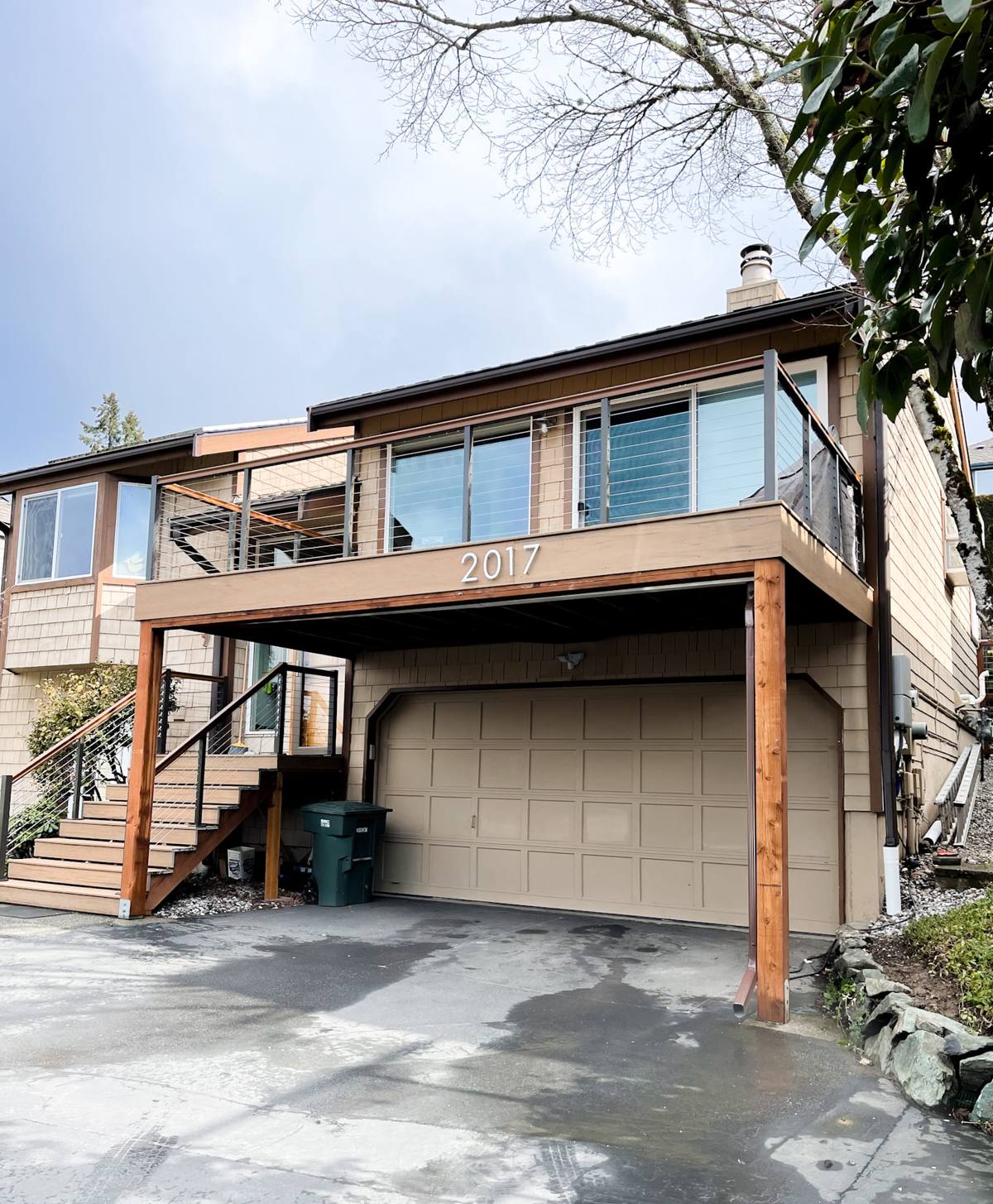
Florida's building code takes wind seriously, and Pinellas County enforcement reflects that. A deck railing isn't just a design element — it's a structural component that has to resist lateral loads without flexing loose over time, and it has to meet height and baluster-spacing requirements that inspectors check. For elevated decks, guardrail height and the structural attachment of the rail posts to the framing matter more here than in a low-wind inland market, because hurricane-force gusts put real lateral force on anything standing upright and exposed. We build railing posts to tie into the deck framing itself, not just the fascia board, so the whole system moves as one unit under load instead of the railing being the first thing to fail in a storm.
Permits and Local Considerations for Shore Acres
Deck additions in St. Petersburg typically require a building permit, and homes in low-lying, flood-prone sections of Shore Acres can have additional requirements tied to flood zone designation — things like minimum elevation for structural attachments or restrictions near the water. We pull the required permits, and where a property's flood zone status affects the build, we work through that before framing starts rather than discovering it mid-project. This protects you at resale, too — an unpermitted deck is a common point of friction in home inspections and insurance claims after a storm.
How Our Process Works
- On-site assessment: We look at the attachment point to the house, existing grade and drainage, sun exposure, and what you actually want to use the deck for.
- Material and layout discussion: We walk through decking material trade-offs honestly, based on your budget and how much maintenance you want to take on.
- Permit and design: We handle the permit application and confirm any flood zone or setback requirements that apply to the property.
- Framing: Structural framing goes in first, with corrosion-resistant hardware and proper ledger flashing before a single deck board is installed.
- Decking, railing, and finish work: Boards, railings, and any stairs or lighting go in last, with fastening details built for salt exposure and UV.
- Final walkthrough: We go over care instructions specific to whatever material you chose, and what to watch for after big storms.
Maintaining a Deck Near the Water
Whatever material you choose, a little seasonal attention goes a long way in this climate. Here's what we tell every Shore Acres homeowner:
- Rinse salt residue and debris off the deck surface periodically, especially after storms with onshore wind.
- Keep gutters and nearby drainage clear so water isn't sheeting directly onto the deck or pooling against posts.
- Inspect railings for looseness once or twice a year — a wobble at the post base is easier to fix early than after it's worked the connection loose.
- If you have wood decking, stay on your sealing or oiling schedule; skipping a year in this sun and humidity shows up fast.
- After any major storm, walk the deck and check fastener heads, railing attachment, and the ledger area at the house for signs of new gaps or water staining.
Why Hire a Crew That Already Works in Shore Acres
A deck contractor who mostly works inland markets isn't necessarily going to think about salt-air corrosion, flood zone permitting, or hurricane wind load on a railing system unless they're prompted to. Those aren't universal deck-building concerns — they're specific to homes sitting near Tampa Bay in Pinellas County. Working this neighborhood regularly means we already know which fastener grades hold up, how local permitting handles flood zone properties, and what kind of framing detail actually keeps a deck tight through a Florida storm season instead of just looking good on installation day. That local pattern recognition is worth more than it sounds like on paper — it's the difference between a deck that needs attention every year and one that quietly does its job for two decades.
If you're planning a new deck or replacing one that's showing its age, we're happy to take a look and talk through what makes sense for your home and budget. Use the form below to request a free, no-pressure estimate.