 St. Petersburg Window
 Crescent Lake's Older Housing Stock Meets a Tough Climate
Crescent Lake is one of St. Petersburg's more established neighborhoods, built out around the lake and park that give it its name, with a housing mix that runs from early-to-mid-20th-century bungalows to homes updated over the decades. That combination — older wall construction paired with a mature tree canopy — creates siding problems you don't see as much in newer subdivisions. Original wood siding and trim on these homes has often been patched, painted, and repainted for generations. Later additions or re-sides sometimes used products that were never really engineered for Pinellas County's climate in the first place.
That climate doesn't do the work-in-progress any favors. St. Petersburg sits exposed to hurricane-force wind events, sustained high humidity, intense year-round UV, wind-driven rain that gets pushed sideways into wall assemblies, and salt-laden air moving in off Tampa Bay and the Gulf. Every one of those factors attacks siding differently — UV breaks down pigments and surface coatings, humidity and wind-driven rain find their way behind poorly flashed seams, and salt air accelerates corrosion on fasteners and trim hardware. A siding product and installation method that hold up fine in a drier or milder climate can fail here years ahead of schedule.
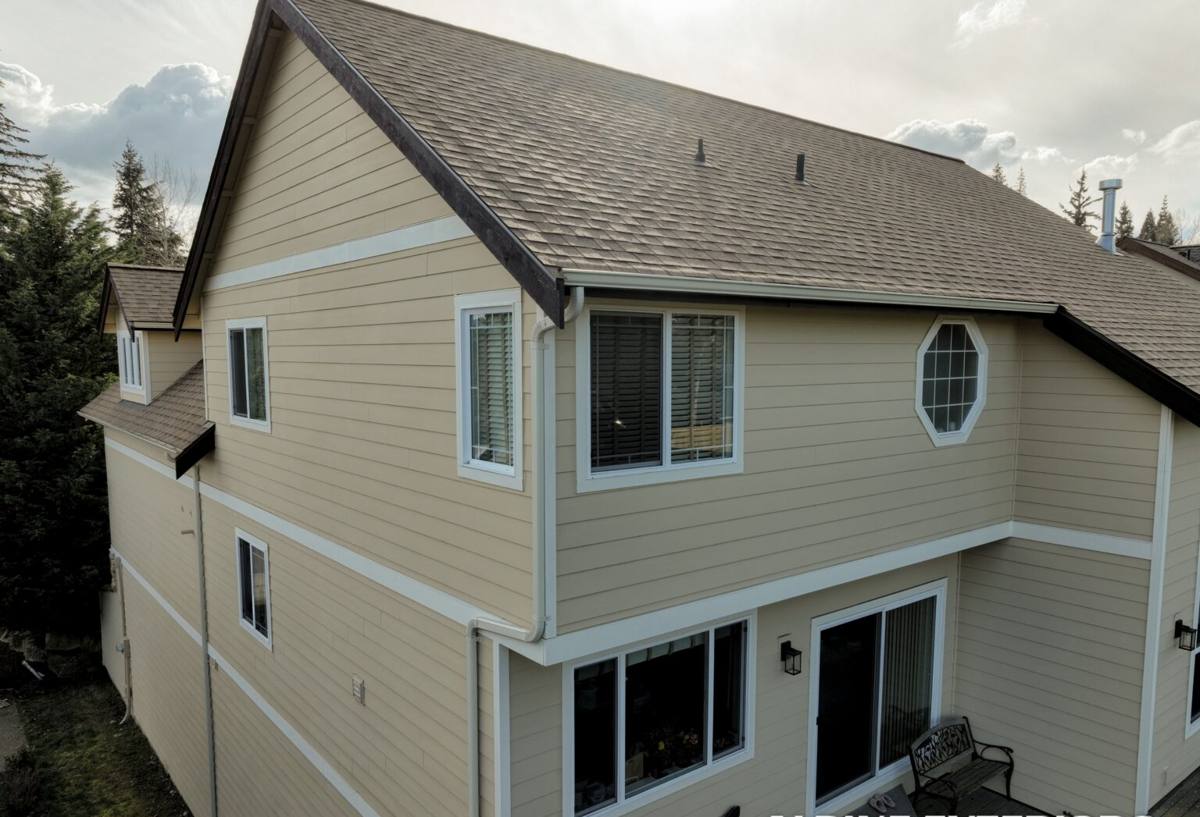
Why We Install Only James Hardie Fiber Cement
We standardized on James Hardie siding exclusively — we don't install vinyl, LP SmartSide, Cemplank, Allura, or unfinished wood siding. That's not a marketing position, it's a practical one built around what actually holds up on Gulf Coast homes over time.
What Hardie Gets Right for This Climate
- Non-combustible material: fiber cement doesn't feed a fire the way wood-based products can.
- Climate-engineered formulation: Hardie produces an HZ5 fiber cement mix specifically for warm, humid regions like ours, versus the HZ10 formulation built for colder, freeze-thaw climates up north. A Crescent Lake home should be getting the HZ5 product line, not a generic version.
- ColorPlus factory finish: baked-on, UV-cured color applied under controlled conditions, which resists the fading and peeling that field-applied paint struggles with under constant Florida sun.
- Dimensional stability: fiber cement doesn't swell, warp, or rot the way wood and some engineered wood products can when they take on repeated moisture.
- Transferable warranty: a real factor for resale in an established neighborhood where buyers ask about exterior condition and history.
We're upfront that other products have their own selling points — lighter weight, lower material cost, easier field cutting. But we've made the call that the trade-offs (moisture sensitivity, coating longevity, fastener corrosion in salt air, warranty structure) aren't worth it on homes that have to survive decades of this specific climate. Hardie is what we put on houses, full stop.
What a Correct James Hardie Installation Actually Involves
Fiber cement siding is only as good as the installation underneath it. Most siding failures we get called out to inspect trace back to installation shortcuts, not the product itself.
The Parts Homeowners Don't See
- Weather-resistant barrier (WRB): a continuous moisture barrier behind the siding, lapped correctly so water sheds outward instead of tracking behind the wall.
- Flashing at every penetration: windows, doors, hose bibs, vents, and anywhere trim meets the wall need proper flashing, not just caulk. Caulk is a backup, not the primary defense.
- Correct fastening: Hardie specifies fastener type, spacing, and placement based on wind zone and exposure. In a coastal wind zone, that pattern is not optional — it's what keeps panels attached in a named storm.
- Manufacturer-specified gaps: panel-to-panel and panel-to-trim gaps sized correctly and sealed with the right sealant, so the siding can expand and contract without trapping water.
- Field-cut edge sealing: any cut edge of Hardie siding needs to be sealed per manufacturer instructions, or that cut edge becomes the first place moisture gets in.
None of this is visible once the job is finished and painted-looking — which is exactly why it gets skipped by crews trying to move fast. It's also exactly what determines whether the siding is still doing its job in fifteen years or needs remediation in five.
Our Process for a Crescent Lake Siding Project
- On-site assessment: we inspect the existing siding, trim, and — where accessible — the sheathing underneath for rot, prior water intrusion, or deferred issues that need addressing before new siding goes on.
- Scope and material plan: we specify the correct Hardie product line (lap siding, panel, or shingle-style, depending on the home's style) in the HZ5 formulation, plus trim and accessories.
- Tear-off and substrate repair: old siding comes off, damaged sheathing gets replaced, and we don't re-side over rot or moisture-damaged framing.
- Weather barrier and flashing installation: a continuous WRB and properly lapped flashing go in before a single piece of siding is hung.
- Hardie installation to spec: fastening pattern, gaps, and sealants follow Hardie's published installation guidelines for our wind exposure.
- Trim, caulking, and touch-up: factory-finished ColorPlus product needs minimal field paint, but seams, cuts, and trim joints get finished correctly.
- Final walkthrough: we go over the completed work with the homeowner before calling the job done.
What Drives Cost on a Home Like This
Every Crescent Lake home is different, so we don't quote sight-unseen — but these are the factors that most often move a project's cost up or down:
| Factor | Why It Matters |
|---|---|
| Substrate condition | Rot or moisture damage found during tear-off means added repair before siding can go on — common in older homes with a history of prior siding or roof leaks. |
| Home size and stories | More square footage and multi-story walls mean more material, more labor hours, and often more staging/access equipment. |
| Trim and architectural detail | Bungalow-style homes often have more trim, window casings, and roofline detail than a plain modern facade, which adds labor time. |
| Site access | Mature landscaping, tree canopy, and tighter lot lines common in established neighborhoods can slow staging and material handling. |
| Color and profile choice | Standard ColorPlus colors and common lap profiles are more cost-efficient than custom colors or specialty shingle-style siding. |
| Tear-off vs. layering | Removing old siding down to the sheathing costs more up front than re-siding over an existing layer, but it's the only way to actually inspect and fix what's underneath — we don't recommend skipping it. |
Signs Your Crescent Lake Home's Siding Needs Attention
- Visible cracking, buckling, or separation at panel seams and trim joints
- Paint that's peeling, chalking, or fading unevenly across the same wall
- Soft or spongy spots when you press on the siding, especially near the bottom courses
- Staining or streaking that keeps coming back after cleaning, especially near roof lines or downspouts
- Visible gaps or missing caulk at corners, window trim, and penetrations
- Rising cooling bills alongside noticeably warmer interior walls
- Fastener heads showing through paint or rust bleeding through the surface
Any one of these on its own isn't necessarily an emergency, but several together usually mean moisture has already found a way behind the siding.
Why Local Experience in This Neighborhood Matters
A siding crew that regularly works in Crescent Lake and similar St. Petersburg neighborhoods knows things a crew from outside the area has to learn on your job. That includes how to navigate tighter, established lots with mature landscaping without damaging what's already there, how older wall assemblies in homes from this era were typically built so surprises during tear-off don't derail the schedule, and what Pinellas County and City of St. Petersburg permitting and inspection actually require for an exterior siding replacement. It also means understanding local wind exposure categories well enough to install to the correct fastening spec rather than a generic one pulled from a manual written for a different region.
None of that shows up in a sales pitch, but it shows up in whether the job passes inspection the first time and whether the siding is still performing correctly after the next hurricane season.
Living With Hardie Siding Long-Term in This Climate
Fiber cement is genuinely low-maintenance compared to wood, but "low-maintenance" isn't "no-maintenance" on the Gulf Coast. Rinsing salt residue and pollen buildup off the siding periodically, keeping gutters and downspouts clear so water doesn't sheet down the wall face, and doing a quick annual look at caulking around windows and trim will extend the life of both the siding and the finish. Because ColorPlus color is baked on at the factory, most homeowners go years without needing to repaint at all — a real advantage in a climate where UV exposure is constant almost twelve months a year.
If your Crescent Lake home's siding is showing its age, or you're planning ahead rather than waiting for a problem, we're happy to take a look and walk you through what we're seeing — no pressure, no obligation. Reach out below for a free estimate.