 St. Petersburg Window
 Deck Building in Coquina Key: A Different Job Than Inland Florida
Coquina Key sits on filled land laced with canals on the south side of St. Petersburg, and that waterfront setting changes what a deck has to survive. A deck built to a generic spec sheet might look fine for a year or two, then start showing corroded fasteners, cupped boards, or a wobbly railing right around the time you'd expect it to still look new. Building decks for this neighborhood means designing for salt air drifting off the canals, intense year-round Florida sun, wind-driven rain, and the outside chance of hurricane-force wind loads on an exposed structure attached to your house.
This page covers what we actually do differently for a Coquina Key deck project — the materials, the fasteners, the framing details, and the process — so you know what "correct" looks like before you hire anyone.
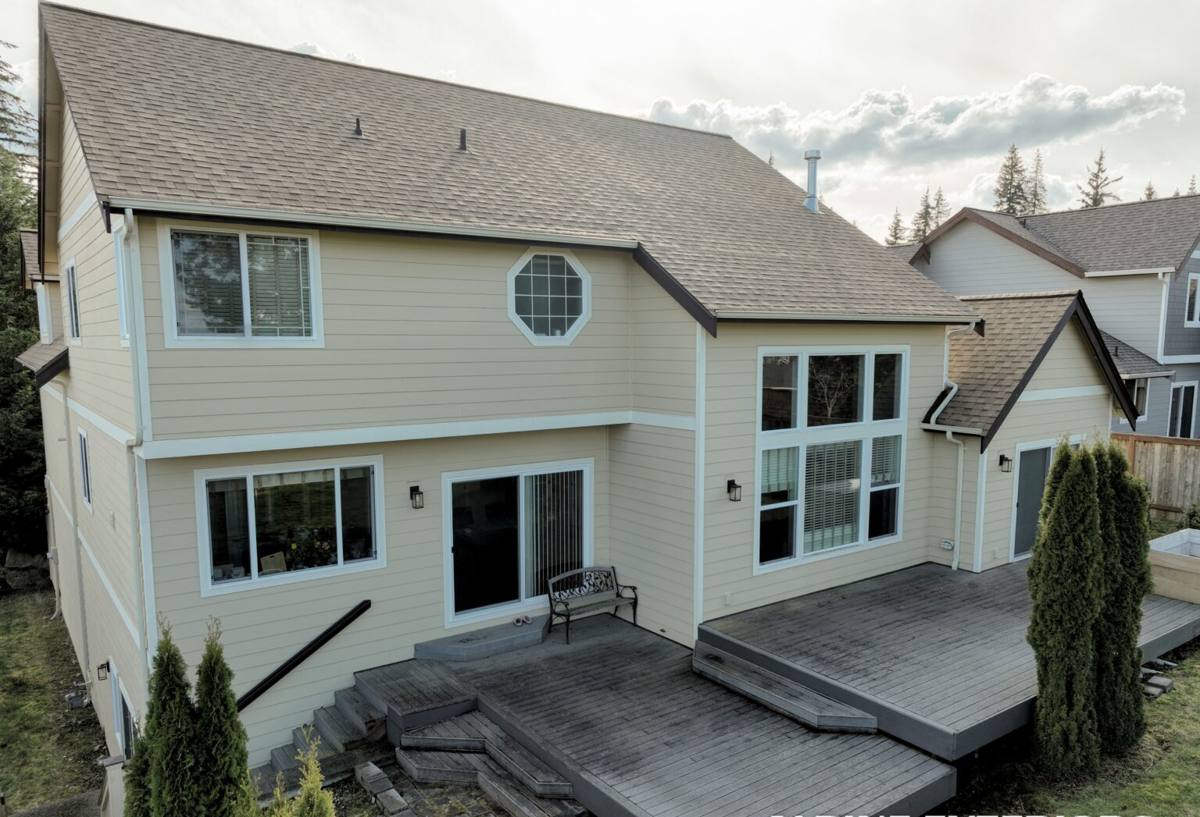
What Coquina Key's Climate Does to an Outdoor Deck
Every deck in Pinellas County deals with sun and rain. A canal-front or near-canal deck in Coquina Key deals with all of that plus near-constant salt-laden air, which accelerates corrosion on anything metal faster than a few miles inland. Left unaddressed, these factors show up in predictable ways:
- Salt air corrosion — untreated or poorly rated fasteners, brackets, and hardware rust and weaken years ahead of schedule, even under a deck that looks fine on top.
- UV breakdown — year-round sun fades and dries out wood fiber, and lower-grade composite decking can chalk or fade unevenly without UV-stable capping.
- Wind-driven rain — rain doesn't just fall straight down here; it drives sideways into ledger connections, railing posts, and any gap in flashing, which is where rot and hidden decay start.
- Wind uplift — an open deck structure, especially anything elevated or attached at the roofline, needs connections engineered for real wind load, not just gravity.
- High humidity — constant moisture in the air slows drying time after rain, which matters for wood choice and ventilation under the deck.
None of this means a deck can't hold up in Coquina Key — it means the design and material choices need to account for it from the start, not get fixed after the fact.
Choosing Decking Material for a Canal-Side Property
There's no single "best" decking material for every home — it depends on your budget, how close you are to the water, how much maintenance you want to do, and how long you plan to stay in the house. Here's how the common options actually compare for this environment:
| Material | How It Handles Salt Air & Sun | Maintenance | Rough Cost Position |
|---|---|---|---|
| Pressure-treated wood | Holds up well if sealed and re-sealed on schedule; untreated fasteners nearby corrode faster than the wood decays | Highest — annual cleaning and re-sealing recommended in this climate | Lowest upfront cost |
| Capped composite | UV-stable capping resists fading and doesn't absorb moisture like wood; performs well near canals | Low — periodic washing, no sealing or staining | Mid to upper-mid |
| Uncapped composite (older style) | Can absorb moisture and mildew in humid, salt-air conditions faster than capped versions | Moderate — more prone to staining over time | Mid |
| PVC decking | Fully synthetic, doesn't absorb moisture, very stable in sun and salt exposure | Low | Higher |
| Tropical hardwood | Naturally dense and rot-resistant but still needs oiling to prevent graying from UV | Moderate to high | Higher |
Our standard recommendation for anything within a block or two of Coquina Key's canals is capped composite or PVC decking on a properly sealed and elevated frame — it removes the moisture-absorption weak point that salt air and humidity exploit fastest. Wood is still a legitimate, lower-cost choice for homeowners who commit to the maintenance schedule.
Framing and Fasteners Matter More Than the Decking Surface
Homeowners often focus on the decking boards and overlook the frame underneath — but the frame and fasteners are what actually fail first in salt air, and they're invisible once the deck is built. This is where a lot of corner-cutting happens because it's the part nobody inspects casually.
| Hardware Type | Suitability Near Coquina Key Canals |
|---|---|
| Standard galvanized fasteners | Adequate inland; not our standard for waterfront-adjacent decks — corrosion risk climbs closer to the water |
| Hot-dip galvanized, heavier coating | Better performance, reasonable mid-tier choice |
| Stainless steel (305/316 grade) | Our preferred standard for ledger bolts, joist hangers, and structural connectors in this area |
| Coated structural screws rated for ACQ-treated lumber | Required for decking screws regardless of fastener grade elsewhere, since treated lumber chemically corrodes mismatched metals |
What a Correctly Built Deck Actually Involves
A deck is a structure attached to your house, sitting on footings, carrying live load — it's not a carpentry project you can shortcut and expect to hold up through a Florida summer of storms. A correct build includes:
- Proper footings sized and depth-set for local soil conditions, not guessed at.
- Ledger board flashing that actually sheds wind-driven rain away from your house's wall assembly instead of trapping moisture behind the ledger — one of the most common failure points on older or DIY-built decks.
- Joist hangers and structural connectors rated for the load and matched to a corrosion class appropriate for the site.
- Hurricane-rated post-to-beam and beam-to-footing connections where wind uplift is a real design factor, not an afterthought.
- Proper board spacing and ventilation underneath, so moisture doesn't get trapped between the ground and the decking.
- Code-compliant railing height and baluster spacing, especially important on any elevated or waterfront deck.
Skipping any one of these doesn't usually show up on day one. It shows up in year three or four as a soft spot, a rusted-through hanger, or a railing that's gone loose — right when you'd assume a deck built recently should still be solid.
Our Deck Building Process
We run the same disciplined process on every Coquina Key project, sized to the scope of the job:
- Site visit and design conversation — we walk the property, talk through how you'll use the deck, and note anything specific to the lot (grade, drainage, proximity to canal or water line, existing structures it needs to tie into).
- Material selection — we walk you through the honest tradeoffs between wood, composite, and PVC for your budget and how close you are to the water.
- Permitting — we handle the permit application and any required plan documentation with the City of St. Petersburg before work starts. Decks are permitted structures; skipping this step is a real liability if you ever sell the home.
- Framing and structural work — footings, ledger, joists, and beams installed to code with corrosion-appropriate hardware.
- Decking, railing, and finish work — surface material installed per manufacturer spec (composite and PVC products have specific gapping and fastening requirements that affect warranty coverage).
- Inspection — final city inspection scheduled and passed before we consider the job done.
- Walkthrough — we go over basic care and what to watch for so the deck actually reaches its expected lifespan.
Permits and Flood Zone Considerations for Coquina Key
Because much of Coquina Key is low-lying, filled, canal-adjacent land, flood zone designation and elevation requirements can affect how a deck is engineered — particularly for anything attached near ground level close to a seawall or canal bank. Pinellas County and City of St. Petersburg permitting will flag any of this during plan review, which is exactly why permits shouldn't be skipped even for a modest deck replacement. If your property has a dock or sits directly on a canal, we'll flag any additional considerations specific to that setup during the site visit rather than assuming a one-size answer applies.
Maintaining a Deck in a Waterfront, High-Salt Environment
Whatever material you choose, a little regular attention goes a long way in this climate. A practical maintenance routine looks like this:
- Rinse salt residue and debris off the deck surface periodically, especially after storms with onshore wind.
- Check fastener heads and visible hardware once or twice a year for early rust staining.
- For wood decks, re-seal or re-stain on the schedule the product calls for — don't wait until it visibly grays.
- Keep gutters and downspouts near the deck clear so runoff isn't dumping extra water onto the structure.
- Trim back vegetation that keeps the deck surface shaded and damp longer than it should be.
- After any named storm, do a quick visual check of railings and ledger connections before assuming everything's fine.
Why It Matters to Hire a Crew That Already Works Coquina Key
A contractor who mostly builds decks inland doesn't necessarily think about salt-rated hardware, ledger flashing sequencing for wind-driven rain, or how close a footing can go to a seawall. A crew that already works Coquina Key and the surrounding St. Petersburg waterfront neighborhoods has already run into these specifics — the permitting process with the city, the way this soil and water table behave, and which material and hardware combinations actually last here versus which ones look fine on the showroom floor. That local, repeated experience is the difference between a deck that needs attention in year three and one that's still tight and solid a decade in.
Get a Straight Answer for Your Coquina Key Deck Project
If you're planning a new deck, a replacement, or a repair on a Coquina Key property, we're happy to come take a look and give you an honest read on what your home needs — no pressure, no upsell. Fill out the form below to schedule a free estimate.