 St. Petersburg Window
 Why Snell Isle Decks Wear Out Faster Than Most
Snell Isle sits close to the water, and that changes how a deck ages. Homes here catch salt-laden air off the bay almost every day, and that salt settles into wood fibers, fastener heads, and any metal hardware holding the structure together. Add in Florida's intense, nearly year-round UV exposure, and you get a one-two punch: sun breaks down the wood's surface and any finish on it, while salt air accelerates corrosion underneath. Afternoon humidity keeps boards damp longer than they'd stay in a drier climate, which is exactly the condition rot and mildew need to take hold.
Then there's storm season. Wind-driven rain during a tropical system doesn't just fall on a deck — it gets forced sideways and upward into every joint, seam, and ledger connection. Hurricane-force gusts also put real lateral stress on railings, posts, and the ledger board that ties the deck to the house. None of this means a Snell Isle deck is doomed to fail early. It means the repair work has to account for these conditions specifically, not just patch what's visibly broken.
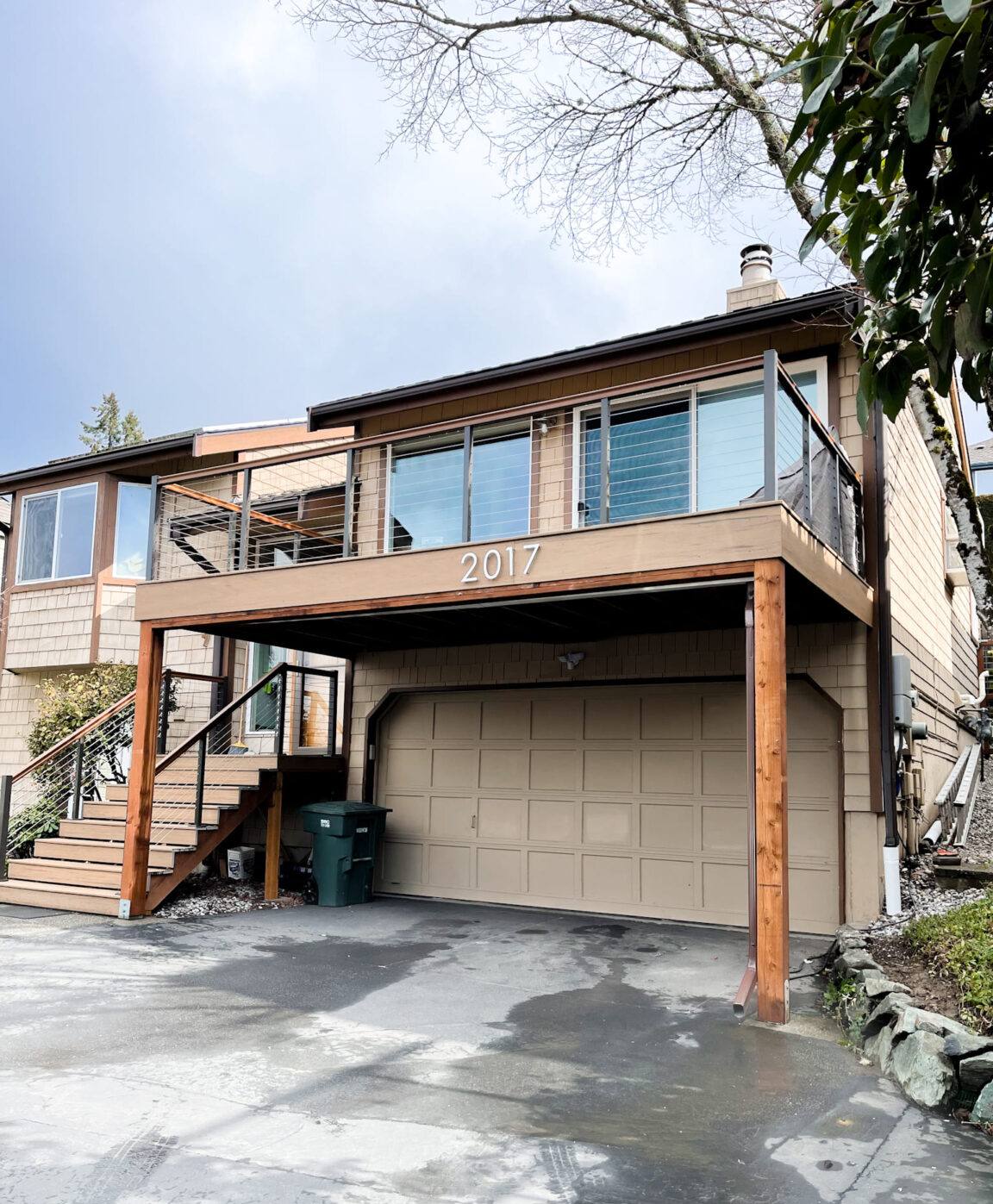
Signs Your Deck Needs Repair, Not Just a Cosmetic Fix
Most deck problems start small and stay hidden under a coat of stain or a rug. By the time damage is obvious, the structural parts underneath have often been compromised for a while. Here's what we look for, and what you can check yourself before calling anyone:
- Boards that feel soft, spongy, or slightly bouncy when you walk across them
- Rust streaks bleeding out from screw or nail heads
- A visible gap or dark staining where the deck meets the house (the ledger board)
- Railings or posts that wiggle more than a firm push should allow
- Screws that have backed out or popped above the surface
- Persistent gray, black, or green discoloration that doesn't scrub off
- Stair stringers that flex or feel different from step to step
- Widening gaps between boards, especially on older wood decks
Any one of these can be minor. Two or three together, especially near the ledger or stairs, usually means the damage has moved past the surface.
What a Correct Repair Actually Involves
A deck repair that only replaces the boards you can see is a cosmetic fix, not a real repair. The framing underneath is what actually holds the structure up, and it's usually the part that fails first in this climate because it's the last thing anyone inspects.
The Framing and Ledger Connection
The ledger board — where the deck attaches to the house — is the single most important connection on most decks, and it's also the spot most prone to hidden rot because water tends to collect right where the deck meets the siding or wall. A correct repair means pulling back decking near the ledger, checking the flashing that's supposed to shed water away from that joint, and confirming the ledger fasteners and connection hardware are still sound. If the ledger flashing has failed, replacing boards without fixing that will just let the same rot come back.
Fasteners and Hardware
Standard hardware doesn't hold up well this close to salt air. We use fasteners and structural connectors rated for coastal or salt-exposed environments — typically stainless steel or heavy hot-dip galvanized coatings, depending on the application — rather than whatever fastener happens to match the board size. This costs a little more up front and saves you from doing the same repair again in three years because the screws rusted out from the inside.
Matching or Upgrading the Decking Material
When we replace damaged boards, we look at whether it makes sense to match the existing material or use the repair as a chance to upgrade a section to something more weather-resistant. Pressure-treated lumber is the most common and least expensive option, but it needs regular sealing to perform well here. Composite decking costs more up front and doesn't need staining, but it has its own installation requirements — proper spacing for expansion, correct fastening systems, and adequate airflow underneath — and it won't visually match older wood sections perfectly. Neither is wrong; the right call depends on your budget, how much of the deck needs work, and how long you plan to stay in the home.
Our Deck Repair Process
- Full inspection first. We check the ledger connection, support posts, footings, joists, and railings before touching a single surface board — this is where hidden damage actually shows up.
- Sound test the frame. We probe and press on framing members to find soft wood that isn't visible from the top or underneath at a glance.
- Fix structure before surface. Any compromised joists, ledger sections, posts, or footings get repaired or replaced first. Surface boards go back on last.
- Address the water source. If rot was caused by failed flashing, poor drainage, or a gap that lets water pool, we correct that cause — not just the symptom.
- Rebuild with coastal-appropriate hardware. Fasteners and connectors are chosen for salt-air exposure, not just for holding the boards down today.
- Final check for level, secure railings, and safe stairs. A repair isn't finished until the whole structure feels solid, not just the section we worked on.
Repair vs. Replace: What Actually Tips the Decision
Not every damaged deck needs to be torn out. But when the framing itself is compromised across most of the structure, patch repairs stop making financial sense. Here's how we walk homeowners through that decision:
| Factor | Leans Toward Repair | Leans Toward Replacement |
|---|---|---|
| Ledger board condition | Solid, flashing intact | Rotted or flashing failed in multiple spots |
| Extent of damage | Isolated boards or one section | Damage spread across most of the deck |
| Support posts/footings | Sound, no movement or settling | Cracked, shifted, or undersized for current use |
| Age of the structure | Under 10–12 years, built to a reasonable standard | Original construction quality was already marginal |
| Budget and timeline | Want the lowest-cost fix now | Willing to invest once rather than repeat repairs |
Cost ranges for deck work vary widely depending on square footage, framing access, and material choice, so we won't quote a number here that wouldn't hold up once we've actually seen the deck. What we can say honestly: a repair limited to boards and fasteners is far less expensive than one that involves reframing or refooting, which is exactly why catching problems early matters.
Permits and Code Considerations
Structural deck repair — anything touching framing, footings, the ledger connection, or railings — typically falls under permitting requirements in St. Petersburg and Pinellas County, even when the work is a repair rather than new construction. Purely cosmetic work, like refinishing or swapping a handful of surface boards with no structural changes, often doesn't require the same paperwork, but the line between the two isn't always obvious from the outside. Part of doing this correctly is knowing which repairs need to be permitted and inspected, and handling that process instead of leaving it for the homeowner to sort out later.
Why a Crew That Already Works in Snell Isle Matters
A contractor who works this neighborhood regularly already knows what to expect before pulling the first board. Waterfront and near-canal properties tend to show a specific pattern of wear — rot concentrated on the water-facing side, corrosion that's worse near the ground on lower decks, and finishes that fail faster than the same product would inland. That's not guesswork after you've seen it repeatedly; it's the difference between diagnosing a deck in twenty minutes versus tearing into sections that turn out to be fine while missing the one that isn't.
Local familiarity also means fewer surprises mid-project — knowing what Pinellas County inspectors expect to see, what tends to trip up an inspection near the water, and how to sequence work around a property that may have limited access or tight side-yard clearance. None of that shows up in a repair estimate, but it shows up in how smoothly the work actually goes.
Keeping a Repaired Deck Sound Longer
A good repair buys you time, but the same conditions that caused the original damage don't go away. A few habits make a real difference here:
- Reseal or restain wood decking on a regular schedule — UV exposure this intense breaks down finishes faster than in most parts of the country
- Rinse off salt spray periodically, especially after windy stretches off the water
- Check fastener heads once or twice a year for early rust staining
- Keep the area under the deck ventilated and free of trapped debris or standing water
- Address small issues — a loose board, a popped screw — before the next storm season rather than after
None of this is complicated, but it's the difference between a repair that lasts five years and one that lasts fifteen.
If you're noticing soft spots, rust stains, or a deck that just doesn't feel as solid as it used to, we're happy to take a look. The estimate is free, there's no pressure to move forward, and you'll get a straight answer about whether you're looking at a repair or something bigger — just fill out the form below.