 St. Petersburg Window
 Old Northeast Sits Where St. Petersburg's Climate Hits Hardest
Old Northeast is one of St. Petersburg's older, established neighborhoods, with tree-lined streets and homes that go back decades. Sitting close to the Tampa Bay waterfront, houses here catch salt-laden air on top of everything else Pinellas County deals with each year: hurricane-force winds, wind-driven rain that gets pushed sideways into siding and trim, and UV exposure that runs strong essentially year-round. Any siding on these homes is working against that combination every single day, not just during storm season.
That's a different load than siding sees in most of the country, and it's why generic siding advice doesn't hold up well here. A product or installation detail that's fine in a drier, cooler climate can fail years early on a home two miles from Tampa Bay. This page covers what siding replacement in Old Northeast actually needs to hold up, what a correctly done job looks like, and why we only install James Hardie fiber cement on these homes.
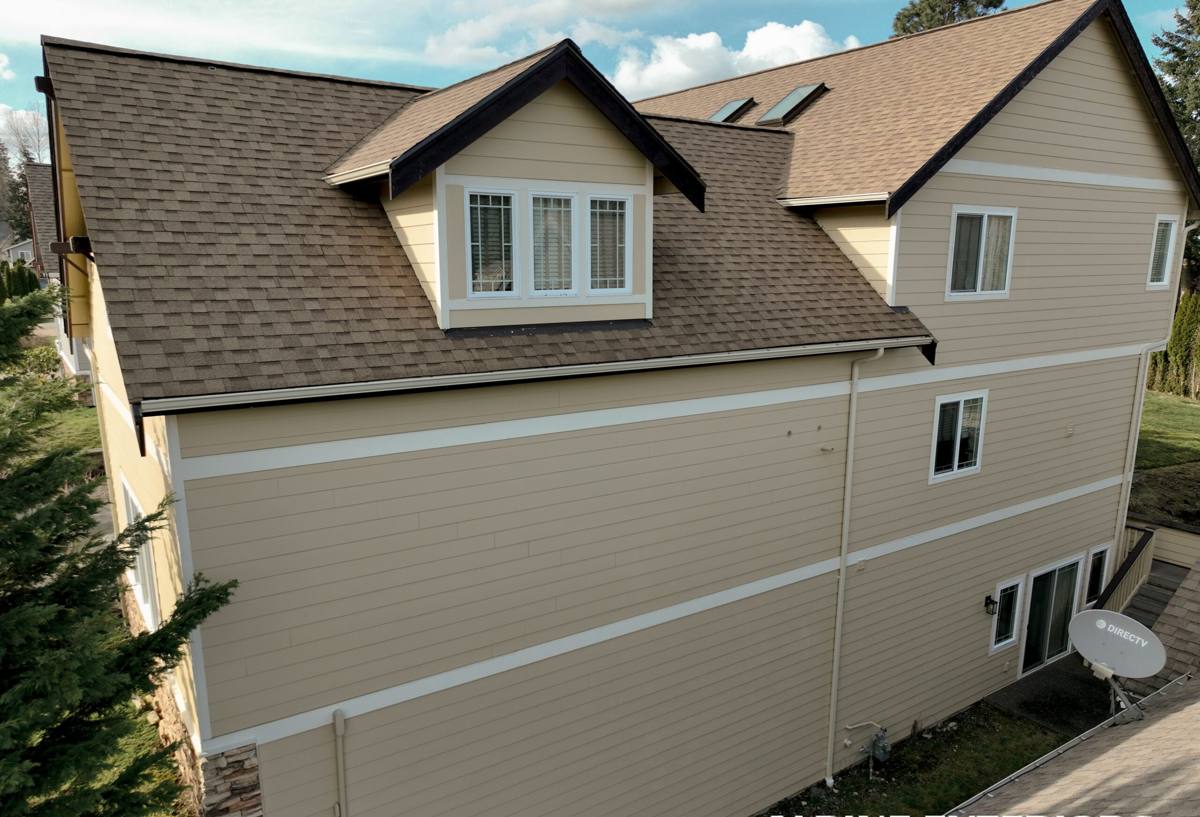
What Old Northeast Homes Need From Their Siding
Before color or style even enters the conversation, siding in this neighborhood has to manage four things at once:
- Wind resistance — siding and its fastening pattern need to stay attached and intact through sustained hurricane-season winds, not just everyday gusts.
- Water management behind the cladding — wind-driven rain doesn't just hit siding, it gets forced up and under laps and around openings, so the drainage plane behind the siding matters as much as the siding itself.
- UV stability — Florida sun is intense and constant, and a finish that isn't built for it will fade, chalk, or need repainting far sooner than a homeowner expects.
- Salt air resistance — proximity to the bay accelerates corrosion on fasteners, trim, and any component not rated for a coastal environment.
Older Homes Add Another Layer
Many homes in Old Northeast were built well before modern building science existed, with wall assemblies, trim profiles, and architectural details that reflect their era. A siding replacement here often has to respect that original look — matching board reveal, trim width, and overall proportions — while quietly bringing everything behind the siding up to a modern standard for moisture control and fastening. Done right, the house keeps its character and gains decades of protection it didn't have before. Done wrong, a home can end up with siding that looks fine for a season or two and then fails from the inside out.
Why We Only Install James Hardie Fiber Cement
We don't install vinyl, LP SmartSide, Cemplank, Allura, primed spruce, or cedar. That's a deliberate standard, not a lack of options. Each of those products has a real place in the industry, but none of them hold up the way we want on a coastal, hurricane-exposed home over the long run — vinyl can distort in sustained heat and doesn't handle wind-borne debris well, wood-based and engineered-wood products are more sensitive to sustained moisture exposure, and unfinished wood siding needs a repainting cycle that's hard to keep up with in this climate.
James Hardie fiber cement is non-combustible, dimensionally stable in heat and humidity, and available with a factory-applied ColorPlus finish that's built to resist UV fade far longer than a field-applied paint job. Hardie also makes climate-specific product lines, including versions engineered for high-humidity, high-moisture regions like ours. That combination — a stable substrate, a finish designed for constant sun, and a manufacturer backing it with a transferable warranty — is why it's the only siding we put on homes in this neighborhood.
What That Means for an Old Northeast Home Specifically
On a home a short distance from Tampa Bay, the finish and fastening details matter more than they would further inland. We spec corrosion-resistant fasteners, follow Hardie's installation instructions for coastal and high-wind zones, and choose trim and siding profiles that hold their factory finish instead of relying on paint that will need attention again in a few years.
What a Correct Siding Replacement Job Actually Involves
Siding replacement is more than swapping old boards for new ones. A job done to spec includes:
- Full tear-off of the old siding and an inspection of the sheathing underneath for rot, soft spots, or prior water damage.
- Repair or replacement of any compromised sheathing before new siding goes on — covering damaged wood doesn't fix it.
- A properly lapped weather-resistive barrier that directs water down and out, not behind the cladding.
- Correct flashing at every window, door, and penetration, since these are the points where wind-driven rain finds its way in.
- Fastening at the spacing, depth, and type called for by the manufacturer — not just "close enough."
- Proper clearance from grade, roof lines, and decks so siding isn't sitting in standing water or trapped moisture.
- Factory-finished boards installed with the correct joint and caulk treatment, so the finish performs the way it's designed to.
Shortcuts That Show Up as Failures Later
Most siding problems we get called out to fix didn't start as siding problems — they started as installation shortcuts that took years to become visible. Fasteners driven too tight or spaced too far apart, a missing or improperly lapped weather barrier, skipped flashing at a window head, or the wrong caulk at a joint. None of these are obvious on install day. They show up two, five, or ten years later as staining, buckling, or rot in the wall behind the siding — usually right after the wind and rain finally find the gap.
Our Process, Start to Finish
| Step | What Happens |
|---|---|
| 1. On-site estimate | We walk the exterior, check existing siding and trim condition, and talk through goals, style, and budget. |
| 2. Material selection | Choosing the Hardie product line, profile, and color that fit the home's style and this climate. |
| 3. Permitting | Pulling the required permits before any work starts. |
| 4. Tear-off and sheathing check | Removing old siding and inspecting and repairing sheathing as needed. |
| 5. Installation | Weather barrier, flashing, and siding installed to manufacturer spec. |
| 6. Final walkthrough | Inspecting the finished work with the homeowner before we call the job done. |
Cost Factors for a Siding Replacement in Old Northeast
Every home is different, so we don't quote pricing sight unseen, but these are the factors that most affect the cost of a job in this neighborhood:
| Factor | Why It Affects Cost |
|---|---|
| Home size and number of stories | More surface area and more difficult access both add labor time. |
| Sheathing condition | Rot or water damage found during tear-off needs repair before new siding can go on. |
| Trim and architectural detail | Older homes with distinctive trim profiles take more time to match correctly than a plain elevation. |
| Site access | Mature trees, narrow side yards, and tight lots common in older neighborhoods can slow staging and material handling. |
| Color and finish choice | Factory ColorPlus finishes vary in cost by color and product line compared to standard options. |
Why Hiring a Crew That Already Works in Old Northeast Matters
A siding job on a home in this neighborhood isn't the same job as one on a newer subdivision house further inland. A crew that already works in Old Northeast knows the local permitting process, understands the wind and building code requirements that apply in this part of Pinellas County, and has a feel for the trim details and proportions that keep an older home looking like itself after the work is done. That familiarity shows up in fewer surprises during tear-off, a smoother permitting process, and a finished result that fits the house instead of looking bolted on.
It also matters after the job is finished. A contractor based nearby and established in the area is easier to reach for warranty service, and has a reputation in the neighborhood worth protecting — which tends to show up in how carefully the work gets done in the first place.
Questions to Ask Before You Hire a Siding Contractor
- Are you licensed and insured to work in Pinellas County, and can you provide proof?
- Will you inspect and repair sheathing before installing new siding, and how is that priced?
- What weather-resistive barrier and flashing details do you use, and are they to manufacturer spec?
- What fastener type and spacing will you use, and are they rated for coastal exposure?
- Who handles the warranty if something goes wrong — you, or only the manufacturer?
- Can I see examples of similar work you've done in this neighborhood or one like it?
If you're weighing a siding replacement for a home in Old Northeast, we're happy to take a look and walk you through what we're seeing and what it would take to do it right. Reach out for a free, no-pressure estimate using the form below.