 St. Petersburg Window
 Siding Repair for Kenneth City Homes
Kenneth City sits inside Pinellas County, tucked between St. Petersburg and the rest of the barrier-island climate that defines this part of Florida. Homes here take the same beating as the rest of the region: hurricane-force winds during storm season, intense UV exposure nearly every day of the year, wind-driven rain that finds its way into the smallest gaps, and salt-laden air that never really goes away, even a few miles inland. Siding repair in this pocket of the county is rarely a cosmetic job. It's usually the difference between catching a small problem early and paying to fix water damage behind the wall a year or two later.
We work on homes throughout St. Petersburg and the surrounding Pinellas communities, and Kenneth City's older housing stock — a mix of mid-century block homes with add-on siding, ranch-style houses, and newer infill construction — gives us a good read on what actually fails here versus what just looks bad. Not every damaged panel needs a full re-side, and not every "small crack" is actually small once you look behind it.
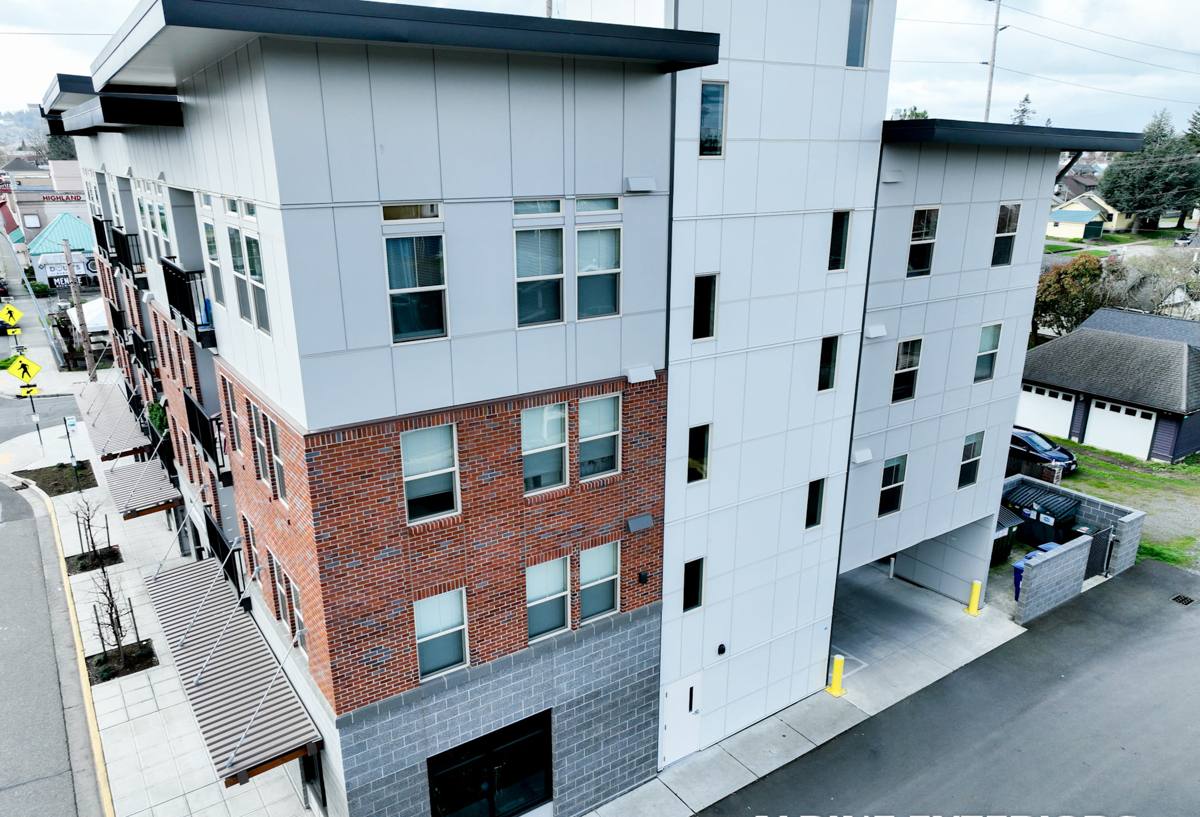
What Kenneth City's Climate Does to Siding
Every siding material eventually shows wear, but the specific way it fails tells you a lot about what's driving the damage.
Wind and Storm Impact
Tropical storm and hurricane winds don't just rip panels off in dramatic fashion — more often they work siding loose at the fasteners, crack corners, or drive debris into a wall hard enough to punch a hole or split a seam. Once a panel is loose or cracked, it's no longer shedding water the way it's supposed to, even if it still looks fine from the street.
UV and Heat
Florida sun is relentless on painted and finished surfaces. Cheaper siding materials and older paint jobs chalk, fade, and become brittle under years of UV exposure. Brittle siding cracks more easily under normal thermal expansion and contraction, and it's far more likely to split when a storm does come through.
Wind-Driven Rain and Moisture
This is the damage you can't always see. Wind-driven rain gets pushed sideways and upward, past laps and seams that would keep out a normal vertical rainfall. Once moisture gets behind siding — through a cracked panel, a failed caulk joint, or a gap where flashing was never installed correctly — it can sit against sheathing and framing for months before it shows up as a soft spot, a stain, or a musty smell inside.
Salt Air
Kenneth City isn't beachfront, but salt air travels well inland across the Pinellas peninsula. Salt accelerates corrosion on fasteners, trim flashing, and any exposed metal components tied into the siding system. Corroded fasteners loosen panels; loosened panels let in water. It's a slow chain reaction, but it's consistent.
Signs Your Kenneth City Home Needs Siding Repair
- Cracked, split, or visibly warped siding panels or boards
- Panels that feel loose or flex when pressed near seams or corners
- Soft or spongy spots when you press on the siding (a sign of moisture damage behind it)
- Staining, streaking, or dark discoloration that doesn't wash off
- Gaps opening up at seams, corners, or where siding meets trim, windows, or doors
- Peeling or bubbling paint, especially on older or non-factory-finished siding
- A musty smell near exterior walls, or visible damage on interior drywall near an exterior wall
- Visible fastener corrosion or streaking rust marks below nail heads
Any one of these on its own might be minor. Several together, especially near the same section of wall, usually means water has already gotten past the surface.
What a Correct Siding Repair Actually Involves
A repair that just patches the visible damage and ignores what's underneath tends to fail again within a season or two — sometimes faster in a climate like ours. A repair done right follows a specific sequence.
1. Diagnose Before Cutting Anything
We start by figuring out why the siding failed, not just where. A cracked panel from a single storm impact is a different repair than a section that's been slowly rotting from a flashing failure. Treating the second problem like the first just means paying for the same repair again.
2. Check What's Behind the Siding
Once damaged siding is removed, we look at the underlying weather-resistive barrier, sheathing, and framing. If there's soft or water-damaged sheathing, that needs to be addressed before any new siding goes back on — covering it up doesn't fix it.
3. Match Material and Profile
Repairs should match the existing siding's profile, reveal, and finish as closely as possible. A mismatched patch is an obvious eyesore and, worse, it can create its own water-intrusion point if the new piece doesn't integrate cleanly with the old flashing and laps.
4. Correct Flashing and Fastening
A huge share of repeat siding failures trace back to flashing that was installed wrong (or skipped) the first time, or fasteners driven incorrectly. We install flashing and fasteners to manufacturer spec, not just "close enough," because in a wind-driven-rain climate, close enough eventually leaks.
5. Seal and Finish Properly
Caulking and sealant have a service life — they're not permanent. Repairs include proper sealant at seams and penetrations, and paint or factory-finish touch-up that's compatible with the existing material so it weathers evenly rather than standing out as an obvious patch.
Repair or Replace? A Honest Look
Not every damaged section justifies a full re-side, but there's a point where patch-repairing an aging or failing siding system stops making financial sense. Here's how we think about it:
| Situation | Repair Usually Makes Sense | Replacement Usually Makes Sense |
|---|---|---|
| Damage extent | Isolated to one or two areas (storm impact, a single cracked panel) | Damage scattered across multiple walls or elevations |
| Underlying material | Sheathing and framing behind the damage are sound | Rot or water damage found behind multiple sections |
| Siding age/material | Newer siding, or a material still performing well overall | Original material is near end of life, discontinued, or chronically failing |
| Match quality | Replacement panels can closely match existing color/profile | Material is faded, discontinued, or a poor match is unavoidable |
| Repair frequency | First repair, or an isolated storm event | Same areas have needed repair more than once |
We'll tell you plainly which category your home falls into. If a targeted repair will hold up, that's what we recommend — we're not in the business of upselling a full re-side when it isn't warranted. But if we open up a wall section and find the damage has already spread, we'll show you what we found and explain the trade-offs before recommending replacement.
Why We Repair With — and Recommend — James Hardie Fiber Cement
When a repair calls for replacement material, or when a homeowner decides a section (or the whole house) has reached the point where repair no longer makes sense, we install James Hardie fiber cement exclusively. We don't install vinyl, LP SmartSide, Cemplank, Allura, or unprimed wood siding, and that's a deliberate standard, not an oversight.
In a climate that combines hurricane wind exposure, constant UV, wind-driven rain, and salt air, the material matters as much as the workmanship. Fiber cement is non-combustible and dimensionally stable — it doesn't expand and contract with heat the way vinyl does, and it doesn't have the moisture-absorption concerns that come with wood-based composite products in a humid, storm-prone environment. Hardie's ColorPlus factory finish is baked on and warrantied against fade, chip, and peel far beyond what field-applied paint typically delivers, which matters directly in a market where UV degrades finishes faster than almost anywhere else in the country. Hardie's HZ5 product line is engineered specifically for high-humidity, high-moisture climate zones like Florida's Gulf Coast.
Using the same material for repairs that we'd use for a full install also means a cleaner match and a more consistent long-term result — you're not mixing a fiber cement repair panel onto a vinyl or wood system, or vice versa, which almost always looks and performs worse over time.
Why Hire a Crew That Already Works Kenneth City
Siding repair looks straightforward until you're the one behind the wall. A crew that regularly works Pinellas County homes already knows the common failure points in this area's housing stock — where flashing tends to get skipped on additions, which siding materials from past decades are prone to cracking under our UV load, and how local wind exposure changes what "correctly fastened" needs to mean here versus a calmer inland climate. That local pattern recognition shortens the diagnosis phase and reduces the chance of a repair that looks fine for a year and then fails again.
It also matters for permitting and code compliance. Pinellas County and the surrounding municipalities have wind-load and building code requirements tied to our hurricane exposure, and a crew unfamiliar with local requirements can end up doing work that doesn't hold up to inspection or, worse, doesn't hold up to the next storm.
Our Repair Process, Start to Finish
- Inspection and diagnosis — We assess visible damage and check for signs of moisture behind the siding, not just at the surface.
- Honest scope recommendation — We tell you whether this is a repair, a partial re-side, or a full replacement, and why.
- Material removal and inspection — Damaged sections come off so we can evaluate sheathing, framing, and existing flashing.
- Underlying repairs if needed — Any water-damaged sheathing or framing gets addressed before new siding goes back on.
- Flashing and weather barrier correction — We fix what caused the original failure, not just what's visible.
- Siding installation to spec — Fastening, laps, and seams installed to manufacturer and code requirements for our wind zone.
- Finish and cleanup — Caulking, paint or finish touch-up, and a final walkthrough so you know exactly what was done and why.
A Few Things Worth Checking Yourself First
- Look at your siding after any significant storm — loose or cracked panels are easiest to catch right away
- Press gently on areas near the bottom of walls and around window and door trim, common spots for moisture to collect
- Check for streaking or rust below fasteners, especially on older siding
- Note any interior staining on walls that back up to exterior siding — it often shows up before the exterior damage is obvious
- Don't assume a small crack is cosmetic — ask to have it checked before the next storm season
If you're noticing damage, aging siding, or storm wear on a Kenneth City home, we're happy to take a look and give you a straight answer about what it actually needs — repair, partial replacement, or something more. Reach out for a free, no-pressure estimate using the form below.