 St. Petersburg Window
 Why Gulfport Roofs Wear Out Faster Than You'd Expect
Gulfport sits right on Boca Ciega Bay, which is part of what makes it one of the more distinctive neighborhoods in St. Petersburg — walkable streets, mature tree canopy, and a lot of older bungalow and mid-century homes. It's also why roofs here take more abuse than roofs ten miles inland. Being this close to open water means salt-laden air moves through the neighborhood constantly, and that salt settles on every exposed surface, including your roof. Add in Pinellas County's full-strength summer UV, sudden wind-driven downpours, and the real chance of hurricane-force gusts during storm season, and you've got a combination that shortens the life of a lot of standard roofing materials.
Older homes in this part of St. Petersburg often still have their original roof decking or have been re-roofed more than once with asphalt shingles, which typically don't hold up as long in this environment as homeowners expect. Metal roofing is popular here for a reason — it's built to handle wind, shrug off UV, and, when specified and installed correctly, resist the corrosion that salt air causes. But "metal roof" isn't a single product, and not every metal roof is actually set up to handle what a Gulfport home deals with year after year.
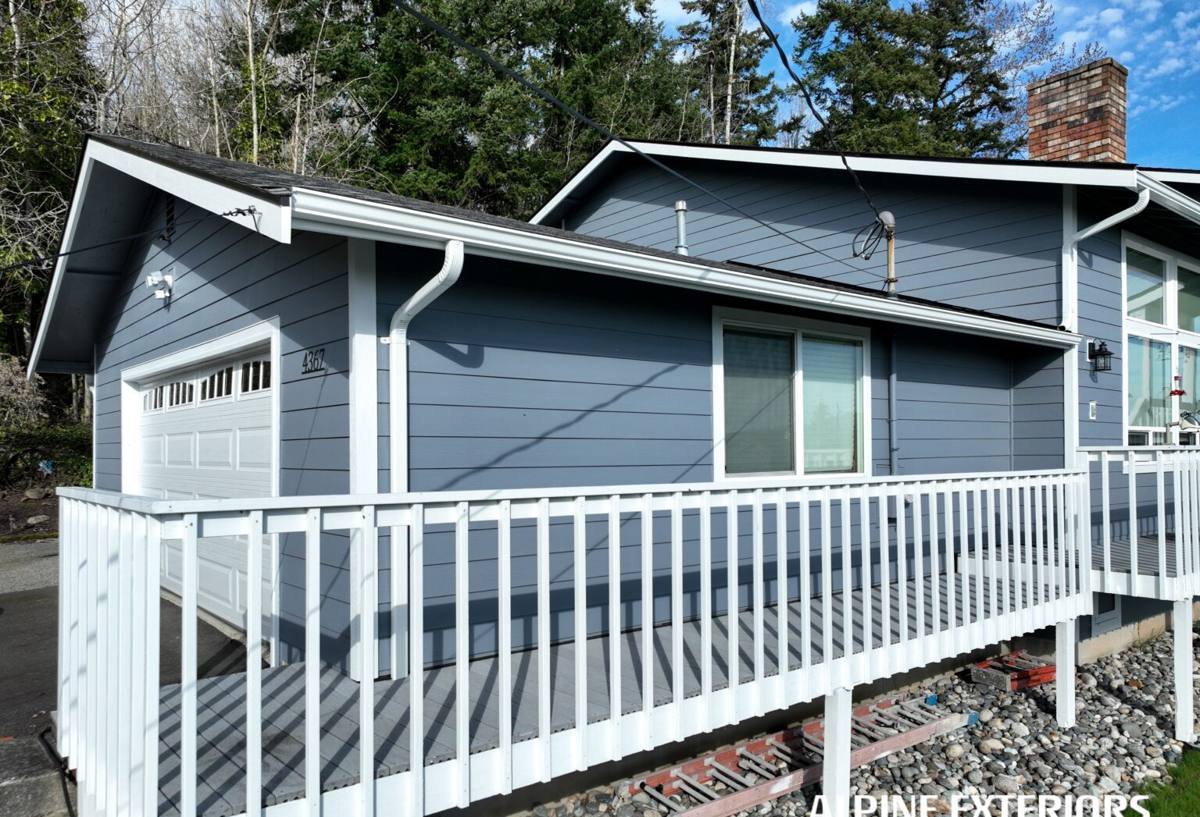
What a Coastal Metal Roof Actually Needs to Do
A metal roof installed a few miles from the water has a different job than one on a dry inland lot. For a Gulfport home, the system needs to manage four things at once: uplift from hurricane-force wind, driving rain that gets pushed sideways under normal roof edges, constant UV exposure that fades and embrittles lesser materials, and salt air that accelerates corrosion on fasteners, flashing, and cut edges.
Wind Uplift
Metal roofing performs well in wind when it's fastened and fastened correctly — that's the key phrase. Panel spacing, clip type, and fastener count all have to match the wind exposure for your specific lot, not just a generic manufacturer minimum. A roof close to open water experiences higher sustained wind loads than the same style of home set back in a more sheltered part of the city.
Water Intrusion
Wind-driven rain in Florida doesn't fall straight down — it comes in sideways and finds any gap in flashing, underlayment laps, or panel seams. Coastal storms make this worse, so every penetration (vents, chimneys, skylights) needs flashing detail that accounts for water moving horizontally, not just runoff.
Corrosion Resistance
Salt air attacks unprotected steel edges, exposed fastener heads, and dissimilar-metal contact points (where two different metals touch and cause galvanic corrosion). This is the piece that gets skipped most often on rushed jobs, and it's the one that determines whether a metal roof looks and performs the same at year fifteen as it did at year one.
Choosing the Right Metal Roofing System
There are two main categories of metal roofing used on homes in this area, and the right choice depends on your budget, your roof's design, and how long you want to go before any maintenance is needed.
| Feature | Standing Seam | Exposed-Fastener Panels |
|---|---|---|
| Fasteners | Hidden under raised seams | Visible, driven through the panel face |
| Typical lifespan | 40-70 years with proper install | 25-40 years, fastener-dependent |
| Maintenance | Minimal — no exposed fasteners to fail | Fastener washers should be checked periodically |
| Wind performance | Excellent when clipped correctly | Good, but relies on fastener integrity over time |
| Upfront cost | Higher | More budget-friendly |
Standing seam is the system we recommend most often for homes this close to the bay, mainly because there are no exposed fastener heads for salt air to work on over the years. Exposed-fastener panels are a legitimate, lower-cost option and can perform well, but they do require someone to check and occasionally replace fastener washers as the neoprene seals age — a maintenance step that's easy to forget and more important here than it would be on an inland roof.
How We Approach a Metal Roofing Job in Gulfport
Tear-Off vs. Roof-Over
Metal panels can sometimes be installed over an existing roof, but on most Gulfport homes we recommend a full tear-off. Older decking often has moisture damage or fastener patterns that don't line up with what a new metal system needs, and you can't evaluate the deck underneath without pulling the old roofing off. A tear-off also gives us a chance to catch rot or soft spots before they become a bigger problem.
Underlayment and Flashing
We use a high-temperature, self-adhering underlayment rather than felt paper, because Florida attics run hot and standard felt breaks down faster under a metal roof's heat cycle. All flashing — around chimneys, vent stacks, skylights, and wall transitions — gets detailed for wind-driven rain, not just standard runoff, which matters more here than it does a few miles inland.
Fastening and Ventilation
Fastener spacing and clip selection are set to the wind exposure for your lot, not a one-size-fits-all pattern. We also check that the roof has adequate ridge and soffit ventilation — metal roofs handle heat well, but the attic underneath still needs to breathe, and poor ventilation is one of the more common issues we find on older Gulfport homes during a roof evaluation.
Permits and Wind Code Requirements
Roofing work in St. Petersburg requires a permit through the city, and metal roofing installations have to meet the wind-load provisions of the Florida Building Code that apply to coastal Pinellas County. This isn't paperwork for its own sake — it's what determines fastener schedules, underlayment type, and how the roof is inspected before it's signed off. We handle the permitting and inspection scheduling as part of the job, and we build the installation to meet code rather than treating code as a minimum to work around.
If your home is in or near one of Gulfport's older or architecturally distinct blocks, it's worth checking with the city on any additional design review before work starts — some areas have guidelines around visible exterior changes. We're glad to help homeowners figure out whether that applies to their property before a contract is signed.
Living With a Metal Roof in a Salt-Air, Tree-Canopy Neighborhood
Metal roofing is low-maintenance compared to shingles, but "low-maintenance" isn't the same as "no maintenance," especially this close to the water and under Gulfport's tree cover. A little attention once or twice a year keeps a good roof performing like a good roof for decades.
- Rinse accumulated salt film off the roof surface periodically, especially after long dry stretches
- Clean gutters and valleys more often than you would inland — tree canopy means more leaf and debris buildup
- Trim back overhanging limbs that can scratch coatings or drop debris into valleys and around penetrations
- After major storms, do a visual check (or have us check) for lifted panel edges or displaced flashing
- Watch for any spot where a different metal is touching the roof — ladders, satellite mounts, or wiring clips can cause galvanic corrosion if left in place
- Have fastener washers and sealant at penetrations inspected every few years, especially on exposed-fastener systems
What Metal Roofing Costs and What Drives the Price
Installed metal roofing in this area typically runs somewhere in the broad range of $9 to $16 per square foot, but that spread depends heavily on the specifics of your roof. Rather than quote a number that doesn't mean much without context, here's what actually moves the price up or down.
| Cost Factor | Why It Matters |
|---|---|
| Panel type | Standing seam costs more upfront than exposed-fastener panels but needs less long-term upkeep |
| Roof complexity | Hips, valleys, dormers, and multiple penetrations add labor and flashing detail |
| Decking condition | Rotted or undersized decking found during tear-off has to be replaced before panels go on |
| Coating and gauge | Heavier gauge steel or aluminum and premium coatings cost more but resist salt exposure longer |
| Roof pitch and access | Steep pitches or limited access (tight lots, tree cover) increase labor time |
The cheapest bid on a metal roof is rarely the cheapest roof over a 30-year span, especially in a salt-air environment. A lower-grade coating or thinner gauge might save money on install day and cost more in early corrosion or repairs down the line.
Why a Crew That Already Works Gulfport Makes a Difference
A metal roof is only as good as the details underneath it, and those details change based on where the house sits. A contractor who works across Pinellas County and beyond may not think twice about the difference between a roof three blocks from Boca Ciega Bay and one further inland — but that difference shows up in fastener choice, flashing detail, and how soon corrosion starts if the wrong hardware gets used. We work in this neighborhood regularly, which means we already know what the older housing stock here tends to look like under the surface, what the city's permitting process expects, and what actually holds up against this particular stretch of Gulf Coast weather.
That local familiarity also means fewer surprises during the job — we're not guessing at deck condition, wind exposure, or code requirements for the first time on your roof. It's the difference between a crew that installs metal roofs and a crew that installs metal roofs that are built for St. Petersburg's coastal conditions specifically.
Get a Straight Answer About Your Roof
If you're weighing a metal roof for your Gulfport home, we're happy to take a look, walk you through what your specific roof needs, and give you an honest, no-pressure estimate — no inflated urgency, no guesswork about what the coastal exposure on your lot actually requires. Fill out the form below and we'll get you scheduled.