 St. Petersburg Window
 Euclid-St. Paul is one of St. Petersburg's older, established residential neighborhoods, with mature tree canopy, shaded lots, and homes that have often had the same deck since it was first added decades ago. That age is exactly what tests a deck the hardest here. Pinellas County's climate — hurricane-force wind loads, intense year-round UV, wind-driven rain, and salt air drifting in off the surrounding water — doesn't wait for a structure to get old before it starts working on it, but an aging deck with outdated hardware and no current wind-rated attachment has a lot less margin left to absorb it. When we replace a deck in Euclid-St. Paul, we're not just swapping old boards for new ones — we're rebuilding the structure to handle what this specific neighborhood's conditions actually demand.
Why Euclid-St. Paul Decks Age Differently
A lot of the housing stock in this part of St. Petersburg predates current wind-load and connection standards, and many decks on these homes were added, extended, or rebuilt at some point without a full engineering review. That means the ledger attachment, post footings, and fastener choices you'll find under an older Euclid-St. Paul deck often reflect whatever standard was common when the work was done, not what current code actually requires. On top of that, the mature tree canopy that gives this neighborhood its character also drops leaves and organic debris onto deck surfaces and between boards, holding moisture against the wood longer after every rain and keeping shaded sections of the deck damp well after the rest of the yard has dried out. Neither issue is unique to this neighborhood, but the combination of older construction and heavier shade cover shows up here more consistently than in newer, more open subdivisions.
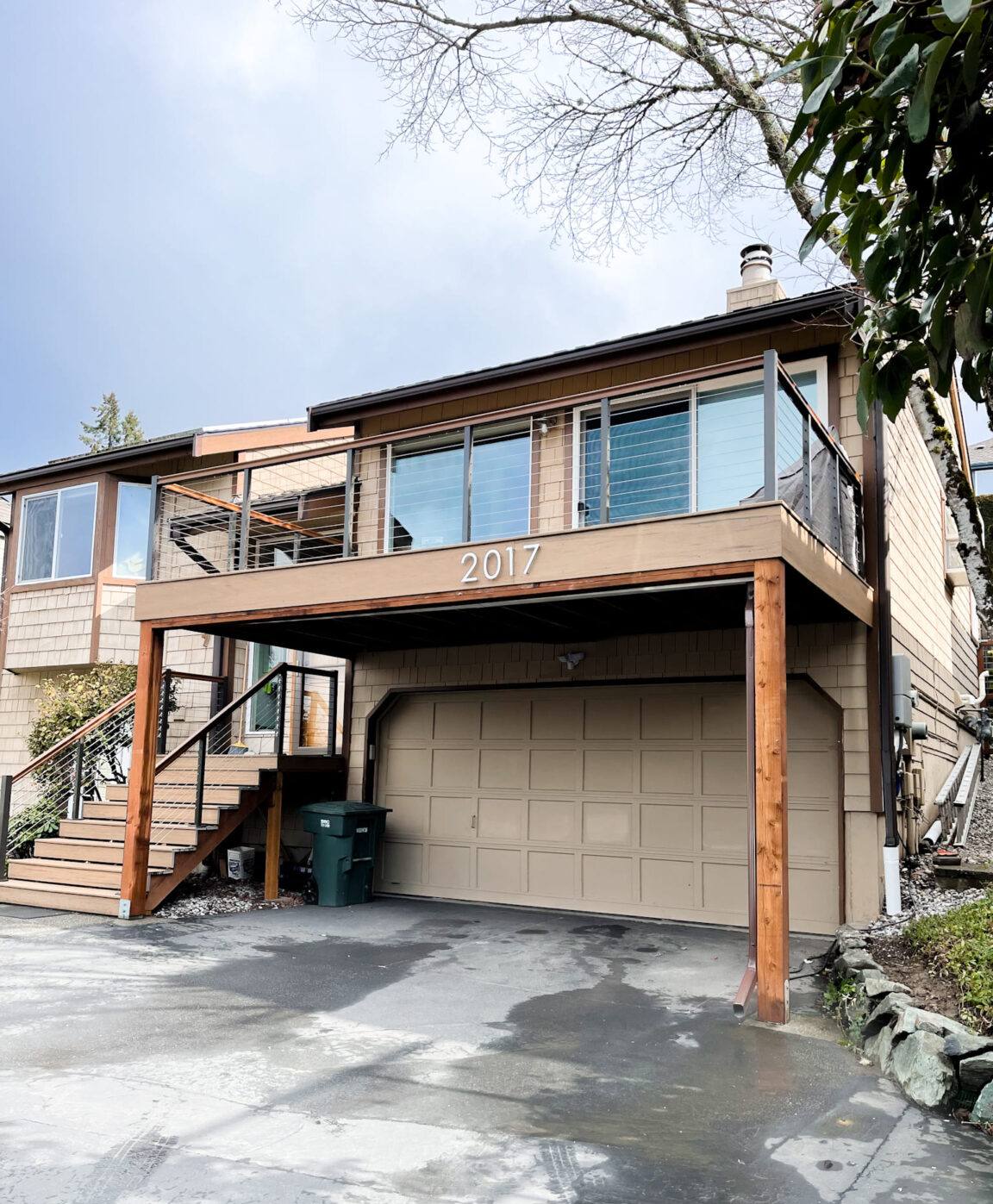
What the Climate Actually Does to a Deck Here
Pinellas County decks deal with several forms of stress at once, and a deck built or repaired without accounting for all of them tends to fail at predictable points. Hurricane-force wind events put uplift and lateral load on the entire structure, and that load has to travel through the ledger connection to the house, down through the posts, and into the footings — any weak link in that chain is where the deck actually fails during a storm. Year-round, intense UV breaks down lesser wood treatments, cheap sealants, and lower-grade composite formulations faster than in a milder climate, leading to surface checking, fading, and brittle boards well before a deck's expected lifespan is up. Wind-driven rain pushes water sideways and upward into places a vertical rain shower never reaches, which is exactly how moisture gets behind ledger flashing and into the band board of the house if that connection wasn't detailed correctly. And salt air, even well inland from the immediate coastline, accelerates corrosion on fasteners, joist hangers, and railing hardware — a slow, constant process that weakens connections from the inside long before any wood damage is visible from the surface.
Where Problems Actually Start
On almost every deck failure we're called out to inspect, the damage traces back to one of three points. The ledger board — where the deck attaches to the house — is the single most safety-critical connection on the entire structure, and it's also the one most likely to have been under-fastened or left unflashed on an older build. Post bases at ground contact are the second common failure point, since wood held in a constantly damp, shaded location wicks moisture and invites rot and insect activity from the bottom up, often while the visible deck surface still looks fine. And fasteners themselves — nails, screws, and hardware not rated for coastal exposure — corrode from the inside of the connection outward, so a deck can look structurally sound right up until a hardware failure lets go under load.
Signs Your Deck Needs Replacing, Not Patching
Some deck problems are legitimately repairable. Others mean the structure has reached the point where patching individual boards just delays a bigger problem. Before you commit to either path, it's worth checking for these:
- Soft or spongy boards, especially near the ledger, stair stringers, or high-traffic areas
- Rust streaks bleeding out around fasteners, joist hangers, or railing brackets
- Any visible gap or separation between the ledger board and the house
- Noticeable wobble in railings or support posts when you push on them by hand
- A deck built before current wind and connection codes that has never had a structural inspection
- Structural framing members that feel soft, crumble, or show insect damage when probed with a screwdriver
- Repeated past patch jobs on the same sections, which usually means the underlying cause was never addressed
If more than one of these applies, a full replacement is almost always the more honest recommendation than another round of spot repairs.
What a Correct Deck Replacement Involves
Permitting and Structural Plan
Deck replacement in St. Petersburg and Pinellas County generally requires a permit, and the structural plan has to account for local wind exposure, not just standard span tables. On an older Euclid-St. Paul lot, we also check whether the existing deck was ever permitted at all — an unpermitted structure can complicate a future home sale or insurance claim regardless of how solid it looks today, so building the replacement to a documented, inspected standard is worth doing correctly from the start.
Ledger Board and Flashing
This is the connection we're most careful with, because it's the one most likely to cause a real safety issue if it's done wrong. Proper attachment means through-bolts or structural lag fasteners sized and spaced for the actual load, not just nails driven into the band board. Flashing gets installed to shed water away from the house sheathing rather than trap it behind the ledger, which is the detail that most often gets skipped on older or DIY-repaired decks and is a leading cause of hidden rot at the house connection.
Footings and Post Attachment
Footings need to be sized for the actual load path and local soil conditions, and posts should sit on hardware that keeps the wood off direct ground contact rather than buried or set flush against damp soil — a common shortcut on older builds that speeds up rot at the base. Post-to-beam and beam-to-joist connections get hurricane ties and rated connector hardware so the load path holds together under wind uplift, not just under normal foot traffic.
Decking, Fasteners, and Railings
Whatever decking material you choose, the fasteners matter as much as the boards — we use corrosion-resistant or stainless hardware as standard practice here, not an upgrade, because standard-grade fasteners simply don't hold up to sustained salt air over time. Railings and guardrails are built to current height and baluster-spacing requirements and structurally attached to the frame, not just fastened to the decking surface, since a railing that only looks solid isn't the same as one that's actually load-rated.
Decking Material Comparison
| Material | Upfront Cost | Maintenance in This Climate | Longevity Notes |
|---|---|---|---|
| Pressure-treated wood | Lowest | Needs regular sealing and inspection; UV and moisture cycling take a toll without upkeep | Shortest lifespan of the common options if maintenance lapses |
| Capped composite | Mid to upper | Low; occasional cleaning, no sealing or staining required | Holds color and resists moisture well when the cap layer is intact |
| PVC decking | Upper | Very low; fully synthetic, doesn't absorb moisture | Strong long-term performance in humid, wet climates |
| Tropical hardwood | Highest | Periodic oiling needed to maintain color and prevent surface checking | Naturally dense and durable, but the finish requires ongoing attention |
There isn't a universally "correct" choice — it's a trade-off between upfront budget, how much upkeep you want to commit to, and how the material's appearance changes over time. Pressure-treated wood remains a reasonable option for homeowners willing to keep up with sealing on a regular schedule. Composite and PVC decking cost more up front but shift the long-term maintenance burden down significantly, which is often the better fit given how hard UV and moisture work on exposed decking here. We'll walk through the honest trade-offs for your specific project rather than steering you toward one material by default.
Our Process, Start to Finish
- On-site assessment — we inspect the existing deck's framing, ledger connection, footings, and hardware to determine what's salvageable and what isn't
- Honest recommendation — full replacement versus targeted repair, explained with the reasoning behind it
- Permitting and structural plan — pulling the required permit and sizing the structure for local wind exposure before any demolition starts
- Demolition and prep — removing the old deck and inspecting the house band board and framing behind the ledger for hidden damage
- Structural rebuild — new footings, posts, beams, and joists installed with rated connector hardware and a properly flashed ledger attachment
- Decking and railings — surface material and railings installed and fastened to current code requirements
- Final inspection and walkthrough — confirming the completed deck passes inspection and reviewing the finished work with you
Why Hiring a Crew That Already Works Euclid-St. Paul Matters
General deck-building know-how doesn't automatically translate into knowing what a specific neighborhood's housing stock and conditions demand. A crew that regularly works in Euclid-St. Paul already knows what to expect when they open up an older ledger connection here, how much shade and organic debris a given lot's tree canopy is likely to create, and which hardware grade actually holds up under sustained salt air rather than just meeting a code minimum on paper. That familiarity shows up in decisions made on site — how a flashing detail gets adjusted for an older band board, whether a footing needs to go deeper because of what the soil on a particular lot actually looks like, when a "repairable" deck is better replaced outright because of what's hidden underneath. Those are judgment calls, not something a generic spec sheet answers for you, and they're the difference between a deck that's still solid after a few hurricane seasons and one that starts showing problems within a couple of years.
If your Euclid-St. Paul deck is showing its age, was never permitted to current standards, or you're just planning ahead of the next hurricane season, it's worth having someone assess the actual structure before deciding between repair and replacement. We offer free, no-pressure estimates for deck replacement in Euclid-St. Paul and the surrounding St. Petersburg area — use the form below to get a time on the schedule.