 St. Petersburg Window
 Why Shore Acres Decks Wear Out Faster Than Most
Shore Acres sits close to Tampa Bay on the northeast side of St. Petersburg, and that waterfront location is a big part of why decks here need more attention than decks a few miles inland. Between the salt-laden air coming off the bay, near-constant sun, wind-driven rain during storm season, and the occasional direct hit from hurricane-force wind, a deck in this neighborhood is under a different kind of stress than one in a drier, inland climate. A deck that would coast along for a decade elsewhere can start showing real problems in Shore Acres in half that time if it wasn't built or maintained with that in mind.
Salt Air and Metal Corrosion
Homes near the bay deal with airborne salt that settles on everything, including the fasteners and structural connectors holding a deck together. Standard hardware — nails, screws, joist hangers — that isn't rated for coastal exposure corrodes faster here. The wood on top can look fine while the metal underneath is quietly losing its grip.
Constant UV Exposure
Florida sun is intense and it's around all year, not just in summer. UV breaks down the lignin in wood fibers and degrades the surface finish on composite decking too, leading to graying, splintering, and a chalky surface that no longer sheds water the way it should.
Wind-Driven Rain and Moisture Cycling
Afternoon storms don't just fall straight down here — wind pushes rain sideways into gaps, seams, and end grain that were never meant to get wet. Decks then dry out fast in the sun, and that repeated wet-dry cycling is what causes boards to cup, crack, and pull away from fasteners over time.
Wind Load During Named Storms
Pinellas County sees real hurricane risk, and a deck attached to the house is a structural component, not just an outdoor surface. Loose railings, an undersized ledger connection, or corroded joist hangers can turn into a genuine hazard when a storm brings sustained high wind.
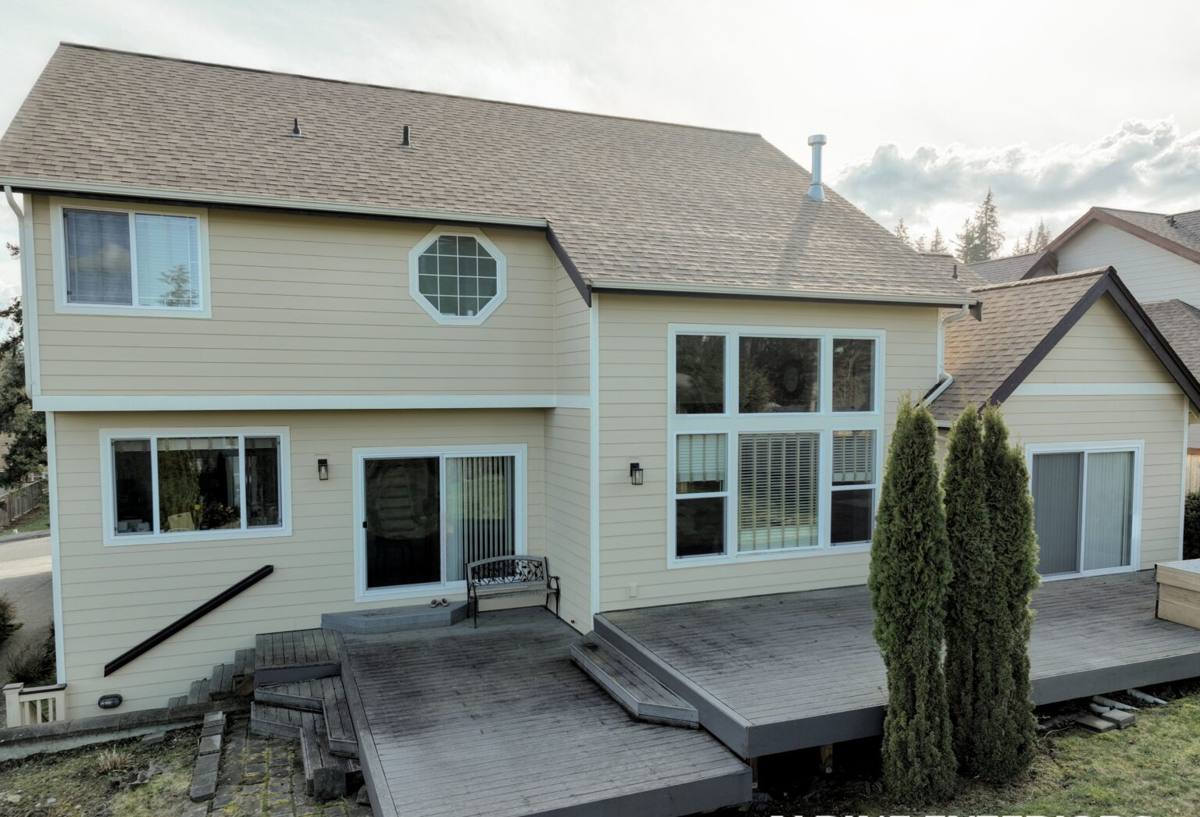
Signs a Shore Acres Deck Needs Repair
Some deck problems are obvious. Others hide underneath the decking boards where you won't see them until they've gotten worse. Here's what we tell homeowners to check for or ask about:
- Boards that flex, bounce, or feel spongy when you walk across them
- Visible gaps opening up where the deck meets the house (the ledger board connection)
- Rust streaks below fastener heads or around metal connectors
- Railings or posts that wiggle when pushed
- Stair stringers that feel unstable or squeak under weight
- Wood that's gone soft, spongy, or dark near ground contact or post bases
- Fasteners backing out or "popping" above the board surface
- Cracks running along the length of a board rather than across the grain
Any one of these on its own might be a minor fix. Several at once usually means the deck needs a full inspection before anyone decides what to repair versus replace.
What a Correct Deck Repair Actually Involves
A repair that only addresses what's visible from the top is a repair that comes back. We start underneath.
Structural Framing Comes First
Joists, beams, posts, and the ledger board attachment to the house are the parts that actually hold the deck up. If any of these are compromised — rot, corrosion, or a ledger that was never flashed correctly — replacing the decking boards on top without fixing the frame is just putting a new floor over the same problem.
Fasteners and Connectors Matter as Much as Lumber
In a bay-adjacent neighborhood, we don't reuse or replace hardware with whatever is standard elsewhere. Coastal-rated stainless steel or heavy hot-dip galvanized fasteners and connectors cost more up front but hold up to salt exposure in a way standard hardware doesn't. This is the single most common corner cut in older or budget deck work we find in this area.
Decking Boards, Railings, and Stairs
Once the frame and fasteners are sound, individual boards get evaluated one at a time — some need full replacement, others just need to be re-secured or have cracked sections cut out and swapped. Railings and stairs get the same structural scrutiny as the deck itself, since these are the parts people actually put their weight on and grab in a hurry.
Ledger Board Flashing
Where the deck attaches to the house is the single most common failure point on any deck, anywhere, but especially in a climate with this much wind-driven rain. Proper flashing keeps water from getting trapped between the ledger and the house framing, which is where hidden rot does the most damage.
Repair or Replace? A Cost-Factor Comparison
Not every deck problem calls for a full rebuild, and not every deck is worth repairing past a certain point. Here's how we walk homeowners through that decision:
| Factor | Repair Likely Makes Sense | Replacement Likely Makes Sense |
|---|---|---|
| Structural framing | Frame is sound; only surface boards or hardware are affected | Joists, beams, or ledger show widespread rot or corrosion |
| Age of the deck | Under 10-12 years old, built with adequate materials | Original construction is old and was never built for coastal exposure |
| Extent of damage | Isolated to a few boards, one railing section, or one area | Damage is spread across multiple structural components |
| Code compliance | Deck already meets current attachment and railing standards | Original build predates current code and would need major rework anyway |
| Cost over time | Repair cost is a fraction of full replacement | Repeated repairs are starting to add up to replacement-level spending |
An honest contractor tells you when repair is the right call and when it's just delaying a replacement you'll end up paying for anyway. We'll give you a straight answer either way.
Material Choices That Hold Up on the Water
Pressure-treated lumber and composite decking are both viable in Shore Acres, but each comes with trade-offs worth knowing before you decide what to repair with.
Pressure-treated wood is less expensive and easy to repair board-by-board, but it needs regular sealing or staining to keep performing in this UV and rain exposure — skip that maintenance and you'll be back to repairs sooner. Composite decking resists rot and doesn't need sealing, but it comes at a higher upfront cost and, if damaged, individual boards can be harder to source and match years later. Neither choice is "wrong" — the right one depends on your budget, how much maintenance you want to keep up with, and how the rest of the deck was framed.
Whatever the decking surface, the framing underneath should always be pressure-treated lumber rated for the type of contact it gets — ground-contact rated for posts and anything near soil, above-ground rated is not sufficient there even though it's sometimes used to cut cost.
Permits and Waterfront Considerations in St. Petersburg
Deck repairs that involve structural framing, not just cosmetic board replacement, typically require a permit through the City of St. Petersburg or Pinellas County, depending on the scope. Waterfront and canal-adjacent neighborhoods like Shore Acres can also carry additional considerations tied to flood zone designation, which can affect elevation requirements and how a deck ties into the home's foundation. We handle the permitting conversation as part of the job rather than leaving homeowners to sort it out on their own.
Our Deck Repair Process
- On-site inspection — we get underneath the deck, not just look at the surface, to check framing, fasteners, and the ledger connection
- Honest assessment — you get a clear breakdown of what's structural, what's cosmetic, and what our repair-versus-replace recommendation is and why
- Written estimate — scope, materials, and cost laid out before any work starts, no surprise add-ons mid-job
- Repair work — framing and hardware first, then decking, railings, and stairs, using coastal-rated fasteners throughout
- Final walkthrough — we check the work with you before calling the job done
Why Hire a Crew That Already Works Shore Acres
A contractor who mostly works inland doesn't always think about coastal-grade hardware, flashing details, or how flood zone rules apply until it becomes a problem mid-project. Working regularly in Shore Acres and other bayside St. Petersburg neighborhoods means we already know what this specific exposure does to a deck over time, what the local permitting process looks like, and what materials are actually worth the extra cost here versus what's just upsell. That familiarity shows up in fewer surprises and a repair that's built for the conditions it's actually going to face, not generic conditions somewhere else in Pinellas County.
Keeping a Repaired Deck Lasting
A good repair buys you years, but a few habits stretch that further in this climate:
- Reseal or restain pressure-treated wood on a regular schedule rather than waiting until it looks dry and gray
- Rinse salt residue off the deck surface and hardware periodically, especially after storms
- Check railings and stair connections for movement once or twice a year
- Keep an eye on the ledger board area where the deck meets the house — that's where problems start
- Address small issues, like a single loose board or popped fastener, before they turn into structural ones
If your deck in Shore Acres has any of the warning signs above, or you just want an honest read on its condition before storm season catches you off guard, we're happy to take a look. Estimates are free, there's no pressure to move forward, and you'll get a straight answer about what actually needs doing — you can request one using the form below.