 St. Petersburg Window
 St. Petersburg's Climate Puts Real Demands on a Backyard Deck
A deck in Disston Heights doesn't live an easy life. Pinellas County sees intense, near-constant UV exposure for most of the year, long stretches of afternoon humidity, sudden wind-driven downpours, and a hurricane season that runs June through November. Because St. Petersburg sits on a peninsula between Tampa Bay and the Gulf, salt-laden air reaches well inland, not just the waterfront blocks — it settles on fasteners, railings, and any exposed metal, quietly working on corrosion year-round. A deck built to a generic national spec, or built by someone who mostly works farther north, tends to show its age fast here: cupped boards, rust bleeding through paint, loose railings, and ledger connections that were never properly flashed against wind-driven rain.
None of that is inevitable. It just means the material choices, fasteners, and structural details have to be picked for this climate specifically, not assumed from a catalog page. That's the whole difference between a deck that looks good for two summers and one that holds up for twenty.
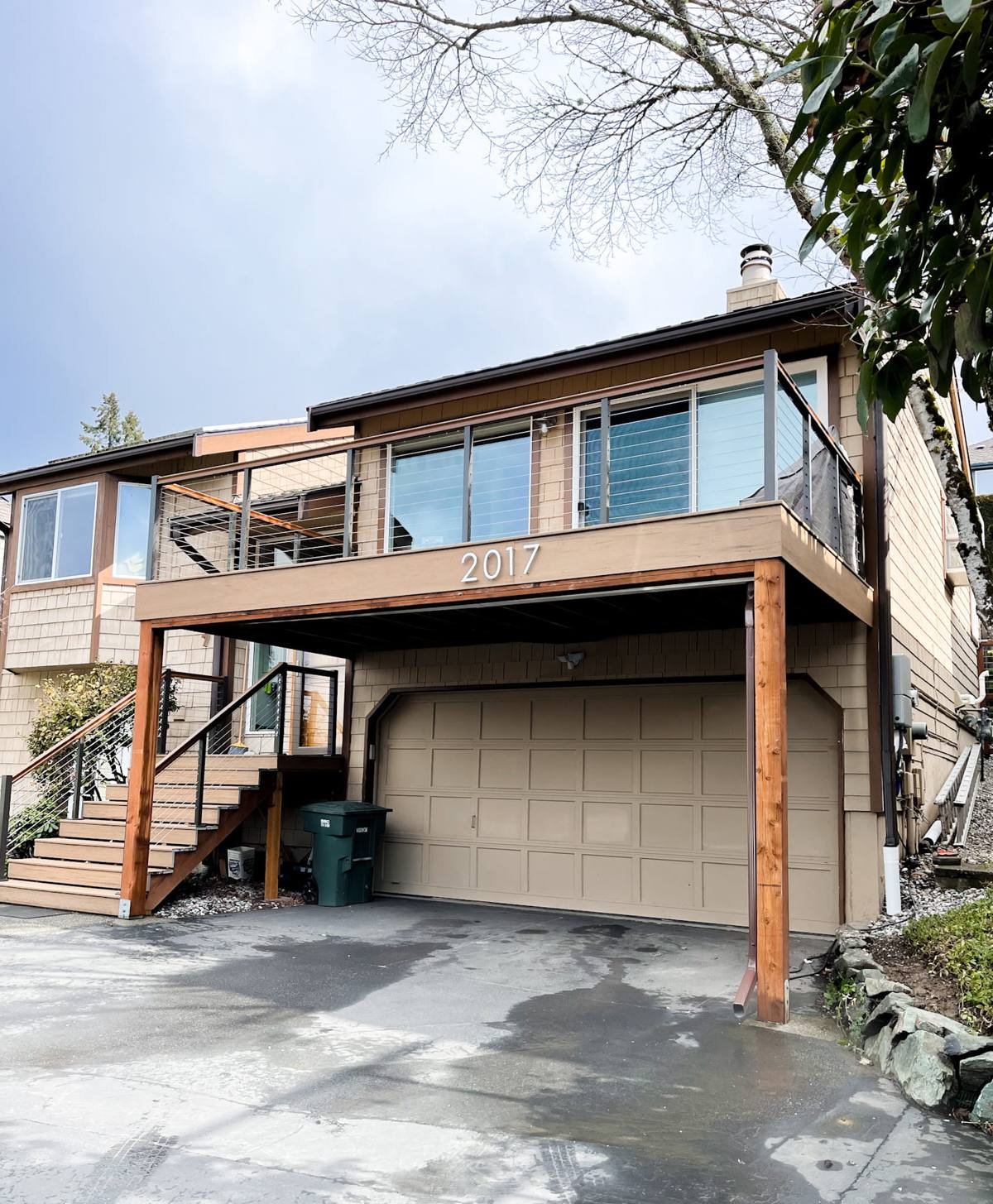
What Disston Heights' Housing Stock Means for Deck Design
Disston Heights is one of St. Petersburg's older, established residential neighborhoods, built out mostly with mid-20th-century ranch and bungalow-style homes on slab foundations. That housing stock shapes a few real decisions on a deck project.
Working with Existing Slabs and Ledger Connections
Many homes in this part of St. Petersburg have a rear patio slab or a low stem-wall foundation rather than a raised wood-framed floor. That changes how a deck ties into the house: instead of a straightforward ledger board bolted to floor joists, we're often designing a free-standing deck (its own posts and footings, no attachment to the house structure) or a properly engineered ledger connection through masonry or block, with the flashing detail done correctly so water doesn't track behind the siding or stucco. Skipping that flashing step is one of the most common causes of hidden rot and mold behind a house wall, and it's not something that shows up until real damage has already been done.
Matching an Established Neighborhood's Look
Homes in Disston Heights tend to have a settled, unfussy character — this isn't a neighborhood of oversized modern builds, and a deck that looks like it was airlifted in from a different style of house tends to stand out for the wrong reasons. We generally aim for railing styles, decking tones, and proportions that read as a natural extension of the home rather than a statement piece competing with it, unless a homeowner specifically wants something bolder.
Choosing the Right Decking Material for Pinellas County Weather
Every decking material sold today can survive a Florida summer for a little while. The question is what it looks and feels like in year eight, and what it costs you in upkeep to get there. Here's how the common options actually compare under intense UV, humidity, and salt air:
| Material | Upfront Cost | Maintenance | Heat & UV Behavior | Moisture/Rot Resistance |
|---|---|---|---|---|
| Pressure-treated pine | Lowest | Needs re-sealing every 1–2 years in this climate | Fades and can splinter without upkeep | Treated for rot, but end cuts and fasteners are vulnerable |
| Tropical hardwood (e.g., ipe) | High | Periodic oiling to hold color, or left to weather gray | Very stable, doesn't warp easily in heat | Naturally dense and rot-resistant |
| Capped composite | Mid-to-high | Low — occasional wash | Can run hot underfoot in direct sun; better fade resistance than uncapped composite | Excellent — doesn't absorb moisture like wood |
| Aluminum decking | Highest | Very low | Reflects heat well when coated; won't rot, splinter, or corrode from salt air | Excellent, including at the coast |
For most Disston Heights projects we lean toward capped composite or a quality treated wood, depending on budget and how hands-on the homeowner wants to be with upkeep. Uncapped composite (the older generation of the product) tends to hold moisture and fade unevenly in intense sun, which is why we don't recommend it here — it's a maintenance and appearance trade-off, not a claim that it fails outright.
Framing, Fasteners, and Code Requirements That Actually Matter Here
Wind Load and Attachment
Structural framing for a deck in this part of Florida has to account for real wind load, not just support the weight of furniture and people standing on it. That means correctly sized and spaced footings for our soil conditions, joist hangers and post connections rated for uplift, and hurricane-rated hardware at key structural points — the same category of connector used to keep roofs on in a storm applies to a deck frame that needs to stay put in sustained wind.
Corrosion-Resistant Fasteners
Standard galvanized screws and brackets corrode faster near the Gulf than most homeowners expect, even several miles inland. We use stainless steel or coated fasteners rated for coastal exposure throughout the frame and decking attachment — it costs more up front than hardware-store galvanized, but it's the difference between railings that are still solid in ten years and ones that are rust-streaked and loosening in three.
Permitting
Deck construction in St. Petersburg requires a permit through the city (or Pinellas County, depending on exact location), along with inspections at the framing stage and at final completion. Permitted work also typically needs to meet current wind-load and railing-height code, which isn't optional — it's there because it's the same code that keeps a deck from becoming a hazard in a storm or a liability at resale.
Our Process for a Disston Heights Deck Project
- On-site assessment. We look at your yard's grade, drainage, existing slab or foundation, sun exposure, and how you actually plan to use the space before talking materials.
- Design and material selection. We walk through layout, railing style, and decking options against your budget and maintenance preferences, with honest trade-offs explained up front.
- Permitting. We handle the permit submission and coordinate the required inspections so you're not chasing paperwork.
- Footings and framing. Footings are set to the depth our soil and load calculations call for, and the frame goes up with corrosion-resistant, wind-rated hardware.
- Decking, railing, and finish work. Boards, railings, and any stairs or built-ins go in last, followed by a final cleanup and walkthrough.
- Final inspection and handoff. We schedule the closing inspection and go over care and maintenance specific to the material you chose.
Cost Factors: What Actually Moves the Price
Every deck quote is different once you factor in size, height off the ground, material, and complexity — but the main variables are consistent:
| Factor | Why It Matters |
|---|---|
| Size and shape | Simple rectangles cost less per square foot than multi-level or angled designs |
| Height above grade | Taller decks need deeper footings, more bracing, and stairs — all add cost |
| Decking material | Pressure-treated is the lowest entry point; composite, hardwood, and aluminum cost more but shift the long-term maintenance burden |
| Railing style | Basic wood or aluminum pickets cost less than glass panel or custom cable railing |
| Site access and existing conditions | Removing an old deck, tying into a slab, or working in a tight side yard adds labor |
As a broad range, homeowners in this area are typically looking at low-to-mid tens of thousands of dollars for a mid-size, well-built deck with quality materials — but the only accurate number comes from seeing your yard and hearing what you actually want out of the space.
Maintaining a Deck in St. Pete's Sun and Salt Air
Whatever material you choose, a little seasonal attention goes a long way in this climate:
- Rinse off salt residue, pollen, and grime every few weeks, especially after long dry spells followed by rain
- Check fasteners and railing connections once or twice a year for rust bleed or loosening
- Re-seal or re-oil wood decking on the schedule the product calls for — don't wait until it looks gray and dry
- Inspect the ledger or attachment point (if any) for signs of water intrusion after major storms
- Keep an eye on drainage under and around the deck so standing water doesn't sit against posts or footings
- Trim back vegetation that traps moisture against the structure
Why a Crew That Already Works Disston Heights Matters
A deck built by someone unfamiliar with St. Petersburg's permitting process, soil conditions, and storm exposure is a deck you'll likely be dealing with again sooner than you should. Working regularly in this neighborhood and across Pinellas County means we already know what the permitting office expects, what soil and drainage conditions look like on this side of the bay, and which material and hardware choices actually hold up to a full cycle of Florida summers and hurricane seasons — not just the ones that look fine on a spec sheet. That local track record is worth more than a lower bid from a crew that's never built here before.
If you're thinking about a custom deck for your Disston Heights home, we're happy to walk your yard, talk through honest options for your budget, and put together a clear plan — with no pressure to sign anything on the spot. Use the form below to request a free estimate.