 St. Petersburg Window
 Siding Installation Built for Gulfport's Waterfront Exposure
Gulfport sits right against Boca Ciega Bay, which means homes here take a different kind of beating than siding just a few miles inland. The combination of open water, near-constant onshore breeze, and full Florida sun puts Gulfport homes in one of the more demanding pockets of St. Petersburg for exterior cladding. If you're planning a siding installation in this neighborhood, the product and the installation details matter more than they would in a more sheltered part of Pinellas County.
We install siding across the St. Petersburg area, and Gulfport jobs come with a consistent pattern: homeowners who've already replaced siding once or twice and are tired of doing it again. That repeat-replacement cycle is usually a sign the wrong product or the wrong installation approach was used the first time, not that siding itself is a losing battle here.
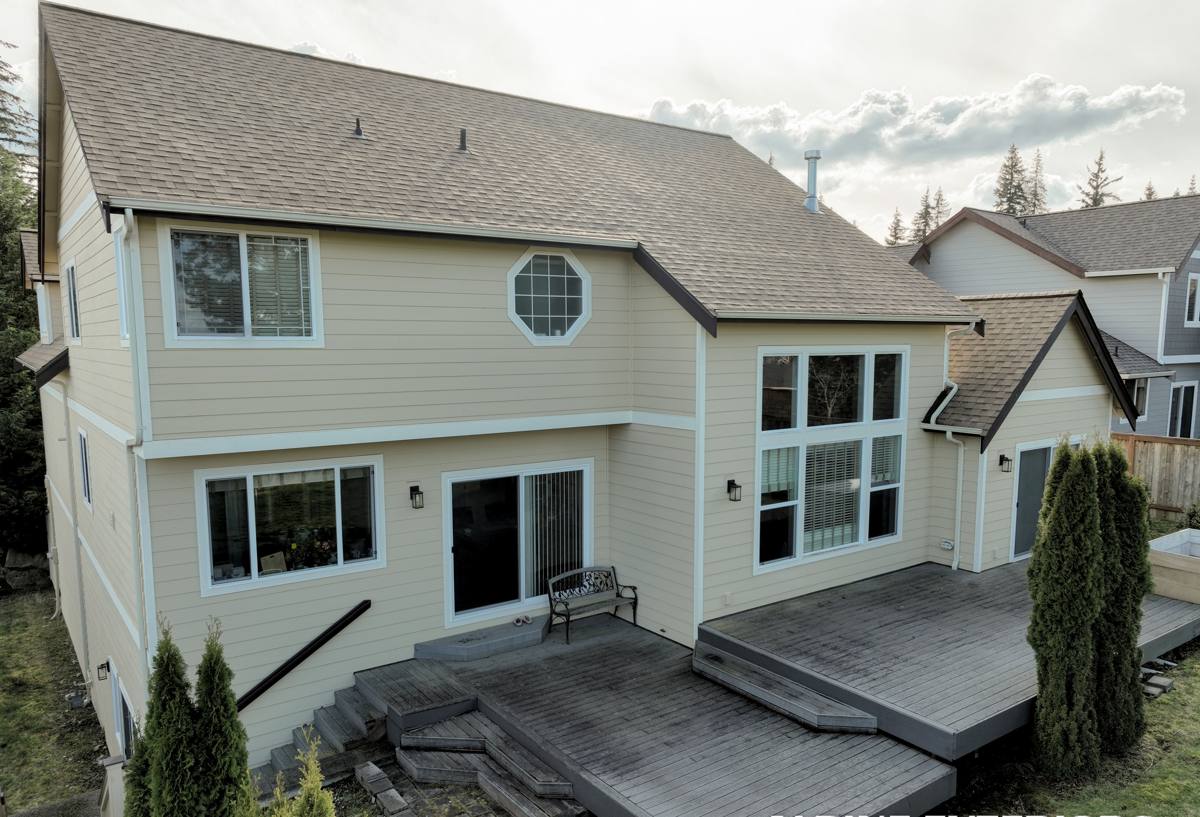
What Gulfport's Climate Actually Does to Siding
Salt-laden air off the bay, wind-driven rain during summer storms and hurricane season, and intense year-round UV exposure all work on exterior siding simultaneously — not one at a time. Each stressor targets a different weak point in a siding system:
- Salt air accelerates corrosion of fasteners, trim flashing, and any exposed metal components, and it degrades certain coatings and adhesives faster than inland exposure would.
- Wind-driven rain pushes water sideways and upward under laps, seams, and trim joints that would stay dry in a normal rainstorm — this is where poor flashing and installation shortcuts show up first.
- Hurricane-force wind tests fastening patterns and panel attachment directly. Siding that's under-fastened or fastened into the wrong substrate can lift, crack, or blow off in a strong storm.
- Year-round UV breaks down pigments and surface coatings over time, which is why fading and chalking show up faster here than in siding installed in cooler, cloudier climates.
None of these are exotic problems — they're the same four forces every coastal Pinellas County home deals with. But Gulfport's proximity to open water means the intensity is higher than in inland St. Petersburg, so the margin for error in product choice and installation quality is smaller.
Why This Changes What We Recommend
A siding product that performs adequately in a sheltered subdivision a few miles from the water can underperform quickly in Gulfport. That's part of why we standardized on James Hardie fiber cement siding for every installation we do, rather than offering a menu of products with different price points and different long-term outcomes.
Why We Install Only James Hardie Fiber Cement
We don't install vinyl siding, LP SmartSide, or other wood-based composite panels, and we don't install lower-cost fiber cement alternatives like Cemplank or Allura. That's a deliberate standard, not a lack of options.
Vinyl siding is lightweight and affordable, but it's a plastic product — it softens and can warp under sustained heat and direct sun exposure, and it's a poor match for hurricane-force wind resistance compared to fiber cement. Wood-based composite siding (like LP SmartSide) uses treated engineered wood, which means any breach in the factory coating or a poorly sealed cut edge gives moisture a path into a wood-based substrate — a real liability in a climate where wind-driven rain is a near-annual event. Both products can be installed correctly and still carry real limitations that show up over a 10-20 year horizon on a bay-adjacent property.
James Hardie fiber cement is cement, sand, and cellulose fiber — non-combustible, dimensionally stable, and engineered specifically for high-moisture, high-UV climates through Hardie's HZ10 product line built for Gulf Coast and Southeast exposure. It doesn't rot, it doesn't attract termites, and it holds up structurally to salt air in a way vinyl and wood-based products don't match.
ColorPlus Factory Finish
Standard fiber cement can be field-painted, and field-applied paint is exactly the kind of coating that fades and chalks fastest under constant coastal UV. James Hardie's ColorPlus finish is baked on at the factory in a controlled process, which gives it better color retention and fade resistance than a job-site paint job — and it comes backed by its own finish warranty separate from the substrate warranty.
What a Correct Siding Installation Involves
The material is half the equation. The other half is installation detail, and this is where most premature siding failures actually originate — not from the product itself.
Moisture Management Behind the Siding
Every installation should include a proper water-resistive barrier, correctly lapped and taped house wrap, and rainscreen or drainage detailing where called for. Siding is not the only layer keeping water out of the wall assembly — it's the first line of defense, and it needs a functioning drainage plane behind it.
Flashing at Every Penetration
Windows, doors, hose bibs, vents, and any wall penetration need step flashing or Z-flashing integrated with the water-resistive barrier, not just caulked over. Caulk is a maintenance item, not a waterproofing strategy — it fails long before the siding itself does.
Fastening for Wind Zones
James Hardie publishes fastener spacing and type requirements specific to wind exposure category, and Pinellas County's coastal wind zones call for tighter fastening patterns than inland installations. Nailing into studs (not just sheathing), using corrosion-resistant fasteners, and following the manufacturer's fastening schedule for the local wind zone are what actually keep panels attached in a storm.
Clearances and Gaps
Siding needs proper clearance from grade, roofing, and decks, along with correctly sized gaps at trim and joints to allow for expansion without trapping water. These are small dimensional details that get skipped when a crew is moving fast, and they're often invisible until years later when the failure shows up.
Our Process for a Gulfport Siding Installation
- On-site assessment — we inspect existing siding, sheathing, and any moisture damage before quoting anything, since what's behind the old siding often drives the real scope of work.
- Substrate repair — any rotted sheathing, damaged framing, or compromised water-resistive barrier gets addressed before new siding goes up. Installing new siding over a bad substrate just hides the problem.
- Water-resistive barrier and flashing — house wrap, flashing at all penetrations, and drainage detailing installed to manufacturer and code specification.
- James Hardie panel or lap installation — fastened per the wind-zone-specific schedule, with correct clearances and joint treatment.
- Trim, caulking, and final inspection — trim work finished, sealant applied only where it belongs (not as a substitute for flashing), and a final walkthrough with the homeowner.
Why Local Experience in Gulfport Matters
A crew that regularly works St. Petersburg's bay-side neighborhoods already knows which wind exposure category applies, what Pinellas County's permitting and inspection process looks like, and what kind of substrate damage tends to turn up behind older siding on homes this close to the water. That's not something a crew based outside the area picks up on the first job — it's built from repetition in this specific environment.
It also means faster response if something needs a warranty check or a follow-up visit after storm season, rather than waiting on a contractor who has to travel in from outside the county.
Comparing Siding Options for a Bay-Adjacent Home
| Factor | Vinyl | Wood-Based Composite | James Hardie Fiber Cement |
|---|---|---|---|
| Wind resistance | Lower impact/wind rating | Moderate, panel-dependent | Engineered for high wind zones (HZ10) |
| Moisture/rot risk | Low rot risk, but seams can trap water | Vulnerable if coating is breached | Non-combustible, does not rot |
| UV/fade resistance | Can fade and become brittle | Depends on factory coating quality | ColorPlus factory finish resists fading |
| Salt air durability | Moderate | Moderate, fastener corrosion risk | Strong, engineered for coastal climates |
| Typical lifespan | 15-25 years | 20-30 years, coating-dependent | 30+ years when installed to spec |
Cost Factors to Expect
We don't quote pricing without seeing the home, since scope varies with square footage, trim complexity, and how much substrate repair is needed underneath old siding. In general terms, expect the total cost to be shaped by:
- Total square footage and the home's architectural complexity (dormers, gables, multiple trim details)
- Condition of the sheathing and framing once old siding is removed
- James Hardie product line and profile selected (lap siding, panel siding, shingle-style accents)
- Trim and soffit scope included alongside the siding itself
- Permitting requirements tied to Pinellas County's wind zone standards
A written estimate after an on-site inspection is the only way to get numbers specific to your home — broad regional averages don't account for what's actually behind your existing siding.
Signs It's Time to Replace Siding in Gulfport
- Visible warping, buckling, or gaps at seams and trim joints
- Chalking, fading, or peeling that's returned after a repaint
- Soft spots, discoloration, or bubbling on interior walls near exterior corners
- Siding that flexes or feels loose when pressed near the bottom courses
- Repeated caulk repairs at the same trim or window locations year after year
If you're seeing any of these on a Gulfport property, it's worth having it looked at before the next storm season rather than after damage shows up.
If you're weighing a siding replacement for a home in Gulfport, we're happy to take a look and walk you through what we're seeing and what a James Hardie installation would involve for your property. Request a free, no-pressure estimate using the form below.