 St. Petersburg Window
 Why Pinellas Park Siding Wears Out Faster Than the Manufacturer's Brochure Suggests
Pinellas Park sits inland enough to avoid direct beachfront exposure, but it's still squarely inside Pinellas County's coastal climate zone. That means homes here deal with the same combination of stresses that batter the rest of the St. Petersburg area: long stretches of intense UV exposure, humidity that never really lets up, wind-driven rain that gets pushed sideways during summer storms, and salt-laden air that drifts inland from Tampa Bay and the Gulf. Add hurricane-force wind events that test every seam, joint, and fastener in the siding system, and you have a climate that is genuinely harder on exterior materials than most of the country experiences.
Siding doesn't fail all at once in this environment. It fails gradually — a compromised caulk joint here, a warped panel there, moisture creeping behind a seam that was never properly flashed. By the time a homeowner notices peeling paint or a soft spot near the bottom of a wall, the damage underneath is often further along than it looks from the sidewalk. That's the core challenge with siding replacement in this part of Florida: it's not just a cosmetic upgrade, it's a decision about what's going to stand between your framing and a climate that doesn't take breaks.
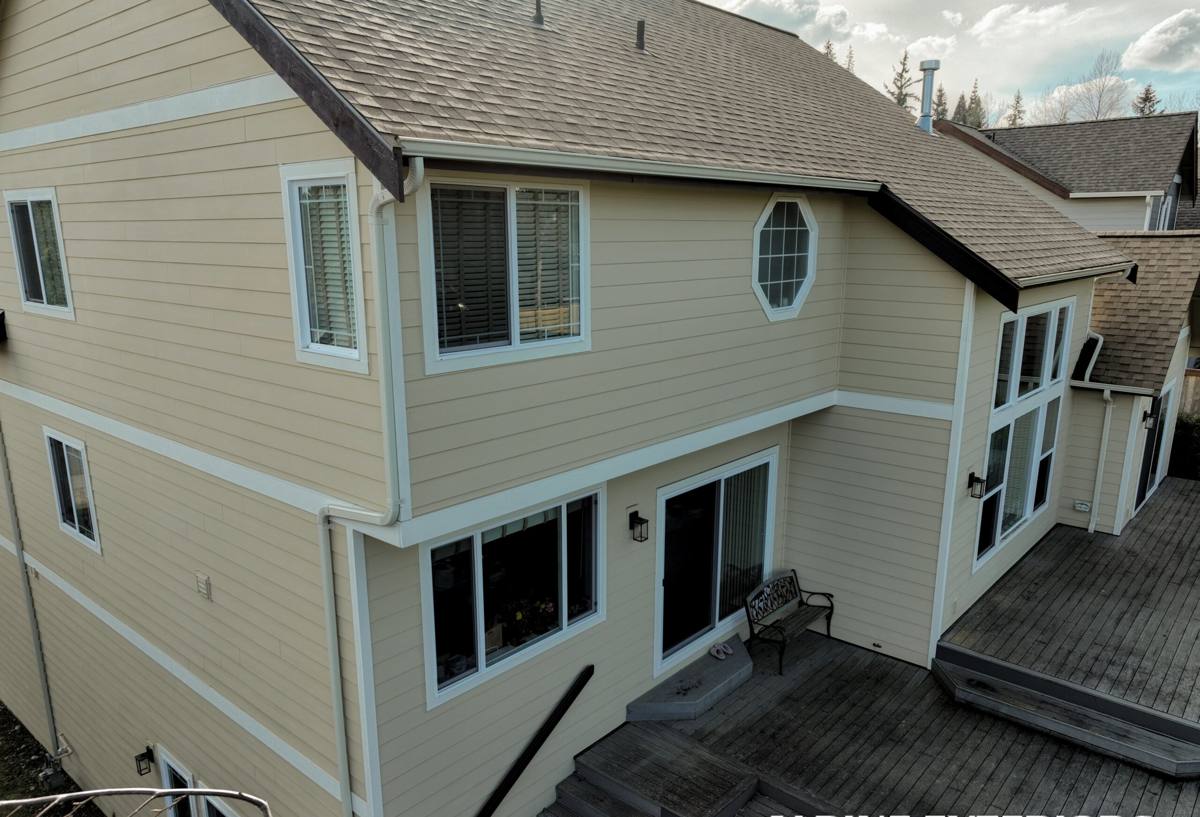
Signs a Pinellas Park Home Needs Replacement, Not Just Repair
Not every siding problem calls for a full tear-off. But there's a point where patching becomes a waste of money, and recognizing that line early saves homeowners from throwing good money after bad.
- Soft, spongy, or crumbling sections when pressed — usually a sign moisture has reached the substrate
- Persistent bubbling or peeling paint that returns within a year or two of repainting
- Visible warping, buckling, or panel separation, especially on walls that face prevailing wind and rain
- Rot or staining around window and door trim, which often indicates water is getting behind the cladding, not just sitting on top of it
- Siding that's original to a home built more than 20-25 years ago, particularly wood-based or early-generation composite products
- Rising cooling costs paired with drafts or temperature swings near exterior walls
If two or three of these show up at once, it's usually a sign the siding system as a whole — not just the visible panels — has been compromised. That's a replacement conversation, not a repair one.
Why Repair-Only Approaches Often Backfire Here
In a lower-humidity climate, spot-repairing a damaged section and repainting can buy real time. In Pinellas County's climate, patched sections are frequently the first to fail again, because the underlying moisture path was never addressed. Water that found its way behind one panel usually found a weak point in the house wrap, flashing, or fastening pattern — and that weak point doesn't disappear because a new piece of siding was nailed over it.
What a Correct Siding Replacement Job Actually Involves
A siding replacement is only as good as what's underneath it. This is the part homeowners can't see once the job is done, which is exactly why it matters most.
Tear-Off and Substrate Inspection
Old siding comes off entirely, and the sheathing underneath gets inspected for rot, soft spots, or prior water damage. Any compromised sheathing needs to be replaced before new siding goes on — installing new material over damaged substrate just hides the problem for another few years.
Weather-Resistive Barrier
A properly lapped, sealed house wrap or weather barrier goes down next. In a climate with wind-driven rain, the direction and overlap of this layer matters — it's the last line of defense if wind ever pushes moisture past the siding itself.
Flashing at Every Penetration
Windows, doors, hose bibs, vents, and any other wall penetration need proper flashing integrated with the weather barrier — not just caulked over. Caulk is a maintenance item that eventually fails; flashing is a permanent water-management detail.
Fastening to Spec
Every siding manufacturer publishes fastening requirements — nail or screw type, spacing, and depth — engineered for wind resistance. In a hurricane-exposed market, following that spec isn't optional. Under-fastened or over-driven siding is one of the most common causes of premature failure and wind damage during storm events.
Trim, Caulking, and Finish Details
The visible finish work — corner trim, joint caulking, paint or factory finish touch-up — is what homeowners see, but it should be the last five percent of the job, not a substitute for the structural steps above it.
Comparing Siding Materials for This Climate
Homeowners researching siding replacement in Pinellas Park will run into several material options. Here's an honest look at how they tend to hold up under Gulf Coast conditions:
| Material | UV & Heat Performance | Moisture Behavior | Wind/Storm Durability |
|---|---|---|---|
| Vinyl siding | Can fade, warp, or become brittle under sustained intense UV | Sheds water well but seams and J-channels are vulnerable points | Lower wind ratings; can crack or blow off in severe gusts |
| Engineered wood (e.g. LP SmartSide) | Factory finish helps, but wood-based core is UV and moisture sensitive over time | Wood substrate can swell or degrade if water reaches cut edges or seams | Reasonable when installed to spec, but edge sealing is critical in humid climates |
| James Hardie fiber cement | Non-combustible, dimensionally stable; factory ColorPlus finish resists fading | Cement composition doesn't rot, warp, or absorb moisture like wood-based products | Engineered HZ product lines rated for high-wind, high-humidity coastal zones |
Every product on this list has been used successfully somewhere. The question for a Pinellas Park homeowner isn't "does it work," it's "does it hold up to this specific climate, with minimal callback risk, for decades rather than years."
Why We Install Only James Hardie Fiber Cement
We made a deliberate decision to standardize on James Hardie siding rather than offer a menu of vinyl, engineered wood, or other fiber cement brands. It comes down to what we've seen hold up in this specific coastal climate: a non-combustible, fiber cement product that doesn't rely on a wood core, holds its factory finish through years of intense Florida sun, and is engineered in HZ5 formulations specifically for high-humidity, high-wind regions like ours. Hardie also backs its products with a strong transferable warranty, which matters to homeowners who may sell within the warranty period. Standardizing on one manufacturer also means our crews install this specific product day in and day out — there's no learning curve, no guessing on fastening patterns, and no mixed experience across a job site.
Our Siding Replacement Process
- On-site inspection and honest assessment of whether repair or replacement is the right call
- Written estimate covering material, labor, disposal, and any sheathing repair contingencies
- Full tear-off of old siding and inspection of sheathing and framing underneath
- Repair of any compromised substrate before new material goes on
- Installation of weather-resistive barrier, flashing, and James Hardie siding to manufacturer fastening specifications
- Trim, caulking, and finish detail work
- Final walkthrough with the homeowner before the job is considered complete
Cost Factors Homeowners Should Understand
Every home is different, but the same handful of factors drive most of the variation in a siding replacement quote:
| Factor | Why It Matters |
|---|---|
| Home size and wall complexity | More corners, gables, and penetrations mean more labor and trim detail |
| Substrate condition | Rotted or water-damaged sheathing found during tear-off adds repair scope |
| Siding profile and finish | Lap width, texture, and color affect material cost within the Hardie product line |
| Access and site conditions | Two-story walls, tight lot lines, or landscaping obstacles affect labor time |
| Trim and accessory work | Fascia, soffit, and window trim replacement alongside siding adds scope but often makes sense to do at the same time |
We provide itemized, written estimates so homeowners can see exactly what's driving the number rather than a single lump-sum figure.
Why Hiring a Crew That Already Works in Pinellas Park Matters
Siding installation quality depends heavily on details that are climate-specific: fastening patterns rated for local wind exposure, flashing details that account for wind-driven rain, and material choices that hold up to salt air and sustained UV. A crew that primarily works in a different climate — or one that installs whatever brand a homeowner asks for without pushing back on fit — is more likely to miss those details. A crew that regularly works Pinellas Park and the greater St. Petersburg area has already seen how different siding systems perform here over years, not just on install day.
Maintaining Your Siding After Installation
Even a properly installed, high-quality siding system benefits from basic upkeep in this climate:
- Rinse siding periodically to remove salt residue and airborne grime, especially on homes closer to the water
- Inspect caulking around windows, doors, and trim annually and re-caulk any cracked or separated joints
- Trim back vegetation and irrigation spray that keeps siding consistently wet
- After major storms, do a visual walk-around to check for loose panels, trim, or fasteners
- Keep gutters and downspouts clear so runoff doesn't sheet down exterior walls
If you're weighing a siding replacement for a Pinellas Park home, we're glad to take a look and give you a straight assessment — no pressure, no upsell script. Fill out the form below to schedule a free estimate.